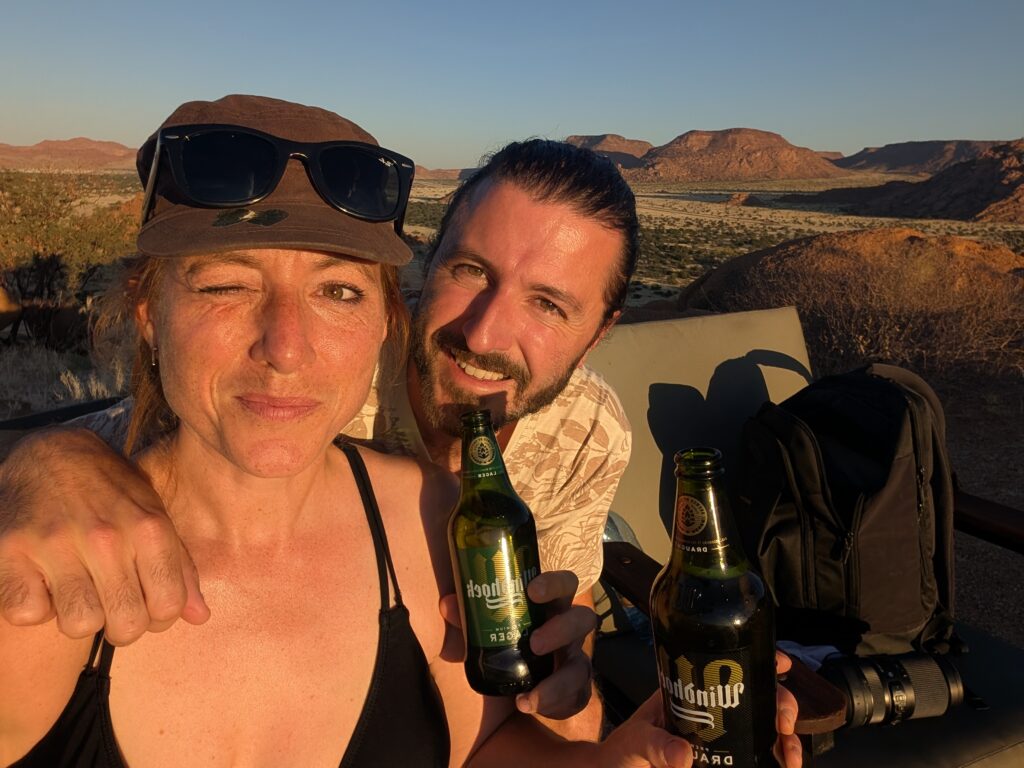
Africa has been on my bucket list for years, and it certainly didn’t disappoint. During ten unforgettable days, we drove more than 2,000 kilometres across one of the world’s most spectacular countries. From the towering red dunes, passing through remote mountains, endless gravel roads and some of the darkest night skies on Earth, every day felt completely different.
Travelling independently in a 4×4 gave us complete freedom to explore the country at our own pace. It also brought plenty of adventures: getting lost in dry riverbeds, learning how to drive on sand, camping under the Milky Way and meeting the most amazing animals along the way.
Looking back
Namibia exceeded every expectation we had.
What surprised us the most wasn’t only the famous dunes or the incredible wildlife—it was how quickly the landscapes changed. Within a single day we would drive from green savannahs to rocky deserts, through mountain passes, endless gravel roads and finally reach the Atlantic coast covered in mist.
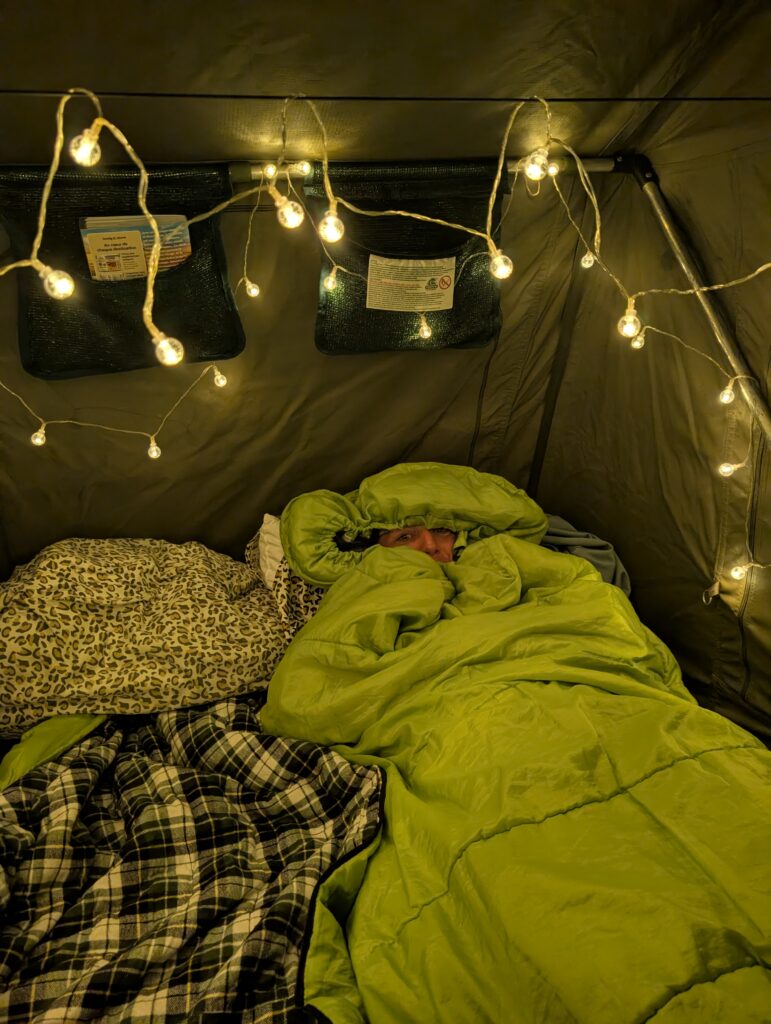
Our plan was to camp 4/9 nights: Sleeping under one of the clearest skies on Earth, cooking dinner beside our rooftop tent but I must admit the comfort of the lodges finally seduced us more!
Driving a 4×4 is almost mandatory, but it’s also part of the adventure. Distances are long, roads are rough and Google Maps isn’t always your best friend—but that’s exactly what makes Namibia so rewarding.
Tips: Download MapsMe and Google local maps as you won’t have any connection during the trip.
Day 1 & 2 – Windhoek to Sossusvlei & Deadvlei
Accommodation: Sossus Oasis Campsite (2 nights)
Landing in Windhoek marked the beginning of our Namibian adventure—but not without a little patience. Between the visa process, collecting our 4×4, shopping for supplies and buying warmer clothes (winter mornings are surprisingly cold!), it was already afternoon before we finally hit the road.
The first kilometres introduced us gently to Namibia. Rolling hills gradually gave way to wide open plains before the scenery transformed into the famous Namib Desert. Along the way we spotted our very first wildlife: jackals, antelopes, birds, goats and cattle roaming freely beside the road.
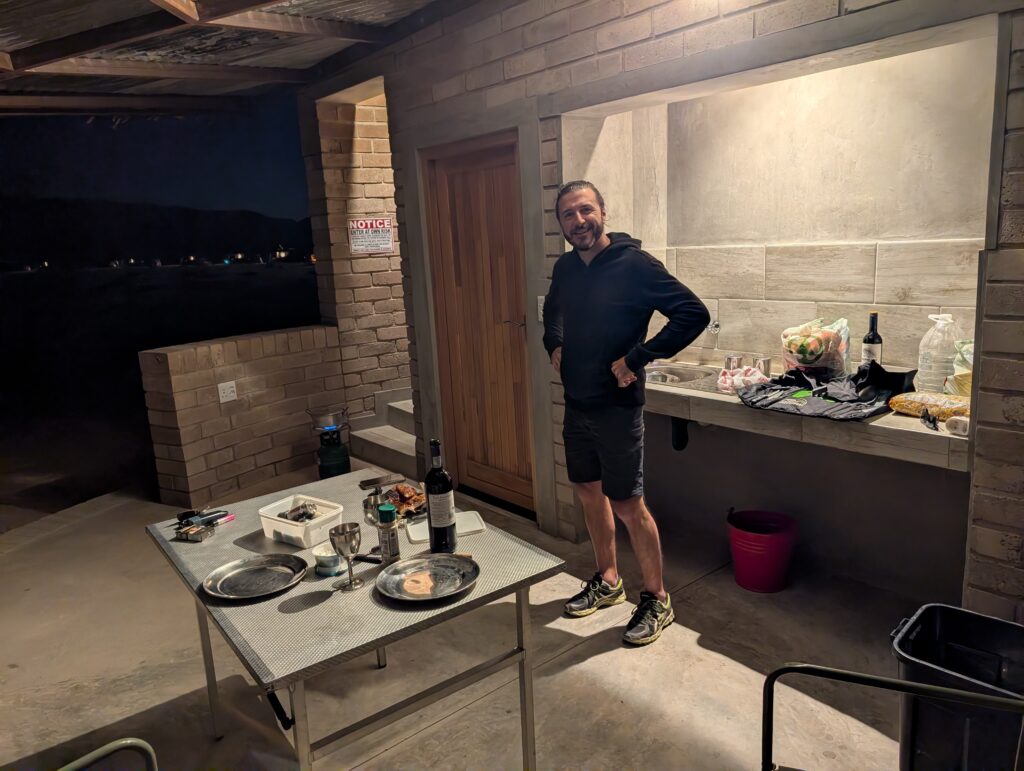
We reached Sossus Oasis Campsite just in time for sunset. After setting up our rooftop tent for the very first time, enjoying a hot solar-powered shower felt like pure luxury before cooking a simple pasta dinner under an incredible star-filled sky.
The drive through Namib-Naukluft National Park is already spectacular, with giant red dunes rising on either side of the road and wildlife appearing around every corner.
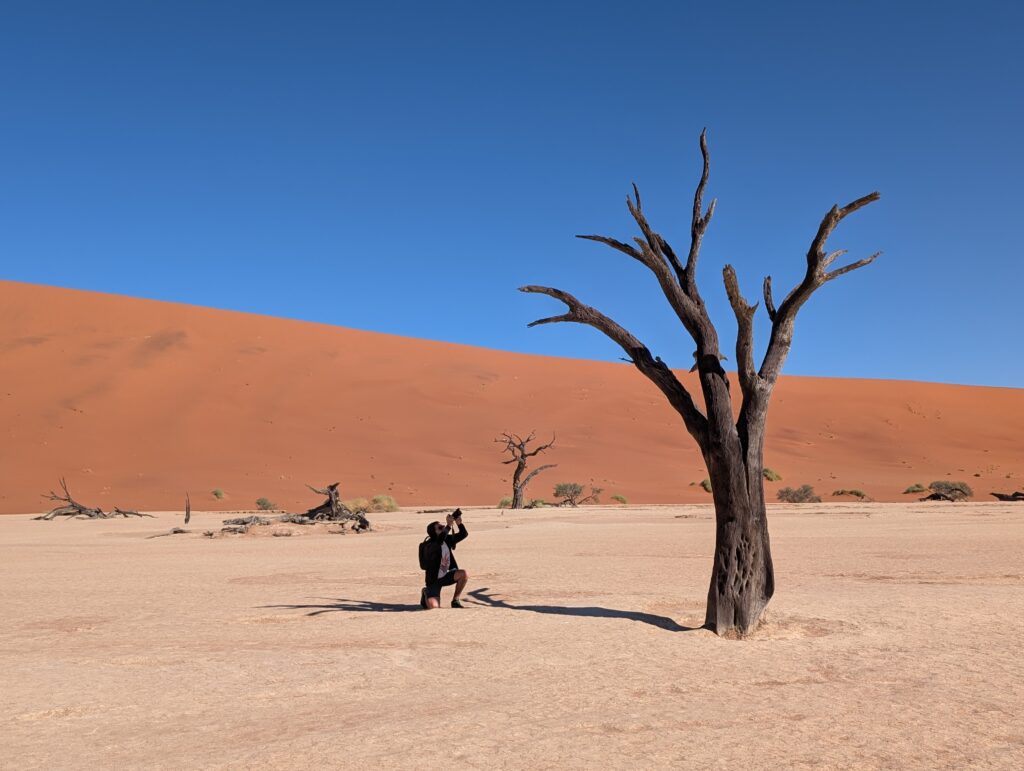
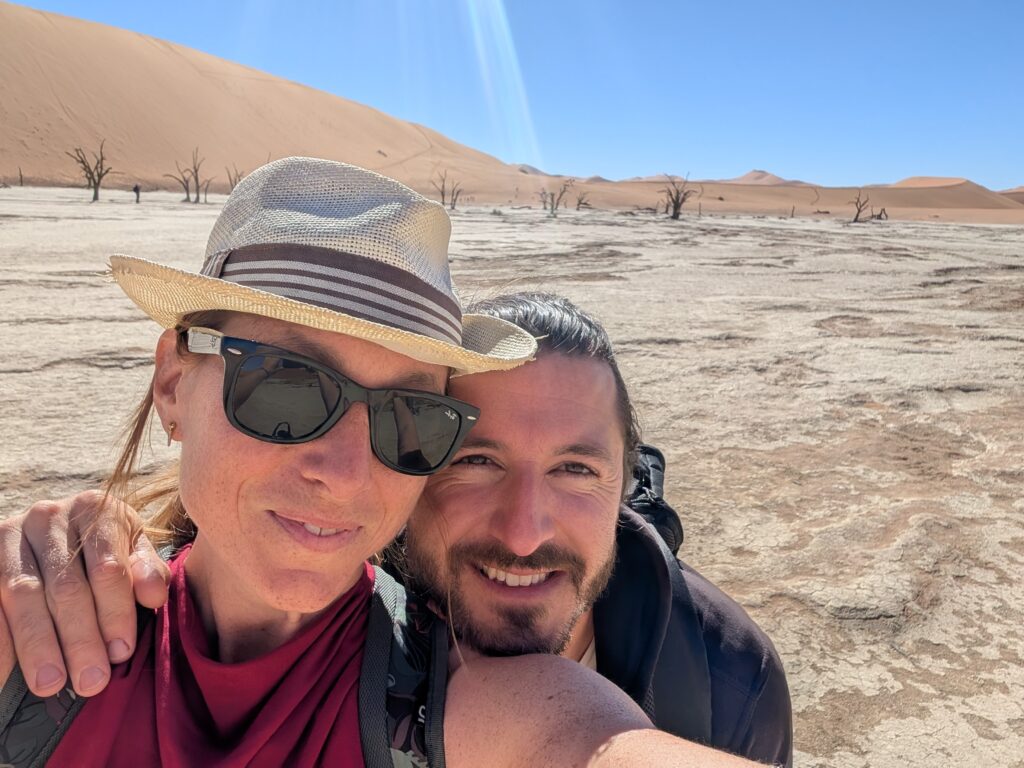
Deadvlei is simply breathtaking. The white clay pan covered with thousand-year-old black trees creates one of the most photogenic landscapes in Africa.
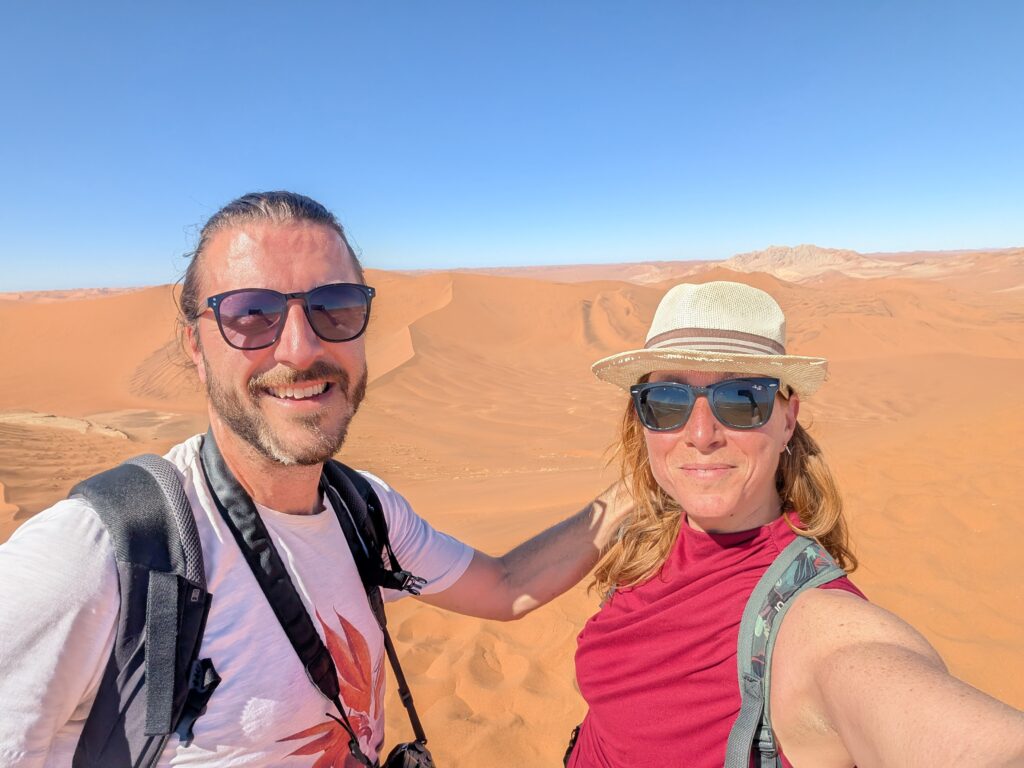
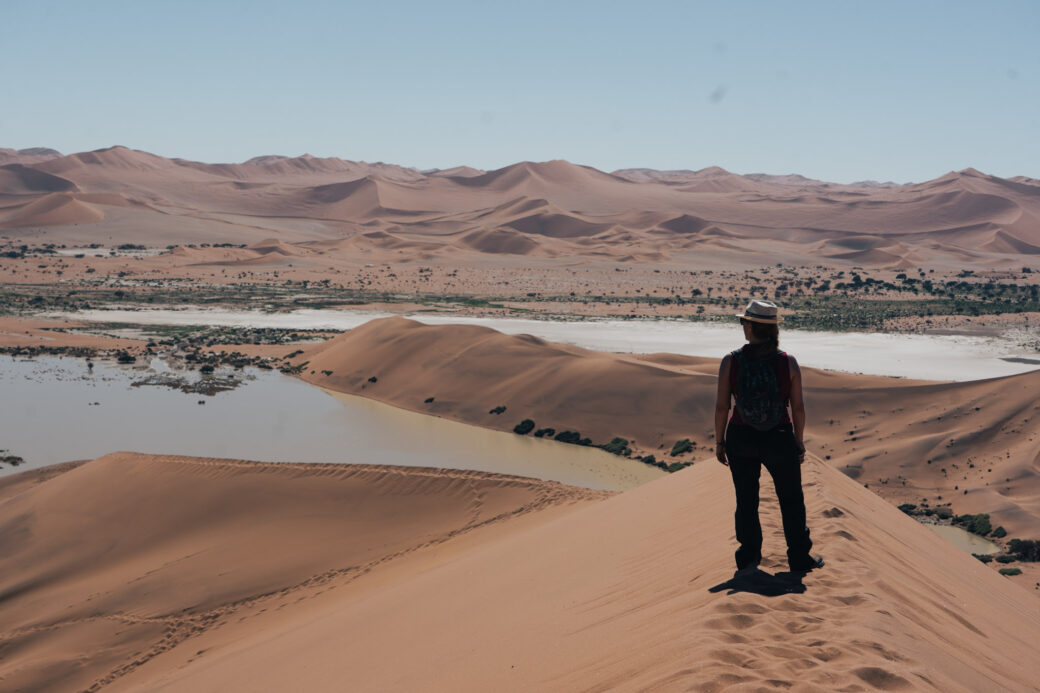
Feeling ambitious, we decided to climb Big Daddy, one of the highest dunes in the world. Walking on soft sand under the midday sun wasn’t exactly our smartest idea, but the panoramic view from the top made every step worthwhile.
On the way back, the changing afternoon light transformed the dunes into glowing shades of orange and red. We ended the day photographing the Milky Way directly above our campsite—a sight we’ll never forget.
Days 3–4 – Swakopmund
After several days in the desert, reaching the Atlantic coast felt like entering another country.
The road to Swakopmund crosses an astonishing variety of landscapes. We saw giraffes crossing the road, zebras, warthogs, ostriches and endless savannah before suddenly arriving in a city wrapped in coastal fog, after the longest straight road ever!
Swakopmund has a distinctly German atmosphere, with colourful colonial buildings, cafés and excellent restaurants. It was also the perfect opportunity to enjoy a little comfort after camping, staying in a beautiful lodge overlooking the surrounding dunes.
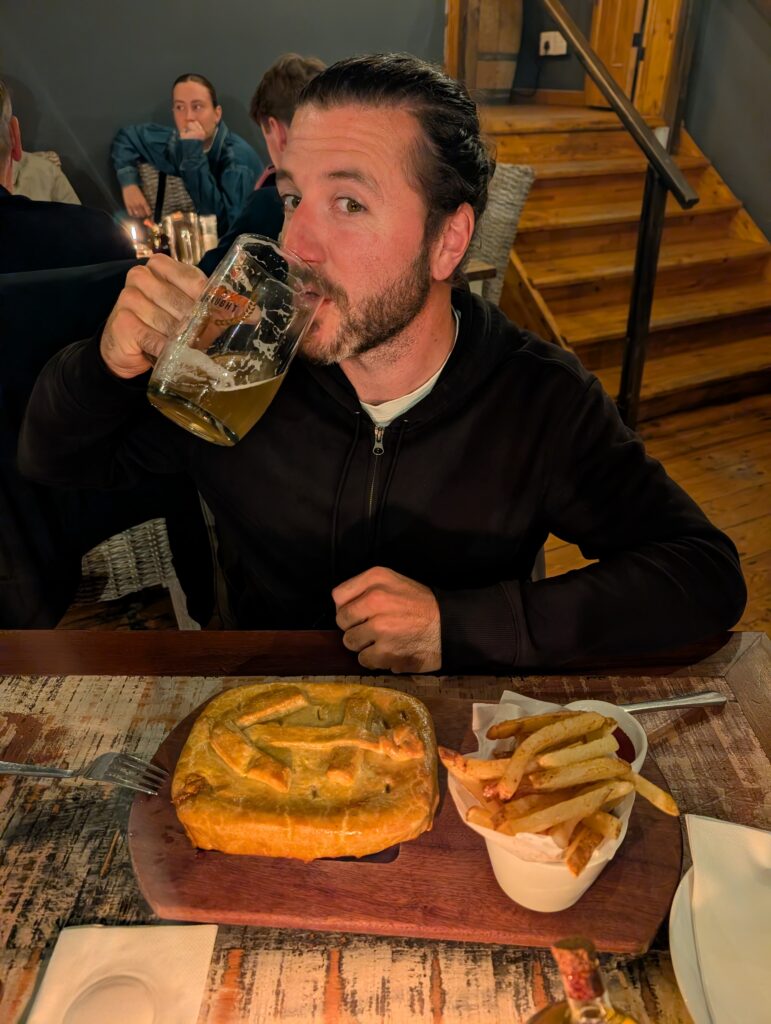
Of course, we couldn’t leave without tasting springbok for dinner.
Day 5 – Spitzkoppe
Often called the “Matterhorn of Namibia“, Spitzkoppe rises dramatically from the surrounding desert.
We originally planned to spend two nights here but eventually changed our itinerary to maximise wildlife viewing later in the trip.
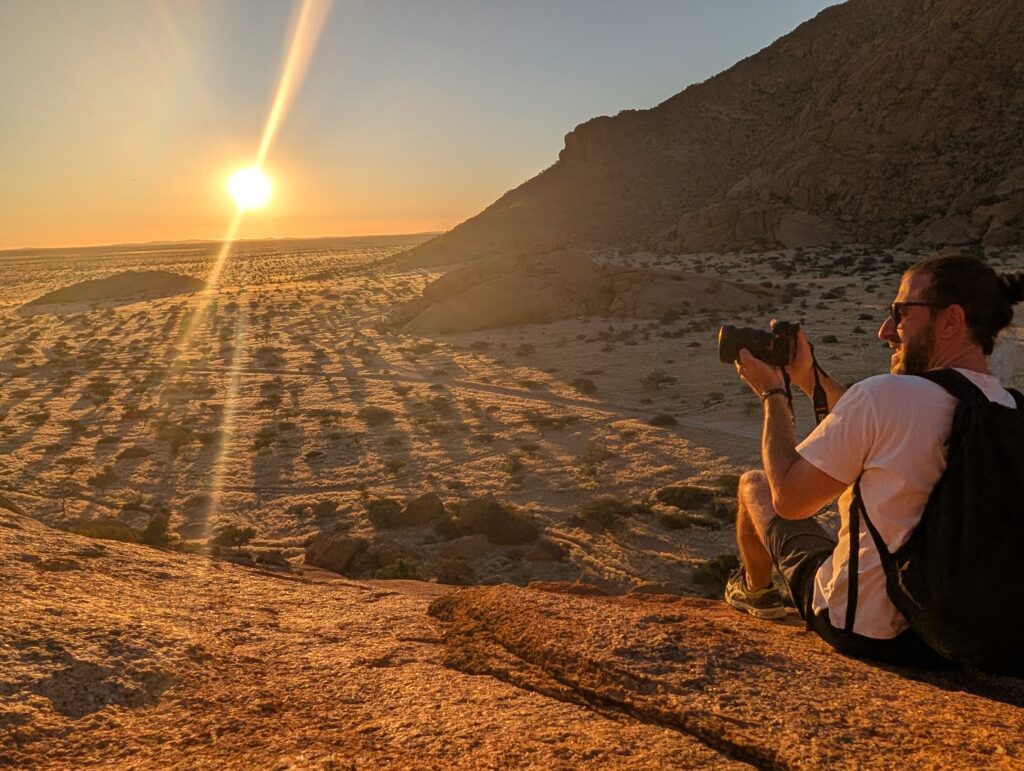
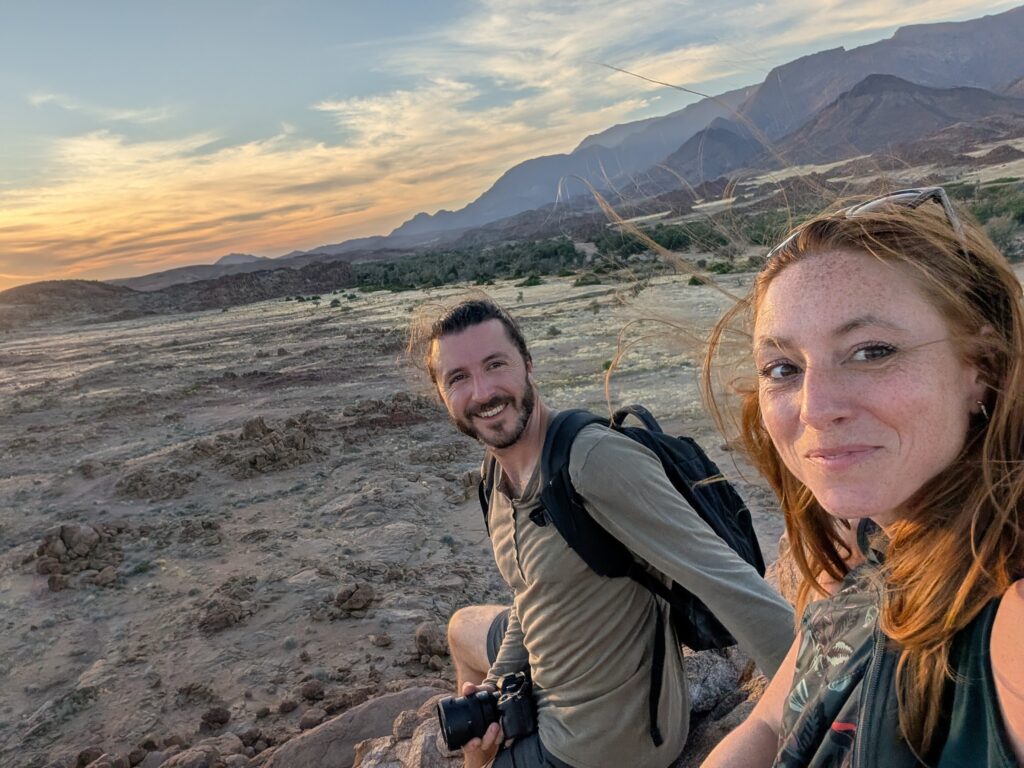
Despite the constant wind and an unbelievable number of flies, Spitzkoppe delivered one of the most beautiful sunsets of our journey. We explored ancient rock paintings, climbed among the granite formations and spent another unforgettable evening beneath a sky filled with millions of stars.
Accommodations:
Swakopmund: Desert Breeze Lodge (2 nights)
Spitzkoppe Restcamp (1 night)
Days 6–7 – Brandberg
Brandberg gave us exactly what we were hoping for: wildlife.
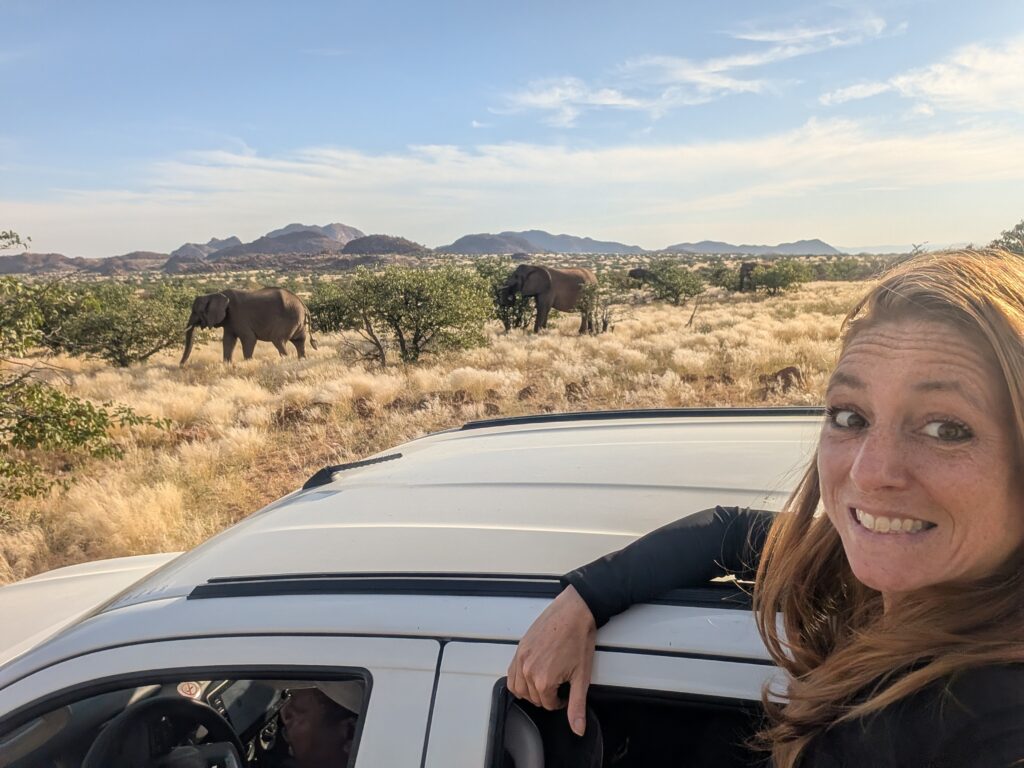
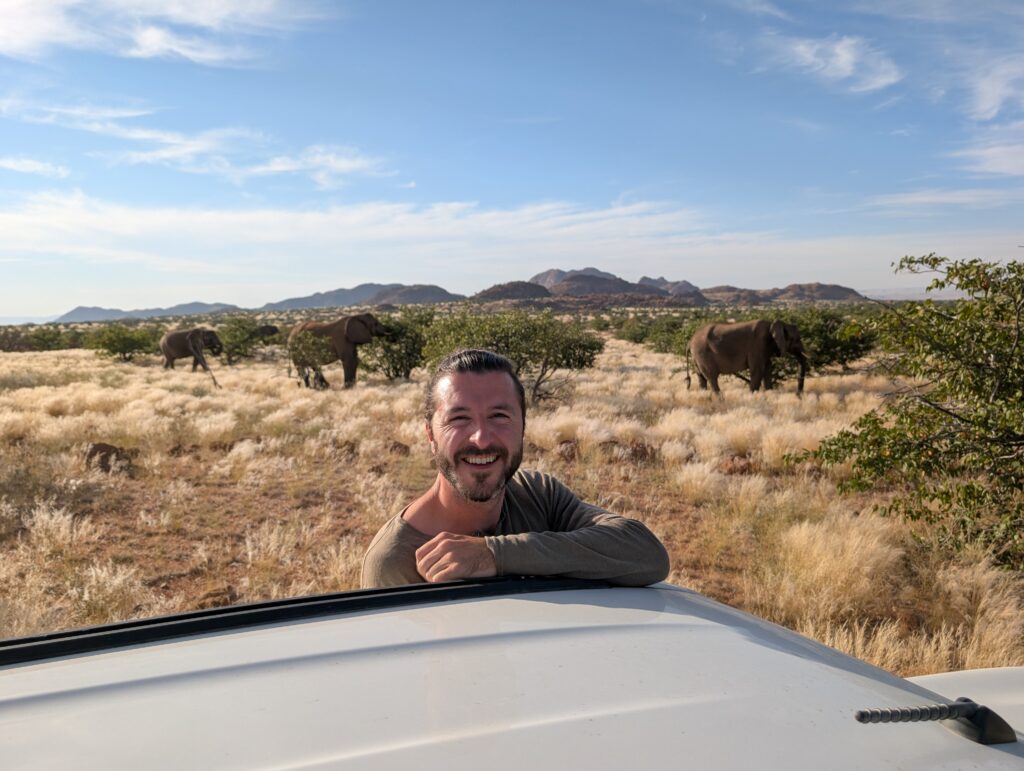
Our stay at White Lady Lodge included one of the most incredible experiences of the trip. Accompanied by our guide Kelvin, we spent two hours tracking Namibia’s famous desert elephants before finally finding the herd at sunrise.
Watching these magnificent animals roaming completely free in such an unforgiving landscape felt surreal and remains one of our favourite travel memories.
Back at the lodge, the adventure continued with unexpected encounters: a curious meerkat visiting our campsite, traditional songs echoing through the valley at night, spectacular sunsets with a “Narnia” vision of the local deer.
Accommodation: White Lady Lodge (2 nights)
Day 8 – Twyfelfontein
After taking several wrong turns and briefly driving through a dry riverbed, we eventually reached this UNESCO World Heritage Site, home to more than 2,500 prehistoric rock engravings.
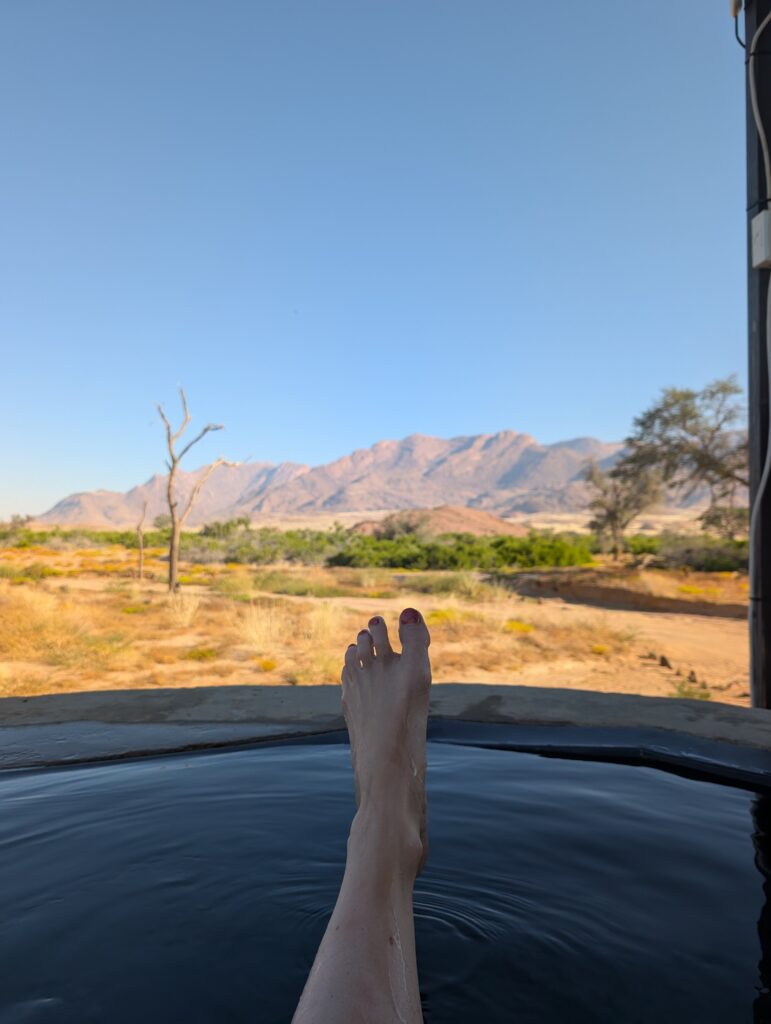
We also visited the Organ Pipes geological formation and Burnt Mountain before spending a relaxing afternoon at our lodge. The sunset reserved us a surprised: the arrival of Baboons sleeping right behind our camp.
One unexpected highlight was also tasting Pap, Namibia’s traditional maize dish, which the hotel staff kindly prepared especially for us even though it wasn’t on the menu.
Accommodation: Twyfelfontein Adventure Camp (1 night)
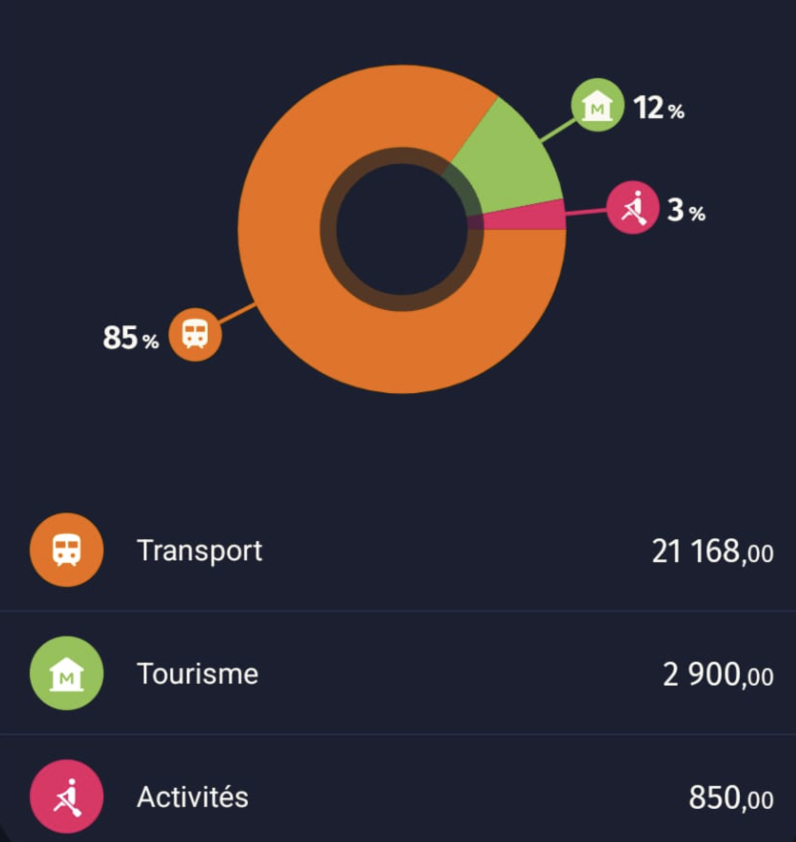
Budget spent (Namibian dollar)
Days 9–10 – Etosha National Park
No road trip through Namibia would be complete without Etosha.
The park offers one of Africa’s greatest self-drive safari experiences. We spent nearly ten hours exploring its countless waterholes where wildlife gathers throughout the day.
Elephants, giraffes, zebras, wildebeest, warthogs, mongooses and countless antelope species were easy to spot. We were also lucky enough to see a lioness resting beneath a tree and, just before leaving, a black rhinoceros hidden near one of the waterholes.
Our final evening was the perfect conclusion to the journey, enjoying local game meat including impala, oryx, kudu and zebra while reflecting on everything we’d experienced over the previous ten days.
Accommodation: Etosha Village (2 nights)
Day 11 – Back to Windhoek
The final drive back to Windhoek felt surprisingly quick. Smooth tarmac roads replaced gravel tracks, our trusty 4×4 was returned without a scratch, and it was finally time to head to the airport.
Leaving Namibia wasn’t easy. Few countries combine such spectacular landscapes, extraordinary wildlife and genuine feelings of freedom. It’s a destination that constantly reminds you just how wild and beautiful our planet can be.
As a conclusion: “Africa is too rich to be poor”
Our best moments