Category: Latin America

  • Pura Vida in Costa Rica

    Pura Vida in Costa Rica

    3 weeks holidays and a new adventure for us in the beautiful central american country of Costa Rica. Its primary forests, its magical coast and carribean ambiance, the fauna, various national parcs and the volcanos made this trip magical!


    Summary

    Costa Rica was our first real big and long trip after our World Tour 2021-2022. We had the chance to take our time, we didn’t book anything in advance and just followed the flow! We travelled 20 days end of March, at the end of the rainy season.

    4 weeks could have allow us to also visit Manzanillo, Montesuma and Isla Tortuga so if you have more time or do not like forest and volcanos you could exchange Arenal area and maybe only keep Monteverde to focus on the coasts.

    Parque Nacional Los Quetzales would also be an option to keep in mind, I guess this is less touristic as Monteverde with less people!

    Tip about the parcs: Reserve your entrance slot in advance and arrive early. You also need to book your tour in Corcovado with anticipation (few weeks before).

    Days 1–2: La Fortuna & Arenal Volcano

    La Fortuna is the perfect introduction to Costa Rica’s landscapes. Surrounded by lush rainforest and dominated by the Arenal volcano, it offers easy hikes and rich biodiversity.

    Highlights

    • Arenal Volcano National Park
    • Butterfly Conservatory – El Castillo
    • Lava trails & rainforest walks
    • Wildlife spotting: howler monkeys, capuchins, toucans, capybaras…
    • Volcano viewpoints and hot springs nearby

    Hotels:
    Casa Amanecer B&B – peaceful location with mountain views, surrounded by birds and nature, Arenal Tropical Gardens.
    Restaurants: Arenal Lodge Hôtel, Arenal ChillOut bar, Fusion Arenal Mirador

    Day 3: Tenorio Volcano National Park (Río Celeste)

    From La Fortuna, we headed north to Tenorio Volcano National Park, home to the famous Río Celeste. The hike leads through dense jungle and areas of volcanic activity before reaching the river, whose unreal turquoise colour is created by a natural chemical reaction.

    Despite being one of the park’s busiest spots, it remains one of the most impressive natural sites in the country. We spent the night in a small local cabin near the park, away from the main village.

    Day 4: Rincón de la Vieja National Park

    Rincón de la Vieja offers a completely different atmosphere, with drier landscapes and visible volcanic activity along the trails. Short hikes take visitors from tropical forest to arid plains, passing bubbling mud pools and steam vents.

    After a long road compared to the short visit we did, we continued towards Monteverde, stopping briefly at a waterfall for a refreshing swim: Llanos del Cortés Waterfall.

    Accomodation: Catarata Bijagua Lodge.

    Days 5–6-7: Monteverde & the Cloud Forest Area

    The Monteverde region is famous for its cloud forests, although conditions can vary depending on the weather. We explored the Santa Elena Cloud Forest Reserve with a guide, and Monteverde Forest Reserve independently (both early in the morning) learning about the ecosystem, forest regeneration and the incredible diversity of plant species. Wildlife sightings included coatis, birds and armadillos.

    In addition to nature walks, we visited a small family-run coffee farm to learn about local coffee production, and experienced one of Monteverde’s major attractions: ziplining above the forest canopy, including a very long “Superman-style” line in 100% Aventura.

    Accomodations: Cabana Woodpecker (Modern cabins or eco-lodges around Santa Elena) or Cabina Romantica nearby Monteverde parc entrance.
    Restaurants: Morpho’s Restaurant, Sabor Tico, Tree House

    Days 8–9-10: Manuel Antonio National Park, Dominical & Uvita

    Moving to the Pacific coast brought a noticeable change in climate. Manuel Antonio National Park, despite being the most visited in Costa Rica, offers a unique mix of jungle trails and white-sand beaches. Early entry allowed us to explore the park before the crowds, spotting sloths, monkeys, iguanas and toucans along the way.

    Dominical & Uvita

    Further south, Dominical and Uvita provided a more relaxed coastal atmosphere. In Uvita, Marino Ballena National Park is known for its whale-tail-shaped sandbar and wide beaches, making it a pleasant stop between jungle and ocean.

    Acomodation: Rio lindo hotel

    Days 11-12-13: Drake Bay, Corcovado & Isla del Caño

    Drake Bay

    To reach Drake Bay, we travelled by boat from Sierpe, navigating mangrove canals and the Pacific coastline. Drake Bay is a quiet starting point for exploring Corcovado National Park, one of the most biodiverse areas in the World.

    Accommodation: Ruizdael on AirBnB, a small family guesthouse directly on the beach.

    Corcovado National Park

    A guided hike from the Sirena Biological Station offered exceptional wildlife viewing, including tapirs, monkeys, sloths, anteaters and countless bird species.

    The experience is a bit demanding but unforgettable.

    Isla del Caño

    We also took a snorkelling trip to Isla del Caño, a protected marine reserve, where we encountered tropical fish, rays and reef sharks under favourable conditions.

    On our way to the carribbean coast, we did a short stop to see the mysterious stone spheres, a UNESCO-listed heritage site: Batambal. Over 300 spheres are scattered across Costa Rica, and their exact origin and purpose remain unknown… We slept between Sierpe and San Jose in Altura House, a small cabin by the mountain nearby the road.


    Day 14: San José

    The capital is compact and easy to explore in one day, and in my point of view more of a transit stop than a highlight, but useful for learning about Costa Rica’s pre-Columbian history!

    Highlights

    • Gold Museum
    • Jade Museum
    • Historic neighbourhoods and markets
    Hotel: Santo Tomas and its swimming pool in the city center.

    Days 15-16-17: Caribbean Coast – Cahuita, Punta Uva & Puerto Viejo

    The Caribbean coast feels very different from the Pacific side, with a strong Afro-Caribbean influence and a relaxed atmosphere. We visited the Sloth sanctuary and next day the Cahuita National Park, walking along coastal trails lined with rainforest and spotting raccoons and monkeys!

    Nearby beaches such as Punta Uva and Manzanillo offer calm waters and white sand, while Puerto Viejo is livelier, with cafés, shops and a small night market.

    Accommodation: Atlantida Lodge, a nice beachfront lodge
    Restaurant: Sobre las Olas by Gondwana, Restaurante y Bar La Peruanita.

    Day 18-19-20: Tortuguero National Park

    The final stop was Tortuguero, accessible only by boat. A scenic canal transfer through dense jungle led to our lodge, set on stilts in the rainforest. The area is known for its waterways and abundant wildlife, including monkeys, caimans and iguanas.

    We stayed at Evergreen Lodge, a peaceful property surrounded by nature, making Tortuguero a perfect and relaxing end to the trip.

    Hotels: We stayed at Evergreen Lodge and its stilted cabins in the rainforest, close to canals and wildlife, and Hotel Tortuguero Beachfront, on the ocean side.

    Final Thoughts

    This 3-week Costa Rica itinerary allows you to:

    • Experience volcanoes, jungle, cloud forest and beaches
    • See a wide variety of wildlife
    • Balance adventure, nature and relaxation

    Best of

  • Our travel book

    Our travel book

    4 months after coming back, here is the full tale of our World Trip! We used Polarsteps as our journal, writing down all our adventures for our friends and family. We now have printed a book (332 pages) with some photos and graphics. Just a small teaser:
    (more…)
  • Budget for a World Trip

    Budget for a World Trip

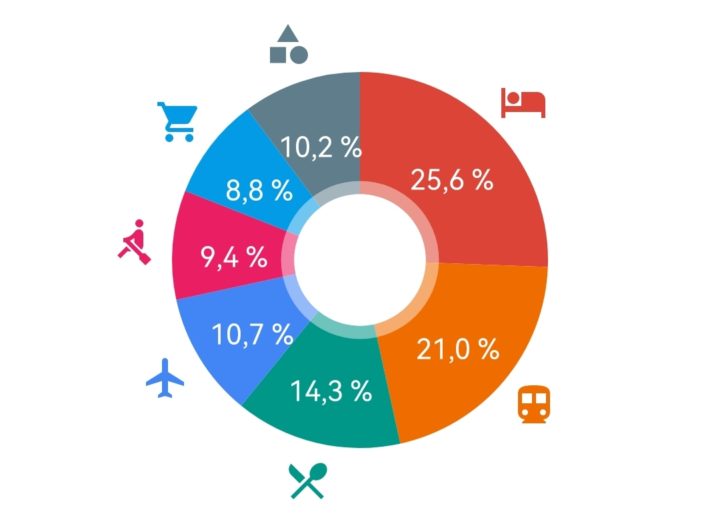
    We travelled for 14 months and gathered all the prices thanks to TravelSpend application: Here is the detail of how much did we pay the planes, accommodations, activities, transportations, food… You will know all about what you should expect to spend on a World Trip!
    (more…)
  • Budget to travel to Mexico

    Budget to travel to Mexico

    After 2 months in Colombia, we arrived in Cancun and visited Yucatan’s Peninsula and crossed the country from Chiapas to Guadalajara, from June 19th to August 9th.


    Note: We are a couple travelling for 1 year and we’ve already spent half of our time and budget and time (20000€ total). The prices mentioned in this post are PER PERSON, except for the taxis and accommodation (usually private double rooms).

    Food

    Mexican food is quite the same everywhere, with the same products: corn, avocado, cheese and spicy stuff! A lunch in the market cost around 60$MX.

    Note: tips around 10%

    • Pizza: 170$MX a medium
    • Full breakfast: between 50 and 150$MX full
    • Burger: 125$MX
    • Ceviche: $MX

    Drinks

    • Water: 15/25$MX
    • Beer: 20$MX a 500ml can in supermarket, 20/30$MX a bottle in a bar
    • Juice: around 40$MX
    • Coffee: 30/50$MX

    Transportation

    Bus: See the details in the post One month in Mexico

    Colectivo: Private agencies offer transportation in mini bus, see the details in the dedicated post.

    Taxi:

    • You can use Uber in the main cities.
    • They also have secured taxi from the bus terminals to the center: 120$MX Mexico, 170$MX Guadalajara, 100$MX Puebla.
    • The taxi from Tuxtla airport to the center: 362$MX

    Metro: 5$MX a metro ticket in Mexico city

    Rent a car: The best way to visit the Yucatan peninsula.


    Accommodation

    CountryMinimumMaximumAverage
    Mexico250$MX1172$MX434$MX
    12€56€21€

    Activities

    For the entrances fee in the various ruins and museums we visited, please check the dedicated post.


    Extras

    • Phone: With Telcel you can have 3Go and a simcard for 200$MX
    • Laundry: between 10 and 30$MX per kg
    • Cigarets: around 50$MX a pack
    Monte Alban

    1 month in Mexico

    After 2 months in Colombia, we passed 9 days in Yucatan peninsula, and then 5 weeks to visit Chiapas, Oaxaca, Puebla, Mexico, the Pueblos Magicos of Querétaro, San Miguel de Allende, Guanajuato and finally Guadalajara (total 42 days).
    Hierve el agua

    What to do in Oaxaca

    After 2 months in Colombia, we passed 9 days in Yucatan peninsula and 7 days in Chiapas. Here is the detail of what we did in Oaxaca (4 nights in Oaxaca and 5 in Puerto Escondido).
    Cascades Roberto barrios

    What to do in Chiapas

    After 2 months in Colombia, we passed 9 days in Yucatan peninsula, and we have now 5 weeks left to visit Chiapas, Oaxaca, Mexico and Guadalajara regions.
    Izamal

    Yucatan peninsula by car

    Arriving from Cartagena after 2 months in Colombia, we rented a car in Cancun for a 9 days road trip through Yucatan, Campeche and Quintana Roo. Here is our itinerary, places to visit and expenses.

    DF

    Mexico DF in 3 days

    I arrived in the beginning of my trip in Yucatan to DF and took one day to visit Teotihuacan site. When I came back after one week playing Indiana Jones in the pyramids, I took a week-end to enjoy the city and celebrate the “Dia de los Muertos”.

    Click on the title of the post


    budget - mexico
    To follow those spendings we used TravelSpend App.
    Looking back…
    Yucatan and Puerto Escondido were quite expensive (it’s also holidays period). With the average of 21€ for a double room, Mexico is one of the highest country in term of accomodation’s price.
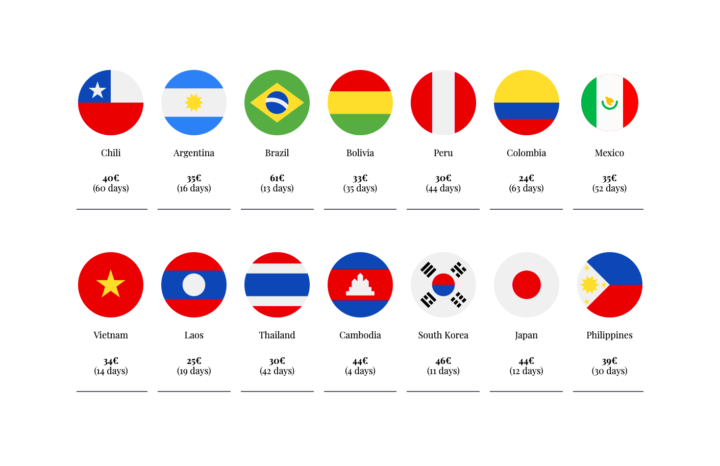
    We spent 43€ per day per person (third most expensive country of Latin America after Chile and Brazil where it was also holidays when we were there).
  • 1 month in Mexico

    1 month in Mexico

    After 2 months in Colombia, we passed 9 days in Yucatan peninsula, and then 5 weeks to visit Chiapas, Oaxaca, Puebla, Mexico, the Pueblos Magicos of Querétaro, San Miguel de Allende, Guanajuato and finally Guadalajara (total 42 days).


    Summary of our itinerary in Mexico

    9 first days: Yucatan Peninsula
    Day 10 flight Cancun => Tuxtla Guttierez
    Day 11 to 13: San Cristobal de las Casas
    Day 14: Villahermosa
    Day 15 – 16: Palenque
    Day 17: Bus Palenque to Oaxaca
    Day 18 to 21: Oaxaca
    Day 22 to 26: Puerto Escondido
    Day 27: Return to Oaxaca
    Day 28: Tehuacan
    Day 29 to 31: Puebla & Cholula
    Day 32 to 34: Mexico
    Day 35 – 36: Querétaro
    Day 37 – 38: San Miguel de Allende
    Day 39 – 41: Guanajuato
    Day 42 – 52: Guadalajara

    We arrived in Cancun and visited in 9 days the Yucatan’s Peninsula by car


    Chiapas

    Tuxtla and Canyon del Sumidero

    We took a an evening flight directly from Cancun (with VivaAirline 1500MX), slept in Tuxtla (Los Pinos hotel, 350$MX a double room) and went to Chiapa de Corzo in colectivo to visit Sumidero canyon. We paid 16 the colectivo + 465 the tour from Chiapa de Corzo. It left us directly to the terminal of Tuxtla to go to San Cristóbal.

    Note: Those same tours start in Tuxtla (9.30am to 6pm, 500$MX) with the combo 2h30 boat cruise and view points tour.

    San Cristóbal de las Casas

    2h from Tuxtla (60$MX by colectivo) this charming fresh city located in a valley (2200m high) is the oldest town of the region. Founded in 1528 it was part of Guatemala until 1824, before the annexion of Chiapas to the Republic of Mexico.

    We did a tour for tips (starting from the Wooden Cross place at 10am and 15pm).
    Good local restaurant: Pisca de Canela

    Villahermosa

    Villahermosa is not so lovely AT ALL. The only attraction point here is Parque Museo La Venta where you will find artifacts of the Olmec civilisation (700 to 400BC) moved here from La Venta in the state of Tabasco.

    Entrance to Parque la Venta: 53$MX
    Bus from San Cristobal: ADO 510$MX

    Palenque

    From Villahermosa we took and ADO to Palenque in the morning, famous for its ruins and nice waterfalls all around.

    After lunch we’ve visited Palenque ruins (colectivo 40$MX with return, entrance 85$MX per person). The museum only opens from Tuesday to Saturday.

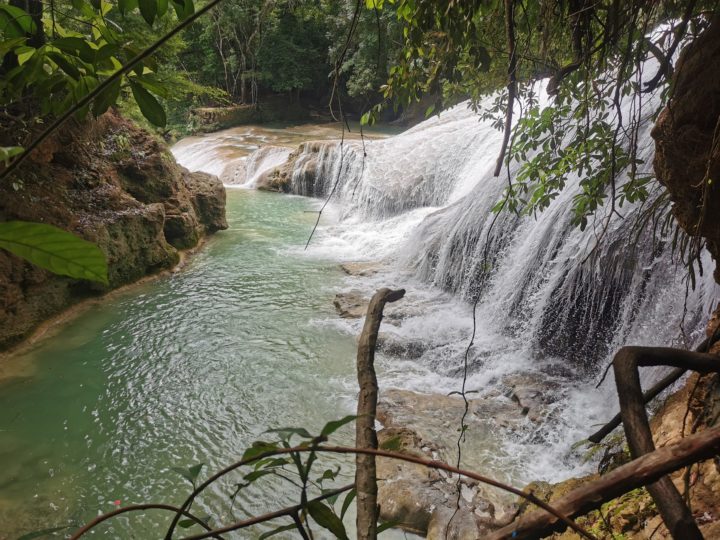
    Second day we took a colectivo to Roberto Barrios (nearby the market, 100$MX with return, 45min) and visited amazing waterfalls (entrance: 60 $MX).

    Buses:
    – Villahermosa <-> Palenque 100$MX around 2h
    – Villahermosa – Oaxaca around 1200 but we had a promo 650$MX nightbus 14h!
    Looking back:
    You can also come to Palenque directly from San Cristobal but there are still conflicts around Ocosingo so be careful.
    – We only visited the main site but you can also take a one (long) day tour for Bonampak and Yaxchilan (around 1300$MX).


    Oaxaca

    Oaxaca is the name of a region and a really nice city. We wanted to visited there the Museo de las Culturas but it’s closed Saturday Sunday and Monday… Instead we did a Tour for tips (starting at 11am in front of Hotel Marqués on the Zocalo) and discovered the best  “Chocolatin” in Boulenc restaurant. We stayed at Hostal Pueblo (300$Me per night for a double room and a rooftop). You have plenty of tours leaving every day around the town, but we preferred to do it alone (half day in Monte Alban and a full day at Hierve el agua).

    Oaxaca de Juarez & Monte Alban

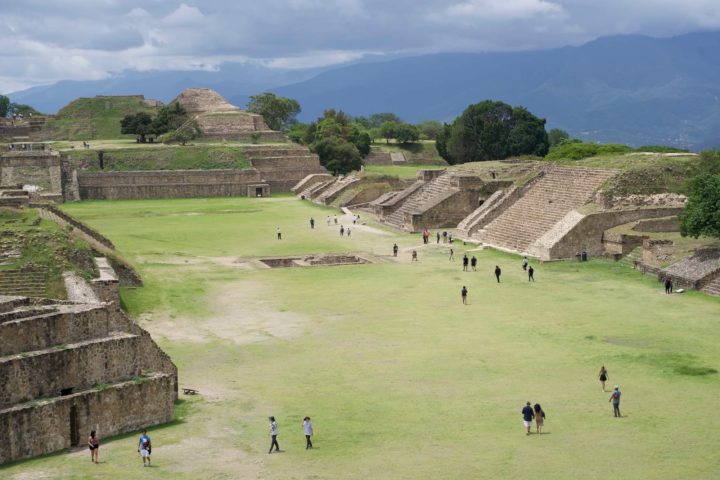
    Monte Alban is a very impressive archeological site with magnificent view on the city. Those ruins have been built from 500bc to 500ac.

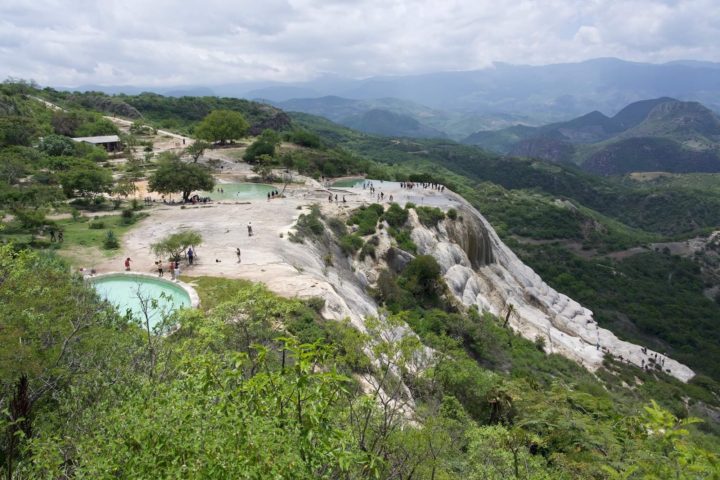
    Hierve el agua

    Nice petrified waterfalls in the middle of nowhere, with baths where you can swim.
    Note: We waited 2h for the colectivo to be filled in with enough people (12 total). We missed the visit of Mitla ruins because of that…

    Monte Alban:
    – Entrance: 85$Me
    – Bus: Leaving from Diaz Ordaz 407 – 90$Me with return
    Hierve el Agua:
    – Entrance: 50$Me + 15 for the road access
    – Bus: From Terminal de 2da clase to Mitla, 40$Me with return (around 1h) and a touristic colectivo 150$Me with return

    Puerto Escondido and Pacific Coast

    Transportation Oaxaca <-> Puerto Escondido:
    280$Me in colectivo Villa del Pacifico (7h40).
    Note: if you want to sleep, prefer ADO buses.
    Prices:
    – Hotel May Flower: 500$Me a private double room
    – Food: between 150 and 200$Me a ceviche, 100$Me a coctail, 35$Me a Corona, 160MX a burger

    As Mazunte and the beaches around had been reached by Agatha storm, we decided to choose Puerto Escondido, a very nice and enjoyable city by the sea. You have boat tours leaving every day at 7am for 500$Me a 3h discovery of dolfins, turtles and whales (depends on the season).

    We finally stood there 5 nights to take a break and visit the beaches around (be aware that there is a LOT the current and swim carefully):

    • Playa Principal: Water is not so clear than in the other places, even if it’s quite safe to swim there, but it’s a nice place to enjoy the end of the day.
      Direct access from the main avenue (Pérez Gazga).
    • Playa Zicatela: 3km of surfing beach, with a lot of restaurants with cheap beers (between 30 and 40$Me), it’s not recommended to swim here (and you shouldn’t).
      Access from Playa Principal or avenida Del Morro.
    • Playa Manzanillo and playa Angelita: Full of restaurants with deckchairs but also shadow to lay on the beach, the water is nice and beautiful.
      Access by stairs calle Quinta Sur.
    • Playa Carrizallilo: Full of restaurants and no shadow without them, it may be the perfect beach to start surf lessons but a bit hard to swim there.
      Access by stairs calle Focas.
    • Playa Coral: with only one restaurant in a complex with swimming pool, this one was the most quiet beach, still with strong waves but good for swimming.
      Access by shitty but nice walk from the Mirador Las Tortugas or 20$Me by the Hotel Posada Real Puerto Escondido.

    Puebla’s region

    Tehuacán

    After those quiet days on the Pacific coast, we went back to Oaxaca just for a night (after a 9h colectivo) and made a stop in Tehuacán.
    The city center is nice but nothing crazy, only the Zocalo and terrasses look nice. But we were there to visit a very nice archeological site: Tehuacan piramids.

    Colectivo Oaxaca – Tehuacan: 200$MX
    Hotel Tehuacan: La Casa Colibri (350$MX small studio)
    Taxi to the ruins: 180$MX
    Entrance to the pyramids: 70$MX

    Puebla city

    With it’s beautiful historical center, this city might be in my top 3 of Mexico! Nice churches (with the amazing Capilla del Rosario), the bohemian streets and handcraft market of El Sapo, one of the oldest theater of Latin America, Palafoxiana library… there is a lot to see here! We visited the Museo Amparo with its precolonial artefacts, and Museo de las Muñecas, colection of scientific tools and a weird reduced head of a momified woman.

    To go there: From Tehuacán, Reforma Norte 118 take a Colectivo to Puebla Terminal (2h, 100$MX)
    Taxi: we paid 100$MX from the terminal to the center, 56$MX to go back there with Uber
    To sleep: Hostel Vee Yuu, 350$MX a double room

    Cholula

    This small town owns the biggest pyramid of the World! Larger than Guizeh, it has been evaluated at 4.45 millions of m3. You sadly won’t see a lot, as it had been entirely covered. The Spanish built a beautiful yellow church on the top of the hill, destroying the temple for its stones.

    From Puebla to Cholula: You have a bus around Puebla’s market leaving you on the main road of Cholula, few blocks from the city center (30min – 10$MX)

    Mexico city: See the dedicated post


    From Mexico city to Guadalajara

    On our way to Guadalajara (where we have our flight to Vietnam), we took one week to visit the beautiful colonial cities classified as “Pueblos Magicos” full of history and nice architectures.

    Querétaro

    1h30 from the Terminal Norte of Mexico city, you have this very cute village full of nice churches, places and green spaces. You have plenty of houses and museums:

    • Casa de la Zacatecana where a woman made her husband killed, and killed herself the murderer and burried both of them in the house which is now haunted
    • Museo Regional in a XVIs century franciscan monastery
    • Casa de la Corregidora, now used as Palacio del Gobierno, where the wife of the governor informed the resistance of the arrival of the troops
    • Other tematic museum like MUCAL, Calendar museum, or Museo de Arte
    From Mexico City: 286$MX Primera Bus Terminal norte (1h30). Then from Querétaro Terminal you can take a bus to the Alameda, the main avenue few blocks from the city center (11$MX).
    To stay: El Petate Hostel (500$MX a double room).

    San Miguel de Allende

    Very historical and cute city, with a pink cathedral and a lot of churches, a Mirador (point of view), great market and great (but expensive) rooftops.

    We visited the Museo Historico de San Miguel, Casa natal de Ignacio Allende where we learnt all about the city and the revolution (65$MX).

    We stood there 2 nights but if you have more time you can also visit a nice Botanic Garden el Charco del Ingenío, 5km from the center and Atotonilco, a nice village nearby.

    To go there: ETN or Primera Bus from Queretaro terminal (1h30, 96$MX), then you have a purple city bus just in front of the station (8$MX).
    To stay: Hostal Catarina (615$MX a double room).

    Guanajuato

    Maybe the most original city we ever been: built between hills, the streets look like a labyrinth, with underground galeries and charming architecture everywhere! Silver and golden mines made this city famous, as 2/3 of the metal were extracted from here.

    The monument of Pipila offers you a nice view of the city. The huge statue represent Juan Jose de los Reyes, famous for burning the Alhondiga de Granaditas where Spanish were hidden. You also have a nice legend about Callejon del Beso (I will let you discover it), Hidalgo market, the University, Don Quijote museum or Teatro Juarez… So many beautiful stuff!

    We walked 4km to the Valenciana mine (you also have buses going there) which wasn’t so interesting as you only see one galery… At least we have learned the importance of the region and saw the church decorated with the gold coming from the mine… You also have el Museo de las Momias, too creepy for us!

    Every night you have a great tradition: Las Callejoneadas, where Mariachis play their music in the streets, telling the stories and legends of the city with huge groups following them! A must do (see the video).

    To go there: ETN or Primera bus (180$MX, 1h30) then from the terminal you have buses going to the very center (6$MX).
    Hotel: Casona del Truco (476$MX a double room).

    Guadalajara

    Last step of our journey in Mexico, but also on this continent, we stayed in Guadalajara to take a good rest before going to Vietnam. We found a very nice accomodation close to Chapultepec avenue (great area for the nightlife).

    We sadly chose the only rainy day to visit the city center. We discovered the huge Orozco’s murals in the Palacio del Gobierno (400m2 of painting) and went to the Regional Museum. The Degollado theater was closed and with the rain we decided to pass the visit of Instituto cultural Cabañas with its 23 patios, and the Mercado Libertad with its 3 floors…

    Accomodation: La Paz & Love hostal, 354$MX a double room
    Taxi from the bus terminal: 170$MX
    Bus to go to the center: 10$MX from Chapultepec
    Museums: Palacio del Gobierno was FREE and the Regional museum 85$MX

  • What to do in Oaxaca

    What to do in Oaxaca

    After months in Colombia, we passed 9 days in Yucatan peninsula and 7 days in Chiapas. Here is the detail of what we did in Oaxaca (4 nights in Oaxaca and 5 in Puerto Escondido).


    Oaxaca is the name of a region and a really nice city. We wanted to visited there the Museo de las Culturas but it’s closed Saturday, Sunday and Monday… Same for Yagul ruins (1h from Oaxaca) opened only Sunday to Wednesday.

    Instead we did a Tour for tips of Oaxaca (starting at 11am in front of Hotel Marqués on the Zocalo) and discovered the best “Chocolatin” in Boulenc restaurant.

    We stayed at Hostal Pueblo (300$Me per night for a double room and a rooftop).

    You have plenty of tours leaving every day around the town, but we preferred to do it alone (need half day in Monte Alban and a full day at Hierve el agua).

    Oaxaca de Juarez & Monte Alban

    Monte Alban is a very impressive archeological site with magnificent view on the city. Those ruins have been built from 500bc to 500ac.

    Hierve el agua

    Nice petrified waterfalls in the middle of nowhere, with baths where you can swim.
    Note: We waited 2h for the colectivo to be filled in with enough people (12 total). We missed the visit of Mitla ruins because of that…

    Monte Alban:
    Entrance: 85$Me
    Bus: Leaving from Diaz Ordaz 407 – 90$Me with return
    Hierve el Agua:
    Entrance: 50$Me + 15 for the road access
    Bus: From Terminal de 2da clase to Mitla, 40$Me with return (around 1h) and a touristic colectivo 150$Me with return

    Puerto Escondido and Pacific Coast

    Transportation Oaxaca <-> Puerto Escondido:
    280$Me in colectivo Villa del Pacifico (7h40).
    Note: if you want to sleep, prefer ADO buses.
    Prices:
    – Hotel May Flower: 500$Me a private double room
    – Food: between 150 and 200$Me a ceviche, 100$Me a coctail, 35$Me a Corona, 160MX a burger

    As Mazunte and the beaches around have been reached by Agatha storm, we decided to choose Puerto Escondido, a very nice and enjoyable city by the sea. You have boat tours leaving every day at 7am for 500$Me a 3h discovery of dolfins, turtles and whales (depends on the season).

    We finally stood there 5 nights to take a break and visit the beaches around (be aware that there is a LOT the current and swim carefully):

    • Playa Principal: Water is not so clear than in the other places, even if it’s quite safe to swim there, but it’s a nice place to enjoy the end of the day.
      Direct access from the main avenue (Pérez Gazga).
    • Playa Zicatela: 3km of surfing beach, with a lot of restaurants with cheap beers (between 30 and 40$Me), it’s not recommended to swim here (and you shouldn’t).
      Access from Playa Principal or avenida Del Morro.
    • Playa Manzanillo and playa Angelita: Full of restaurants with deckchairs but also shadow to lay on the beach, the water is nice and beautiful.
      Access by stairs calle Quinta Sur.
    • Playa Carrizallilo: Full of restaurants and no shadow without them, it may be the perfect beach to start surf lessons but a bit hard to swim there.
      Access by stairs calle Focas.
    • Playa Coral: with only one restaurant in a complex with swimming pool, this one was the most quiet beach, still with strong waves but good for swimming.
      Access by shitty but nice walk from the Mirador Las Tortugas or 20$Me by the Hotel Posada Real Puerto Escondido.
  • What to do in Chiapas

    What to do in Chiapas

    After 2 months in Colombia, we passed 9 days in Yucatan peninsula, and we have now 5 weeks left to visit Chiapas, Oaxaca, Mexico and Guadalajara regions. Here is the detail of what we did in Chiapas as we are currently travelling in Oaxaca:


    Chiapas

    Tuxtla and Canyon del Sumidero

    We took a an evening flight directly from Cancun (with VivaArline 1500MX), slept in Tuxtla (Los Pinos hotel, 350$MX a double room) and went to Chiapa de Corzo in colectivo to start the tour in the Sumidero canyon. For the same price you have tours starting in Tuxtla at 9.30am to 6pm for 500$MX with the combo 2h30 boat cruise and view points tour (instead we paid 16 the colectivo + 465 the tour from Chiapa de Corzo). It left us directly to the terminal of Tuxtla for San Cristóbal.

    San Cristóbal de las Casas

    2h from Tuxtla (60$MX by colectivo) this charming fresh city located in a valley (2200m high) is the oldest town of the region. Founded in 1528 it was part of Guatemala until 1824, before the annexion of Chiapas to the Republic of Mexico.

    We did a tour for tips (starting from the Wooden Cross place at 10am and 15pm).
    Good local restaurant: Pisca de Canela

    Villahermosa

    Villahermosa is not so lovely AT ALL. The only attraction point here is Parque Museo La Venta where you will find artifacts of the Olmec civilisation (700 to 400BC) moved here from La Venta in the state of Tabasco.

    You will pay 53$MX the entrance of the archeological parc + a zoo.

    Palenque

    From Villahermosa we took and ADO to Palenque in the morning, famous for its ruins and nice waterfalls all around.

    After lunch we’ve visited Palenque ruins (colectivo 40$MX with return, entrance 85$MX per person). The museum only opens from Tuesday to Saturday.

    Second day we took a colectivo to Roberto Barrios (nearby the market, 100$MX with return, 45min) and visited amazing waterfalls (entrance: 60 $MX).

    Buses:
    – Villahermosa – Palenque 100$MX around 2h
    – Villahermosa – Oaxaca around 1200 but we had a promo 650$MX nightbus 14h!
    Looking back:
    You can also come to Palenque directly from San Cristobal but there are still conflicts around Ocosingo so be careful.
    – We only visited the main site but you can also take a one (long) day tour for Bonampak and Yaxchilan (around 1300$MX).


  • Yucatan peninsula by car

    Yucatan peninsula by car

    Arriving from Cartagena after 2 months in Colombia, we rented a car in Cancun for a 9 days road trip through Yucatan, Campeche and Quintana Roo. Here is our itinerary, places to visit and expenses.

    (more…)
  • Budget to travel to Colombia

    Budget to travel to Colombia

    We passed 2 months in Colombia, travelling from the ecuadorian border to the caribeen coast, from April 17th to June 19th.


    Note: We are a couple travelling for 1 year and we’ve already spent half of our time and budget and time (20000€ total). The prices mentioned in this post are PER PERSON, except for the taxis and accommodation (usually private double rooms).

    Food

    We’ve found meals for 15 soles (starter/main course/drink included).

    • Pizza: between 20 and 35K
    • Full breakfast: between 5K and 10K per person

    Drinks

    • Water: Around 3K
    • Beer: Between 6 and 8K
    • Juice: 8K
    • Coffee: between 1000 and 3000

    Transportation

    Bus

    • Pastos – Popayan 50K, to San Augustin 30K, Bogota to Medellin 87K, Medellin – Guatape 17K… For the rest please read the dedicated post.
    • City bus:
      – In Bogota they have a special bus way through the city (2800 one way and you need to pass with somebody),
      – In Cartagena called TransCaribe will transport you from the airport to the city center, and from the city center to the bus terminal only for 2700pesos (ask again to somebody to use their card).

    Colectivo:

    The best experience we had is to take the Escolera bus from Jerico to Andes (15K)

    Taxi:

    Do not hesitate to use Uber, or even better Cabify in the main cities as Bogota and Medellin. The drive is about 20K.

    Tramway/Funicular: in Medellin you need to buy 6K a card and each way is 3K (one way works for the tram + the funicular).


    Accommodation

    CountryMinimumMaximumAverage
    Colombia30K95K55K
    7€22€12€60

    Activities

    We paid the entrance of San Augustin archeological parc 25K, el Purital 7K, National museum of Bogota 4K, golden museum 2K, and the most expensive was Tayrona 67,5K. For the rest please read the dedicated post.


    Extras

    • Phone: With Claro there was an offer for 20 soles 4Gb with Facebook and WhatsApp unlimited for 30 days (we used a chip a traveler gave us in Bolivia)
    • Laundry: around 5s per kg
    • Cigarets: 5soles a pack, 27soles 10packs (they call it “brazo”)
    • Guarda Maleta: 3800 for 24h
    Tayrona

    How to visit Tayrona

    We founded hard to find information about Tayrona and how to visit the parc, where to start, what to visit, where to stay…

    ayahuasca ceremony

    Ayahuasca Ceremony in Colombia

    Ayahuasca has became a huge touristic stuff in Latin America. I was surprised to see offers in the streets of Cusco, among the other tours in the Sacred Valley… It was hard to find the authentic experience I was looking for, but in Colombia I found the perfect place and occasion. Here is what happened, my recommendations and advices to have a great Ayahuasca experience:

    Click on the title of the post


    To follow those spendings we used TravelSpend App.
    Looking back…
    Colombian budget was the cheapest in South America, thanks to the 18 days we spent without paying the accomodation (in Rincón we stayed 15 days for free in an hostel in exchange of a website, and we’ve been invited in Villa de Leyva by a very nice couple – THANKS again Valerie and Romi) we spent a total of 25€ per person per day.

  • How to visit Tayrona

    How to visit Tayrona

    We founded hard to find information about Tayrona and how to visit the parc, where to start, what to visit, where to stay… So here is what we did and tips for you traveller: How to go to Tayrona? What to bring and how much money do I need? Where to sleep? What itinerary to visit Tayrona main part? What we did.


    Let me first tell you that this place is a real paradise and a must do if you go to Colombia! Blue transparent and warm water, huge jungle full of monkeys, white sand beaches and lot of postcard landscapes! I only share here our experience, we didn’t visit Palangana area (Cinto, Playa Cristal…).

    How to go to Tayrona?

    Option 1: By bus & minimum 2h walk

    The cheapest way to go to Tayrona parc entrances is the bus: one of the various you have between Santa Marta and Buritaca, Palomino or Riohacha. You ask to the driver to leave you at Calabazo (30min from Santa Marta) or el Zaino, the easiest part for trekking (it’s the main one: 45min from Santa Marta).
    In Santa Marta we took it at the bus terminal (15000cop each) but we heard they also leave in front of the market (heard 8000cop).

    Option 2: By boat

    Second option for those who don’t want to walk is to take a boat from Santa Marta or Taganga. It cost around 150000cop round trip and leaves you at Cabo San Juan.

    Tips: Before arriving be sure to be at the gate in the morning (you can only enter until 11AM at Calabazo or 12PM at Zaino).
    > Check the timetable on their official website

    What to bring in Tayrona?

    Think of the weight of your bad and bring the minimum.

    • Water (in Cabo San Juan they refill your 1L bottle for 6000cop and sell a 600ml bottle 4000cop, on Playa Brava 1L cost 7000cop).
    • Cash (see bellow).
    • Suncream + anti Mosquito.
    • Towel, soap and toilet paper.
    • A pyjama for the night.
    • A locker.

    How much money do I need in Tayrona?

    ONLY CASH / SOLO EFECTIVO: No bank there, neither card machine, so you need to calculate your budget, knowing that:

    • Bus in the parc: 5000cop one way
    • Entrance: 57500cop (low season) – only thing you can pay by card
    • Insurance: 5000cop/day (this insurance is obligatory. You can buy it at the entrances and extend it in Cabo San Juan)
    • Coffee: 2000cop, beer 6000cop, juice 8000cop
    • Meal: 35000/40000cop
    • Bakeries: 6000cop sweet one, 10000cop salty one (on Playa Piscina: cheap but really good)

    Where to sleep in Tayrona parc?

    You will have the choice between 3 areas and 3 kind of night: Hamak, tent or cabana. We testify only what camp we’ve seen (maybe we missed some of them).

    Note: If you bring your own tent you “only” pay 30000cop.

    Arrecifes:

    – Several camps in the wood (Don Pedro, Bermudez / Jorge Andres): Hamak 30000cop, tent 80000cop
    – Breakfast 10000cop
    – Ecolui: 120000cop for a cabana

    Good: you stay far from the croud and it’s cheaper
    Bad: no shadow on this beach and you cannot swim here, the closest is Arenilla (20min from here)
    and you have no view on the sea

    Cabo San Juan:

    – Only one camp (40000cop hamak with locker, 120000 tent)
    – Restaurant: 20000cop breakfast, 6000cop 2 coffees and a small oreo pack, 40000cop a meal, 85000cop a bottle of wine, 6000cop a beer, 8000cop a natural juice.

    Good: Central area where you can swim, 20min from la Piscina, 10min from playa Nudista and 20min from Cabo del Saco
    Bad: A lot of tourists

    Playa Brava:

    – Only one camp (40000cop hamak, 250000cop a lodge)
    – Restaurant: 20000 breakfast, 35000cop a meal, 7000 1L of water.

    Good: It was to me the most magical place of this parc (shadow, palm trees, grass…)
    Bad: Big walk to go there, and lot of wind (choose the hamak on your left when you arrive
    )

    What itinerary to visit Tayrona parc?

    The lazy way: walk the minimum! (yellow line)

    > Take the boat to San Cabo and walk to La Piscina, playa nudista, Boca del Saco (all easy between 10 and 20min flat walks).
    > You can do it in a day or choose to take more time and sleep at Cabo San Juan.


    The easy way: walk 2h on a flat way (orange line)

    > From el Zaina take the mini bus (5000cop to save 5km).
    > Then walk to Cabo San Juan passing playa Arenilla (2h15 walk), La Piscina (5min).
    End to Cabo San Juan where you can sleep or enjoy and go back the same nice way.


    The medium: climb 300m during 3km and go down (red line)

    > Come to Cabo San Juan by boat
    > Walk until Playa Brava (2h/2h30)
    > You can have lunch there and go back passing by Boca del Cabo, Playa Nudista and Cabo San Juan.
    You can go back the same day or choose to sleep on Playa Brava.


    The hard one: cross the full parc (purple line)

    > Start with the easy way
    > Go to Playa Brava!
    > It’s 3h from the Calabazo entrance.
    > 2h30 from Cabo San Juan passing mountains in the humid jungle.

    Where to swim in Tayrona Parc?
    There are only few beaches where you can swim: la Piscinita (until 4pm), Arenilla, la Piscina and Cabo San Juan (until 5pm). Stay with water maximum on your knees on the others beaches!

    What we did: the hard way!

    Note: we haven’t seen la piscinita, I guess it was one of the beach closed.

    • FIRST DAY: we arrived from Bucaramanga after a night in the bus… So we didn’t have a lot of force and left one of our backpack in the bus Terminal’s « Guarda equipaje » (luggage storage) and took a bus to Zaino entrance.

      Here we paid the entrance and the insurance and took a mini bus to Castilletes area (parquadero).
      From there we walked to Arenilla beach where we had lunch and kept going Cabo San Juan.

      We went to playa nudista, had diner and slept in cabo San Juan.
    • SECOND DAY: we went back to La Piscina early morning and left at 10am (check out time) to playa Brava.

      The walk was hard but after 2h30 we arrived at the paradise: Teyumakke camp. Palm trees, green grass and the beautiful Playa Brava.

      This area is private and for only the people who stay in the camp, but if you don’t want to sleep here you have a public beach nearby and an access to a waterfall (20min walk).
    • THIRD DAY: we had the most difficult walk to go to Calabazo and exit the parc (see bellow).

    Easy part: Walk between Cabo San Juan and La Piscina beach

    On the left Cabo San Juan, on the right la Piscina

    Note: I didn’t register our walk between Parquadero and La Piscina: 4km, 2h30.


    The second day: Cabo San Juan to Playa Brava

    On the right Cabo San Juan, on the left Playa Brava

    The third day: Playa Brava to Calabazo

    Upper part: Playa Brava

    Our best moments

  • Ayahuasca Ceremony in Colombia

    Ayahuasca Ceremony in Colombia

    Ayahuasca has became a huge touristic stuff in Latin America. I was surprised to see offers in the streets of Cusco, among the other tours in the Sacred Valley… It was hard to find the authentic experience I was looking for, but in Colombia I found the perfect place and occasion. Here is what happened, my recommendations and advices to have a great Ayahuasca experience:


    Ayahuasca or Yage, what is it?

    Ayahuasca or Yage (in Colombia) is a traditional ceremony of indigenous people. They call it  “Medicina”. It’s not allowed around the World but it’s still used in Amazonia mainly. It’s held by a Shaman, or a Taita, considered almost as a doctor. He uses a mix of 2 plants, chacruna and ayahuasca, one containing DMT (which can make you have some hallucinations), to prepare a brew not really tasty but really not so bad (it tasted like earth).

    My personal experience

    Well I had 2 ceremonies in Colombia: First in San Augustin and second near Minca.

    The first one is really recommended, I did it with an old shaman, his wife and his friend. He doesn’t do that for tourisism, but his ceremonies are opened to everyone. His name is Chito, he will send you a taxi to pick you up at your hotel (you can give tips to the driver but it’s up to you) and the ceremony only costs 80000pesos.

    The strange thing is that he won’t explain you anything, because he thinks the plant is here to help you, so I better explain the process because we didn’t understand why we passed 2h waiting for others to come, smoking tabacco without talking…

    Before starting

    We (my boyfriend and I) arrived around 8pm and sat around a fire in silence until 10pm, the start of the ceremony (I guess it’s a kind of meditation time). Sometimes local people come to join, but this time it was just us, Chito, his assistant and his wife. Then the shaman will dress up and prepare the room with smoke, singing and blessing the beverage.

    He will invite you to drink and then everybody will lay down in a “hamaka” or mat on the ground (up to you, just be confortable because you will pass the whole night here). They’ll switch off the lights for the rest of the night, because as they say « it needs to be dark for you to see the light ». You only have the fire but I advise you to stay on your bed/hammock. Also my advice: bring a cover or a sleeping bag and if you can a pillow.

    Then I cannot explain you what you will see and feel as it’s totally personal. You may want to vomit because it’s a plant that physically do that, but it’s really a detail of the night, try not to think about it. It shows that it makes effect, and it’s a good way to clean your body.

    Prepare yourself

    By the way it’s better to start a vegetarian diet days or weeks before the ceremony, with no alcool, no sex, no drug (even weed) no coffee or tea or even spices: more your body is clean, better will be the effect. I’m not vegetarian but somebody told me  « I wouldn’t experience a spiritual ceremony with dead animal in my body » indeed… Prefer seeds (like almonds, nuts, non salty peanuts), fruits and vegetable the market of San Augustin is full of. Try to eat less sugar and fat food. Last detail: the day of the ceremony you need to stop eating 8h before the start.

    The Shaman will talk to you during the ceremony, asking if you’re ok, and he might offer you a second round which is optional, up to you. He will sing few times to help to raise the effect before stopping again, leaving the place in silence.

    When does it starts?

    You shall feel something 45min after the first round. I personally vomited 1h30 after taking it, and I passed a night between dream and conscience. I took an other drink at 2am. Around 7am we all walked up and talked about the experience. They only speak spanish by the way. It was an authentic experience I totally recommend.

    Not all are good…

    The second time it was more touristic for me. The conditions weren’t the same, it was more organized but less intense (the beverage was in shots, instead of a big cup the fist time). There was a child sleeping with us, dogs… Weird! Also they charged us 180000pesos.

    The most important: the contact of Chito (tell him Jennifer, La pelirroja and Julien from France send you). He only has sms but you can ask any hotel to contact him if you can’t. We were staying at Bambu hotel and they coordinated everything (again he doesn’t speak English).
    Chito: +57 314 4005421

    Have a good fun and if you have other question don’t hesitate to post a comment or contact me on Facebook!

    My personal conclusion

    To take Ayahuasca is hoping a lot of stuff… To have hallucinations, to be high, to reveal something inside of you, to see other Worlds… I cannot tell – and nobody can – tell you for sure what you will experience. The Shaman says the plant knows what is good for you, and if you react by crying, dancing or screaming it’s because you need to.

    Don’t worry for the vomit or the transit you could have (I’ve been 3 times in the toilet, my boyfriend didn’t), it’s only a part of the ceremony for your body to reject any toxin it may have.

    Even if I didn’t experience any transcendance, neither saw my animal totem or see my past or my future, I passed a very intense night thinking about thousands of things, hoping not to forget. But it all disapeared like a dream, leaving only good feeling. Again it’s very personal and I hope I could have help you with this post to prepare yourself about what to expect in an Ayahuasca ceremony.

  • Average prices in Latin America

    Average prices in Latin America

    When you travel you never know what to expect in term of price. As a tourist it’s always touchy as you have no idea if the price proposed is too expensive or not. Here I wanted to share with you our spendings, what you should pay for a meal, a night, and the activities like tours and so on…


    (more…)
  • Budget to travel to Peru

    Budget to travel to Peru

    We traveled to Peru during 6 weeks, from March 3rd to April 15th. We’ve spent most of our budget visiting the historic places and enjoying tours in Huaraz.


    Note: We are a couple travelling for 1 year and we’ve already spent half of our time and budget and time (20000€ total). The prices mentioned in this post are PER PERSON, except for the taxis and accommodation (usually private double rooms).

    Food

    We’ve found meals for 15 soles (starter/main course/drink included).

    • Bread: between 1 and 2 soles for 6 pieces
    • Empanadas:0,5 sol
    • Market: 16soles for 100g almonds+100g peanuts+100g nuts+50g cranberries, 1 banana 0,5sol
    • Full breakfast: around 15soles per person

    Drinks

    • Water: Around 3soles 2,5l
    • Beer: 10soles 65cl
    • Juice: 6soles
    • Cocktails: Around 15s for a Pisco Sour or Chilcano, the cheapest found was a jar at 25s!

    Transportation

    Bus

    • 30 soles Puno-Cusco, 80 to Arequipa, 50 to Nasca, 10 to Pisco, 25 to Lima, 25 to Barranca, 56s to Huaraz, 62 nightbus to Trujillo, 105 to Mancora and 31 Tumbes to Machala (Ecuador).
    • City bus to Chan Chan 2 and Trujillo 2,5s.

    Colectivo:

    • Huge red of mini vans which leaves you everywhere! We used them a lot around Cusco to visit the sacred valley (see the detail of each trip in the dedicated post).
    • Carreful in Huaraz: to go to Churup laguna we paid 10s per way per person (they can offer you more telling you they will wait for you, but they always do)
    • We paid 20 Mancora-Tumbes to go to the border and keep going to Ecuador.

    Taxi:

    From the border with Bolivia to Kasani 6s, from Huacachina to Ica 10s, from Paracas to Pisco terminal 16s
    In Lima Uber works very well and is much cheaper than a cab

    Train: We used Perurail to go to the Machu Picchu: see the dedicated post.


    Accommodation

    CountryMinimumMaximumAverage
    Peru25s101s42s
    6€25€10€

    Activities

    Check the detail on dedicated posts:


    Extras

    • Phone: With Claro there was an offer for 20 soles 4Gb with Facebook and WhatsApp unlimited for 30 days (we used a chip a traveler gave us in Bolivia)
    • Laundry: around 5s per kg
    • Cigarets: 5soles a pack, 27soles 10packs (they call it “brazo”)
    • Peruvian hat: 10 soles
    Pisaq

    Itinerary in Peru

    We just passed more than one month in Peru, coming from Bolivia. Let me share with you the itinerary we followed, our feedback and tips.

    Laguna Paron

    Hikes around Huaraz

    Huaraz is known for the beautiful trekkings you can do. In only one day you can visit with tours the beautiful Laguna Parón, Laguna 69 and Chavín de Huántar, but also Laguna Churup all alone. Here are the details of each hike we did.

    pachacamac

    What to visit in Lima? Pyramids!

    Looking what to do in Lima, we often find the Miraflores district, plaza de Armas, cathedrals or parque del Amor… Beyond the classics, like the beautiful Museo Larco, I invite you to discover the Monumental Mateo Salado, el Parque de las leyendas, Huaca Huallamarca, Huaca Pucllana, and Pachacamac.

    sacred valley pisaq

    Cusco & the Sacred Valley by yourself

    As we had time we decided to visit by ourselves the main sites around Cusco, and more! With this solution you can see more parts of the sites, take your time and walk cross the lands and cities in total freedom!

    difference huchuy picchu and Wayna picchu

    How to visit Machu Picchu

    As we are just back from the Machu Picchu, I’m sharing with you all the tips, information how to get to Aguas Calientes, how to buy the entrance, what are the prices, the difference between Llaqta Picchu, Wayna, Huchuy and la Montaña… and where to get your Machu Picchu passeport stamp!

    Click on the title of the post


    To follow those spendings we used TravelSpend App.
    Looking back…
    Peru budget was close to Bolivian’s one, we spent a total of 24€50 per person per day.

  • Itinerary in Peru

    Itinerary in Peru

    We just passed more than one month in Peru, coming from Bolivia. Let me share with you the itinerary we followed, our feedback and tips.

    (more…)
  • Hikes around Huaraz

    Hikes around Huaraz

    Huaraz is known for the beautiful trekkings you can do. In only one day you can visit with tours the beautiful Laguna Parón, Laguna 69 and Chavín de Huántar, but also Laguna Churup all alone. Here are the details of each hike we did.

    (more…)
  • What to visit in Lima? Pyramids!

    What to visit in Lima? Pyramids!

    Looking what to do in Lima, we often find the Miraflores district, plaza de Armas, cathedrals or parque del Amor… Beyond the classics, like the beautiful Museo Larco, I invite you to discover the Monumental Mateo Salado, el Parque de las leyendas, Huaca Huallamarca, Huaca Pucllana, and Pachacamac.


    Museo Larco

    Before listing the archeological sites and pyramids you can visit in Lima, let’s start with the Larco Museum, a good prerequisite to understand peruvian history!

    Founded in 1926, this national museum hosts the collection of the peruvian archeologist Rafael Larco Hoyle. You will find there 45.000 artefacts of the whole Peru culture and an amazing storage, opened to public. You will learn that the Incas are only part of the last chapter and that you are here in Peru, in one of the cradle of civilization!

    Surprising things:

    • Heads of animal and people (like in the underground temple of Tiahuanacu – Bolivia)
    • A representation of Africans with black hands
    • Guy wearing barb when people there didn’t have any
    • Wheels have never been used there, but they had circular weapons
    • Gold crown looking like egyptian’s (see Nefertari representations)
    • Sex statues like Asian, Greeks did (and many others)

    I guess there is still A LOT to learn about the human history!

    How to visit the Larco Museum: Open every day from 11am to 7pm (S/35) located Simon Bolivar Avenue 1515

    Monumental Mateo Salado

    Photo: Lugaresturisticosperu.com

    Located nearby the Larco Museum and also known Huaca Mateo Salado, it’s the youngest site of the city.

    • Discovery: Abandoned until 2001 when it was declared “Patrimonio cultural de la Nacion”
    • Size: 16.4ha
    • Datation: Xe > XIXe centuries
    • Composition: 4 pyramids
    • Culture: Ychsma, Inca
    How to visit: Open Thursday, Friday and Saturday from 10am to 3pm (S/10) calle Palmeras cudra 5

    Complejo Archeologico Maranga

    Also known as Parque de las leyendas, we missed it when we were in Lima but it definitly looks great! On the same site you will find 4 huacas: Tres Palos, La Cruz, San Miguel and La Palma.

    • Discovery: first mentioned in 1873
    • Size: 150ha
    • Datation: 200BC > 1450AC
    • Composition: 53 monuments, mostly in Adobitos the tallest is 32m.
    • Culture: Lima, Yshma, Inca
    How to visit: Open everyday from 9am to 5pm (S/15) Avenida Parque de las leyendas 580
    Photo: Delima.com

    Huaca Huallamarca

    View from avenida El Rosario

    With a unique and very well preserved pyramid, it was a religious and administrative center, part of the Inca road Qhapaq Ñan.

    • Discovery: mentioned in 1873, starting to dig in 1942
    • Size: 85x67x20m
    • Datation: 200BC
    • Composition: pyramid with a 9m ramp
    • Culture: Huallas
    How to visit: Open Tuesday, Thursday, Saturday from 10am to 3pm (S/5) Avenida Nicolas de Ribera 201

    Huaca Pucllana

    Built with vertical adobe bricks, called “bookseller’s technique“.

    • Discovery: Excavated only in the 80s!
    • Size: 20ha (only 6 today)
    • Datation: 500AC
    • Composition: Adobitos
    • Culture: Lima, Huari
    How to visit: Open Monday, Wednesday, Friday,Saturday, Sunday from 9am to 4.15pm, you need to book online (S/15), calle General Borgono
    View from calle Sarrio

    Pachacamac

    Piramide con Rampa 1

    Considered the biggest coastal historic center, there is still A LOT of work to do here… The site is huge and only few buildings have been revealed.

    • Discovery: 1890s
    • Size: 600ha
    • Datation: IIIe > XIVe centuries
    • Composition: 16 pyramids, sun temple, hold temple, painted temple, inca temple, cementary
    • Culture: Lima, Wari, Yshma, Inca
    How to visit: Open Tuesday, Thursday, Saturday from 9m to 4pm (S/15), located outside Lima on Antigua Panamerica Sur. Better to book online but you can still go without reservation

    Map of the sites

  • Cusco & the Sacred Valley by yourself

    Cusco & the Sacred Valley by yourself

    As we had time we decided to visit by ourselves the main sites around Cusco, and more! With this solution you can see more parts of the sites, take your time and walk cross the lands and cities in total freedom!

    (more…)
  • Budget to travel to Bolivia

    Budget to travel to Bolivia

    We were there from January 27th to March 3rd. We went to Oruro carnaval where the accomodation price is tripled during this event (2 nights). Check the details of our itinerary.


    Note: We are a couple travelling for 1 year and we’ve already spent half of our time and budget and time (20000€ total fir the year). The prices mentioned in this post are PER PERSON, except for the taxis and accommodation (usually private double rooms).

    Food

    You can find lunch 12bs with soup and main course. For a fresh trout we paid 35bs.

    • Water: 6bs for 2l
    • Empanadas: 5bs
    • Market: 12bs a meal, 5bs a burger in the street
    • Humitas: 10bs for 2

    Drinks

    • Water: 6bs for 2l
    • Beer: 10bs 75cl
    • Juice: 7bs
    • Cocktails: Pisco sour 34bs

    Transportation

    Transports are really cheap:

    • Tuk-tuk: We paid between 5 and 10bs
    • Colectivo: Villazon-Tupiza 10bs, Potosi-Sucre 40bs, 35bs from Cochabamba to Torotoro, La Paz-Tihuanacu 20bs.
    • The bus: Tupiza-Uyuni 50bs, Uyuni-Potosi 30bs, Sucre Cochabamba night bus 40bs, Cochabamba-La Paz 40bs, La Paz-Rurrenabaque 70bs.
      Note: You need to pay a “uso de terminal” around 2,5bs every time.
    • Cablecar in La Paz: between 3bs and 8bs one way.

    Accommodation

    CountryMinimumMaximumAverage
    Bolivia72bs162bs108bs
    9€21€14€

    Activities

    Again, we’ve spent most of our budget in activities, mostly in Uyuni and Rurrenabaque.
    > See the details of all the activities’ cost in the Post “One month in Bolivia”.


    Extras

    • Phone: We paid a chip with 6Gb 10bs, and added recharges 2 times 10bs each.
    • Bathroom: usually 1bs, 2 in touristic places like Uyuni.
    • Laundry: between 4 and 6bs per kg.
    • Cigarets: 10/12bs a pack.
    La Paz

    One month in Bolivia

    We started in Tupiza, did a 3 days tour of Uyuni, enjoyed Potosi and Sucre, a tour in Torotoro, La Paz, passed almost 2 weeks in Rurrenabaque, lived the Carnaval of Oruro, visited the ruins of Tiwanaku and finished our trip on Titicaca lake before crossing the border in Kasani.

    Pampa del Yacuma

    Rurrenabaque, pampa & jungle

    What to do in Rurrenabaque, what is the difference between pampa and selva, how much is a tour, what you should expect, where to eat, how to get to Rurrenabaque from La Paz…

    Uyuni Salar

    Uyuni salar

    I couldn’t leave Chile before visiting this region in the border north of the country. So we booked a 3 days 4 nights tour with my chilean best friend and discovered real nature treasuries, like the region of the lakes, the geysers and warm water baths, inca’s hieroglyphs, canyons and volcanic formations, and cities lost in the desert… We Slept in a salt hotel before arriving to the main attraction: el Salar de Uyuni!

    From Titicaca to Cusco

    From Titicaca to Cuzco

    In 15 days I’ve made a trip from La Paz to Cuzco, passing through Copacabana, Isla del Sol, Valle Sagrado (sacred valley), Machu Pichu and her sister: Choquequirao! I’ve met great people on my journey, I will never forget this travel which really changed my life…

    Click on the title to see the post


    To follow those spendings we used TravelSpend App.
    Looking back…
    We spent a total of 33€ per person. We haven’t negociated the rooms (I guess we should have).
  • One month in Bolivia

    One month in Bolivia

    After 5 beautiful days in Salta (Argentina), we crossed the border from La Quiaca to Villazon and started our trip in Bolivia! We started in Tupiza, did a 3 days tour of Uyuni, enjoyed Potosi and Sucre, a tour in Torotoro, La Paz, passed almost 2 weeks in Rurrenabaque, lived the Carnaval of Oruro, visited the ruins of Tiwanaku and finished our trip on Titicaca lake before crossing the border in Kasani.


    From Salta we took a night bus (2300Ars) and arrived in La Quiaca. Not much to see there but we’ve been stuck one day because of the form we hadn’t fill in online (phones and wifi connections were cut that day).

    After crossing the border (see the details of the process) we took a “colectivo” to Tupiza (20bol, 3h).

    Tip: Change only the minimum of your money there (we only received 1/3 of the value of our ARS) .

    Tupiza

    In Tupiza we stood 2 nights: 1st day we took rest, walking only to get money, to eat and to get an Entel card (you need to register at the Multicentro – we paid 10bs for the chip and 6Go).

    Second day we climbed to Cerro de la Cruz (8bs tuktuk with return).

    You can also go to ride horses for 15€ for 3h, and you can start a 4d/3n tours to Uyuni for 5000bs for a group of 4 people (1250bs/pers). Instead we decided to go to Uyuni directly and take a cheaper tour from there (650bs 3d/2n). 

    To sleep: Hôtel La Torre (147bs, with great breakfast)
    To eat: Churrasqueria Moises, pizzeria The Alamo
    To go to Uyuni from Tupiza: We took a bus at 12am (50bs, 5h trip)

    Uyuni

    Day 1:

    We started with the train cimentery. You will see the first locomotive (English one) brought there in 1850 mainly to send the silver to Chile and Argentina.

    Then we headed to the salar where you can only drive at 15km/h when it’s flooded. Between January and March is the rainy season.

    Good thing is you will enjoy the biggest mirror of the World. Bad thing you cannot access at Incahuasi island during this period.

    After a quick stop to the hotel to leave the food, we went to the “Ojos del Salar” where gaz is escaping.

    Then we had lunch near to the Dakar monument and the flags island. We enjoyed a full afternoon in the salar, playing with the mirror effect and staying until the sunset, the most beautiful of our life!

    We slept at a nice Salt hostel called Hostal Dulce Salada

    Price of Uyuni Tour (3d/2n): 650bs/person
    Included: 2 nights, food and boots (only necessary when you have the mirror effect, as the water can be 20cm deep).
    Not included:
    – the entrance of Parque Eduardo Avaroa (150bs)
    – the toilets (between 2 and 5bs)
    – the hot shower (20bs)
    Contact of our guide: Edwin +59163683925

    Day 2:

    We left at 8am for a long road to Valle de las Piedras where we had lunch. Then we passed by the volcan Oyahue and lagunas Hediondas and Honda and finally the Siloli desert (with the Stone Tree).

    we arrived at the entrance of the Parque Eduardo Avaroa at 5pm (150bs the entrance) and visited the mirador of Laguna Colorada (best time is before 4pm to appreciate the colours).

    Day 3:

    We woke up early to leave at 5am to appreciate the smoke of the geisers. At 7am we enjoyed the hot water of Chalviri and had a great breakfast there. We crossed the Dali desert and headed to Laguna Blanca, Laguna Verde and Licancabur volcan. The tour finished there and we went back to Uyuni passing the beautiful Laguna Kara and Laguna Pastos Grandes. We were back around 6.30pm.

    To sleep in Uyuni: Hostal Nichkito (147bs double room with breakfast) 
    How to go to Potosi from Uyuni: We took a bus at 11.30am (30bs) around 4h trip. You have many more departures all day long from the « terminal » Calle Arce.

    > See the trip to Uyuni from San Pedro de Atacama in Chile


    Potosi

    From the bus station we went directly to our hostel: a nice colonial house near by the center (30min walk going up to the hill, I would recommend to take a cab instead).

    The Casco Viejo is really beautiful. Potosi was the center of the World in the XVIIcentury due to the Cerro Rico full of silver. It’s also the second highest city of the World (4070m)! You can visit the mine still in activity, and still using people in very bad conditions (we didn’t)…

    On the main place you have a statue of Liberty copy in bronze which was dressed only 4 years after the one of NYC to celebrate the century of the Bolivian independance.

    The day after we visited the Money museum (40bs) and the cathedral. You also have the Torre de la Compañía but it was closed at that time. 

    To sleep: Hospedaje Maria Victoria (140bs double room with breakfast)
    To eat: American Burger (22bs)

    Sucre

    Considered for a lot of people as the capital of the country, it was indeed the center of upper Peru. Called Chacras, and then la Plata, this city with its white buildings is one of the most beautiful in Bolivia (and Patrimony of Humanity). If you want to enjoy the market you can have lunch on the 3rd floor with good Sopa De Mani (5bs) and Chorizo (15bs). The cemetery also worth the visit.

    Casa de la libertad

    Known as the first historic monument of the country, it’s where has been signed the independency. The tour guide will teach you the history of the revolution, talking about Bolivar, Sucre but also Juana Azurduy (entrance: 15bs)

    Convento San Felipe

    Before used as a Catholic Church and convent, it’s now a college you can only visit it from 2pm to 6pm (ring the bell on Nicolas Ortiz Street to enter). You will visit the church, the roof and if you’re luck the crypt! (entrance: 17bs)

    Recoleta

    Nice walk with nice view on the city. Not much to visit but the view worth the climbing!

    Museo of etnology (musef)

    Free museum with a lot of research made around the local traditions to understand the diversity of the Bolivian people. It stood in an old classical bank and house of Francisco Algardonia.

    Cafe de la torre

    Nearby the main place, this old church tower is now a coffee. You can enjoy a good breakfast behind the bells with great view on the city!

    San Francisco church

    Old Franciscan church with a terrasse on the roof to enjoy a good coffee!


    Torotoro

    From Sucre we took a night bus to Cochabamba (we left at 9pm and arrived at 4.30am) then a taxi to the colectivo at 6.30am. We arrived at 10am and went to the parc office to buy our entrances (100bs each). Behind this office you have the guides who presented us the options (you can split the cost with a group):

    • Hellas de dinausorios (dino’s footsteps), the Vergel waterfall and the Gran Canyon. 160bs (60 for the transport and 100 the guide)
    • Stone cathedral and ciudad de itas with cave speleology. 600bs for the transport and guide, and you need to add 12bs for the equipment and 2.5bs for the cave entrance per person
    • Tortugas cimentery and siete vueltas: 320bs

    As we were only 2 we took the first option. Our guide told us the moto taxi was cheaper if needed!

    How to go to Torotoro: The only way is to take a colectivo (35bs, 3h trip) from Cochabamba (Avenida Vallegrande – 20bs from the bus terminal or 30min walking)

    La Paz

    Here is a list of the main sightseeing’s in La Paz:

    • El alto and the biggest market in Latino America every Thursday and Sunday (best is to take the yellow line to 16 de Julio to have the full view of the city)
    • Mirador Killi Killi
    • Cementary
    • Archeology museum (closed for CoVid reason)
    • Historic center with Plaza Murillo and street Jaén
    • Plaza mayor de San Francisco and behind it the witch market (Calle Linares and Santa Cruz)
    • Challuma Hill with it’s coloured houses (above the red line)

    In one day you can also go to visit the Valle de La Luna or the Death Valley by bike.

    Where to eat or take a drink:
    – El Bestiario (café teatro with various shows and great food)
    – Costilla de Adam (craziest decoration ever)
    – Cafe Typica (in a nice garden)
    – El Popular: Gastronomic for only 70bs the menu (only for lunch)
    – DT Brew house (real draft beers)

    > Map of the cable cars

    How to go to La Paz from Cochabamba: From the Terminal there are plenty buses leaving all day long. We paid 40bs per person with Flota Cosmos (around 7h trip)
    How to go to La Paz from Rurrenabaque: You only have night buses leaving around 7pm. Check more info about Rurrenabaque.
    How to go to La Paz from Oruro: 35bs bus from the terminal, with plenty buses leaving all day long!

    Rurrenabaque: see the dedicated post


    Carnaval of Oruro

    Oruro carnaval is one of the biggest celebration in Latin America, on Unesco List of the Intangible Cultural Heritage of Humanity.

    Accomodation during Oruro Carnival: Prices of the hotels are amazingly raising for this event, so we shared a room with an other couple (784bs per night for a room with 4 beds).

    Seats tickets for the Carnival: You need to pay if you want to be seated and enjoy the parade of the 50 folkloric groups. We heard prices of seats between 150bs and 500bs, and we paid ourselves 220bs for the two days (from 6am to 2am). You buy it directly where you want to be seated.

    Parade: The parade starts from Avenida Villaroel, follows Avenida 6 de Agosto, Calle Bolivar, Plaza 10 de Febrero and ends to the Santuario Socavon (with dancers and musicians on their knees in respect to the Virgin).

    The city hasn’t really big interest, appart from the Virgin Monument you can reach by teleferic (20bs per person one way). We also visited the cathedral and Sovacon museum which is an old mine with a small sanctuary to Tio God (14bs for 15min visit + 3bs if you wanna take photos). This visit also includes a second museum with old artefacts found in the region and the traditional masks used during the Carnaval (small but nice).

    How to go to Oruro from La Paz: A lot of buses are leaving from the city center terminal. We paid only 25bs to go, and 35bs to go back.

    Tiwanaku (Tiahuanacu) and Pumapunku ruins

    After this week-end of carnaval we went back to La Paz for a night and left for Tihuanaku by the morning. Those ruins are incredible and the guide told us a lot about the history and traditions of Tiwanaku tribe. You can visit there a site with 3 temples, a piramid, a cimentary and 2 museums: one about ceramics, the second about llama and the biggest statue found on the site and in South America (Bennett Monolyth, 7.2m).

    Entrance fee: 100bs for tourists.
    Guide (I recommend): 80bs for the main site, 130bs for the 2 sites and 2 museums (we only paid 100bs for the whole tour, sharing with a Bolivian family).
    To go to Tiahuanaku from La Paz:
    Colectivo from the Terminal de Transporte Interprovincial de El Alto (close to the teleferic Estación UPEA). Around 1h30 and between 15bs and 20bs (if you cannot find colectivos for Tiahuanacu you can take one to Desaguadero: They’ll leave you on the main road, 30min walking to the city center and the ruins).
    To go back to La Paz we only paid 8bs picking a colectivo on the main road.

    Copacabana and Isla del Sol

    From the Terminal de Transporte Interprovincial de El Alto we took a colectivo to Copacabana (20bs, 3h) right after coming back from Tihuanaku. We arrived by night and visited the city the day after.

    We climbed to the hill of Horca del Inca, the Inca rock (falsy baptized by the Spanish when they arrived: Pachataka means “place where time is measured“). You can see there an old observatory made with 3 stones, but also stones cutted to be send to Tiahuanacu (said by the gardian who requested 10bs to go there). It would be great to have a guide there to tell us a bit more about this unknown site… We also saw a beautiful sunset on Cerro Calvaro, second great mirador.

    Second day we took a boat to the North part of Isla del Sol, which just reopened in December 2021! We paid 50bs round trip and as the boat was late (he left at 10am instead of 9.30) we went directly to the ruins (usually the boat leaves you on Challapampa Beach where you walk 45min to arrive to the ruins). It gave us the time to visit quickly the ruins (in 20min) and to go to the south by walk (3h – 9km). You can also go back to the boat which wait until 2pm before going to Yumani (south).

    Warning: The floating islands are FAKE! The real ones are in Peru (Puno). The ones they have on Isla del Sol or nearby Copacabana are made with barils and wood! Worse: they made you fish the trout from a fishnest…

    See also « From Titicaca to Cuzco » (2017)


    Summary of our trip:
    Day 1: Villazon – Tupiza
    Day 2-3: Tupiza
    Day 4-5-6: Uyuni tour
    Day 7-8: Potosi
    Day 9-10: Sucre
    Day 11-12-13: Torotoro (Julien was sick so we took rest there but 2 days are enough)
    Day 14-15: La Paz
    Day 16 to 24: Rurrenabaque
    Day 25-26: Oruro
    Day 27: Ruins or Tihuanaku
    Day 28-29: Titicaca
    Some words in Queshua:
    Acuripuna = vamos
    Eminacachanki = como estas
    Eminaparanicun = como almarecieron
    Vicuricuna = hay que comer
    Misky = rico
    Pachi = gracias

    Crossing the border La Quiaca – Villazon

    You first need to validate all this documentation in the Bolivian desk before having your exit stamp from Argentinian desk.

    Then you will cross the border to the health center where they take your temperature and age, and finally you will be registered in an other desk (they will send you print the copy of your passport with the page of the Argentinian stamps).

    Here we had the surprise not having our passeport stamped: they gave us a paper instead saying you will have to register everytime you arrive in a new place on their website (codes are your passeport number).

    Crossing the border in Kasani to Peru

    We exchanged our last pesos bolivianos in Copacabana with a perfect exchange rate (700bs => 379soles). We took a colectivo for 3bs per person (leaving on Plaza Sucre) to Kasani to cross the border. On Bolivian side they checked our updates on the migration website, and on Peruvian side they requested our vaccines and made us fill a form before checking our vitals. It was very fast (30min total to cross). Let’s go to Peru!!!


  • Budget to travel to Argentina

    Budget to travel to Argentina

    We’ve spent a first week in Argentina from December 29th to January 6th, and went back to Salta from January 19th to January 27th where we rented a car (again I’ve split this spending in accommodation + transportation).


    Note: We are a couple travelling for 1 year and we’ve already spent half of our time and budget and time (20000€ total for the year). The prices mentioned in this post are PER PERSON, except for the taxis and accommodation (usually private double rooms).

    Prices are indicated in Euro as we were using the Blue rate (see the yellow post).

    Food

    Restaurants are kind of fency. We had a great breakfast in Mendoza for 6€ and a great bbq meal for 16€72 with meat and a bottle of wine to share.

    • Burger: 7€ in a restaurant
    • Full breakfast: 3€
    • Coctails: Ron coca 2€65

    Drinks

    • Water: 0,70€
    • Beer: 2€20 a 500cl bottle
    • Juice: 1€60
    • Alcool: in a shop we paid only 10€ for 4 beers and 2 wine bottles!
    • Cocktails: Ron coca 2€65

    Transportation

    • Bus Mendoza – Buenos Aires 51000clp (Julien’s drone has been stolen in his bag locked in the suit). Buenos Aires-Iguazu (See the detail of the trip)8500ars. Night bus Salta – la Quiaca 10€.
    • Train Buenos Aires-Tigre 0,30€ with return!

    Accommodation

    CountryMinimumMaximumAverage
    Argentina2200ars4200ars2981ars
    18,60€35,50€25€
    Blue rate9,70€18,5013,11€

    Activities

    Tigre 3€90, Cataratas 12€30, Quilmes 1€80, Serranias 0,20€


    Extras

    • Phone: 4€84 tourist pack
    • Laundry: 2€20
    Salineras Grandes

    [VIDEO] Salar Sunrise

    During our road trip around Salta, we decided to sleep in the middle of the desert and enjoy the sunrise on this amazing salty desert!

    serrania de hornocal

    Road trip around Salta

    After a quick trip in Brasil we arrived in Salta from where we started a 4 days road trip.

    Click on the title of the post


    To follow those spendings we used TravelSpend App.
    Looking back…
    The BEST TIP we ever had (thanks Morgan!) was to use Western Union to get the Blue rate which basically double our purchasing power.
    Total spent: 34€ per day per person.
  • [VIDEO] Salar Sunrise

    [VIDEO] Salar Sunrise

    During our road trip around Salta, we decided to sleep in the middle of the desert and enjoy the sunrise on this amazing salty desert!

    (more…)
  • Road trip around Salta

    Road trip around Salta

    After a quick trip in Brasil we arrived in Salta from where we started a 4 days road trip.

    Note: When we talk about “Salta Valley” we are often mistaken: in this North Western part of Argentina you have Salta but also Tucumán and Jujuy regions. 


    Quebrada de las Conchas 

    First day we rented a car in Salta and took the road direction to Cafayate (on road 68). After 2h driving through vineyards and green mountains we arrived in this magical valley of colored mountains and crazy points of view. It took us around 4h to get there (with a lot of stops!). We slept at Tierra de Vinos Hostel.

    Garganta del diablo

    Anfiteatro

    Los Castillos


    Quilmes Ruins

    After a night in Cafayate and 1h30 drive (part of road 40 in a good shape), we arrived in Tucumán region and visited the sacred city of Quilmes (entrance to the site: 400 pesos including a nice museum plenty of information about the story of this place and people). 

    We crossed the mountains to go to Tafi del Valle where you have the huge Angostura lake. Sadly we didn’t have time to stop by as we needed to be in San Salvador de Jujuy for the night… We crossed the Parque Aconquija: after the desert you are here in a huge rainforest! We arrived in our hostel (Patricia’s 381) by night after a long national road (5h from Tucumán). 

    Tip: From Cafayate if you have a 4×4 I advise you to take North and go to Cachi and San Antonio de los Cobres by road 40 and join directly the Salineras Grandes. You can still visit the ruins (1h30 from Cafayate), and you will only loose Tafi del Valle and the nice forest but you have an other one between Salta and Jujuy on road 9).

    Quebrada de Humahuaca

    1h north of San Salvador de Jujuy you have this marvelous valley to visit! Only entrance fee to pay: at Garganta del Diablo (150 pesos, time spent there: 40min).

    Purmamarca & Los Colorados

    Small but so cute village at the feet of colorful mountains. You can park your car at the entrance fence and climb to the Belvedere to have a full view on the city. You can also drive (or walk) into the colored canyon right behind and go to the Mirador los Colorados

    Maimara & Cerro Paleta del Pintor

    This small city is again at the feet of crazy stribed mountains. You can climb the Mirador el Monolito to have a nice global view. 

    Tilcara & the Garganta del diablo

    Tilcara is a beautiful andinian city with a famous celebration in january: Enero Tilcareno
    From the town you can go up to Garganta del Diablo (30min driving) offering a huge view on the city and the valley. You also have a small Tilacarian Pucara to visit. 

    Quiaca & the Quebrada de las Senoritas

    Cute but very small village, it’s the entrance to a small trekking where you will walk into a reddish canyon and white and gold picks. Total: 4km, 1h30 walk (easy). 

    > More pictures on Facebook

    Humahuaca & Serrania de Hornocal

    Nice city and stop of most of the tours (a restaurant didn’t accept us because we were not part of a group). It’s also where your start your 40min ascension to the magical Serrania where the access is managed by the community of Hornocal. 

    Entrance: 10h-18h, 50 pesos/person
    Tip: Remember to bring water and to climb in zigzag if you don’t want to feel the 4300m high. 

    Salineras Grandes


    We slept there to see the sunrise and enjoy the place when it’s still peaceful, before the tourists arrival! On the north side you can go freely. Between the salar and Purmamarca you also have the beautiful Cuesta de Lipan road with a lot of Miradors. 

    To access to the southern part of the salar you need to ask a guide or to take a tour.

    Our best moments


    Summary of our trip:
    Day 1 – Salta, Quebrada de las Conchas, Cafayate
    Day 2 – Ruins of Quilmes, Tafi del Valle, Parque Aconquija, San Salvador de Jujuy
    Day 3 – Tilcara (garganta del Diablo), Humahuaca, Serranias de Hornocal
    Day 4 – Salineras Grandes, Purmamarca back to Serranias, Quebrada de las Senoritas, Tilcara, back to San Salvador de Jujuy
    Day 5 – Back to Salta via the nice Caldera road (needed to be there at 1pm for the car)
    About the car:
    – To rent a car you will need a credit card for the garantee! We didn’t but we negociated with Ô Carrol to use my mother’s one (7500 pesos/day).
    – We did all those roads with a compact car, no need 4×4 (only for the road 40 we didn’t take).
    – Only parking we paid was in San Salvador de Jujuy: 700pesos a night (with our hotel).
    – Only toll: 80pesos from Tucumán to San Salvador de Jujuy
  • From Iguazu to Rio

    From Iguazu to Rio

    After visiting Iguazu falls from the argentian side, in Puerto Iguazu, we decided to cross the border and enjoy a Brazil East coast! From Foz de Iguaçu we went to Florianopolis, Paraty, Ilha Grande and finally Rio for a total 13 days. I share with you the detail of the trip and transportation!


    Puerto Iguazu

    Coming from Buenos Aires (after the visit of Tigre), the direct bus was full so we had to take a bus from Retiro to Posadas (8500RS per person – 14h in a night bus) and an other to Puerto Iguazu (100ARS – 6h). You also have the WAY BETTER OPTION: take a national flight (only 2h with Jet Smart or Aerolineas Argentina).

    We visited the waterfall park in one day: by bus it’s only 30min (17ARS one way)and the entrance costs 5500 or 4675 ARS if you pay online.


    How to cross the border Argentina => Brazil

    It took 4 hours to cross the border by ourselves:

    • 11h40: We take a bus from Puerto Iguazu bus station.
    • 11h55: It stopped first for the people who were only crossing for one day (in that case they check your vaccines and give you a simple paper).
    • 12h15: We crossed the argentinian custom to get our exit stamp (here they usually ask for the “declaracion jurada”, the same to get into the country).
    • 12h30: Our bus left us at the Brazilian border (telling us we’ll need to get the next one). Here you only need to fill in a simple information form to have your entry stamp (no vaccine neither PCR documentation has been asked).
    • 15h: The next bus finally arrived! It was supposed to be every hour but not this day apparently…
    • 15h30: We arrived in the Rodovaria (bus station).
    Price: 500 ARS with Rio Uruguay (you can also take a cab which will charge you 7500 ARS with return for one day, or R$ 150 from the border to the center)

    Foz do Iguaçu

    We had the entrances booked on internet at 8h30 for the bird parc and at 11am for Iguazu. Timing was perfect! The city bus left us in front of the bird parc and we only had to cross the road to arrive in Iguaçu falls. A guide tried to sale us the boat tour but the water is so low that I don’t really see the point (you couldn’t really get close to the falls because there was not enough water…). The visit of the falls in Brazil is very fast (only 1km50) and you cross the parc by bus, but it gives you a nice view of the falls you can’t have in Argentina.

    After this nice visit we were back in town at 2pm and had some difficulties to get our bus online to go to Florianopolis (they ask for CPF, a national number we didn’t have). Hopefully the guy from the hotel sent us to Ambatur agency were we get our tickets (see detailed transportation).

    To sleep: Pousada El Shaddai R$ 140 private triple room.
    To go to the parcs: Bus number 120 from all over the city center, every 20min, R$ 10 with return (around 1h trip)

    Florianopolis

    After a quite good night in the bus we arrived to the Rodovaria (in the city center of Florianopolis). At 300m of this arrival, you have 2 others terminals for city buses to go everywhere you want! We chose a central position: Lagoa da Conceçao (bus ticket: R$ 11). We found a dorm in Vizoo guest house for R$ 60 per person/night.

    First day: Joaquina dunes and beach

    We walked around 1h30 (with a nice stop at Marquês da Lagoa, a bar I totally recommend with live music) and found a path to the dunes: Trilha Dunas da Joaquina. We had lunch on the beach full of bars and music. We went back by bus (only R$ 9).

    Second day: Barra da Lagoa

    We took a bus at the Rodovaria for R$ 9 to go to this nice beach and walked into the hill where you have smaller beaches (follow Trilha das Piscinas) but also a beautiful view from the Farol da Barra (lighthouse). The path is kind of wild: very good experience!


    Street of Paraty

    Paraty

    After a night bus to São Paulo and a second 5h bus (see the details) we finally arrived in Paraty and found the first hostel available. We discovered a little paradise here: small colonial streets, no car, and a lot of tours you can book for the day to discover the islands around. As we had booked our plane to go back to Argentina we only had one night there, but it definitely worth more time!

    To sleep: Janlu Hostel, R$ 120 double room

    Ilha Grande

    We took a public transport from the bus station for only R$ 17 (no need to book in advance, you pay directly to the driver and it’s almost every hour). After 2h we arrived in Angra dos Reis and waited for the ferry (see the details). We booked 2 beds at Ocean View hostel for R$ 72 per bed).

    1st day:

    Playa Lopes Mendes walking through the jungle for almost 3h. We went back by taxi boat (R$ 40 you can take on Pouso beach every hour).

    2 day:

    Meia Volta (half tour of the island by boat) R$ 120 from 10 to 4.30pm to do snorkeling in Lagoa Verde and Lagoa Azul, have a lunch break and enjoy Praia Amor and Praia Feiticeira.

    Ilha Grande
    Street of Ilha Grande

    Marcelo and Maria Isabel place

    Rio de Janeiro

    We took the ferry back at 10am and the bus at 12.30. We arrived in a luxuary house in Santa Teresa: At Marcelo and Maria Isabel.

    > Check what to do in Rio

    To sleep: You can contact Marcelo directly on WhatsApp as they have plenty of options: +55 21 98461-1339

    After 4 nights there we went back to Argentina by plane (with Flybondi to Buenos Aires and Aerolineas Argentina to Salta)… TO BE CONTINUED


    Our best moments


    Bus transportation details

    FromToDurationTypePrice (R$)CompanyWhere to buy
    Foz do IguaçuFlorianopolis13hSemi leito241NordesteAmbatur Agency (contact: +554530281502)
    FlorianopolisSao Paulo14hSemi leito155CatarinenseIn bus station
    Sao PauloParaty6hBasic80ReunidasOnline
    ParatyAngra dos Reis2hCity bus17Directly to the driver
    Angra dos ReisIlha Grande1h30Ferry boat*18,5CCR BarcasTo the peer
    Ilha GrandeAngra dos Reis1h30Ferry boat*18,5CCR Barcas To the peer
    Angra dos ReisRio de Janeiro3hSemi leito66Costa VerdeOnline
    *price will be raised from February 2022 to R$ 20,50. One per day during the week at 15h30, and a second at 13h30 during week-end and days off.

  • Budget to travel to Brazil

    Budget to travel to Brazil

    We were there during the holiday period where prices are hard to negociate, from January 6th to January 19th. We went from Iguazu to Rio and took a plane back to Salta.


    Note: We are a couple travelling for 1 year and we’ve already spent half of our time and budget and time (20000€ total for the year). The prices mentioned in this post are PER PERSON, except for the taxis and accommodation (usually private double rooms).

    Food

    We paid 180$R per person for a “all you can eat” meat restaurant! The rest was much more cheaper…

    • Burger: 35$R
    • Full breakfast: 28$R
    • Pizza: 60$R

    Drinks

    • Water: 6$R
    • Beer: 14$R
    • Alcool: around 20$R caipirinha or a ron cola

    Transportation

    Bus:

    • We took night buses from Iguazu to Florianopolis (241$R), and from Florianopolis to Sao Paulo (155$R), then a bus to Paraty (90$R), to Angra del Rey (17$R) and to Rio (66$R)
    • Locker in the Terminal: 10$R
    • City bus to Iguazu: 10$R with return
    • City bus in Florianopolis: 4,5$R

    Ferry to Isla Grande: 19$R (see the details)
    Taxi boat from a beach to an other: 40$R

    Tram and Metro in Rio: The fee depends on the hour, we paid 12$R once and 7$R an other time.

    Uber: From Santa Teresa in Rio to the airport: 35$R

    Taxi in Rio: 22$R to cross the entire city


    Accommodation

    CountryMinimumMaximumAverage
    Brazil120reales150reales139reales
    18,70€23€21,60€

    Activities

    Iguazu falls: 102$R + 68$R parque dos aves, Boat tour in Isla Grande 120$R, Cristo Redentor 105$R and Pao de Azucar 120$R.
    > See the detail of our trip from Iguazu to Rio


    Extras

    General

    • Bathroom: 2 reales
    Foz do Iguaçu

    From Iguazu to Rio

    After visiting Iguazu falls from the argentian side, we decided to cross the border and enjoy a Brazil East coast! From Foz de Iguazu we went to Florianopolis, Paraty, Ilha Grande and finally Rio for a total 13 days. I share with you the detail of the trip and transportation!

    Rio

    One week in Rio de Janeiro & Around

    Ahhhhh Rio! I think this is one of the best city I’ve ever visited… I’ve been there first for the Carnaval and on various professional trips, and I always enjoyed the weather, the people, the music, the ambiance…

    Click on the title of the post


    To follow those spendings we used TravelSpend App.
    Looking back…
    We’ve spent a total of 51€ per person per day (the most expensive of our trip) but we were in the middle of the holidays so I guess the prices were superior than the rest of the year.
  • How to visit Tigre

    How to visit Tigre

    Tigre is a very nice city outside of the capital you can reach by train in only 1h. There you have plenty of stuff to do, lot of restaurants, shops, fisherman life and gorgeous houses nearby the river. The boat tour is a must do to fully discover this delta and the famous Rio de la Plata!


    Visit Tigre

    Coming from Atacama, in Chile, we arrived in Buenos Aires for the New Year’s eve, and visited Tigre the 2nd of January. As a bank holiday, it was really full of local tourists in a family ambiance.

    If you need more calm, avoid the week-end, otherwise it’s a very nice place you can visit in only one day and go back to Buenos Aires in the evening, to take a bus or plane to Iguazu or Salta!


    retiro
    El Retiro train station

    How to go to Tigre?

    EASY PEASY: By train!

    From Buenos Aires, there is a very simple and cheap way to explore this beautiful city of Tigre: The train (only 30km, 1h)!

    You need to go to El Retiro train station, buy a ticket at the old counter (74 ARS) and get on the first train (leaving every 30min, starting from 5am to 9.30pm)!

    From the train station of Tigre, you only need to walk 5min to find the main canal where all the boat tours are (between 70 y 185 ARS depending the tour you pick).

    Don’t forget to take a look on the Puerto de frutos, very nice area where you can have lunch by the river.


    Read also:

    serrania de hornocal

    Road trip around Salta

    After a quick trip in Brasil we arrived in Salta from where we started a 4 days road trip.

    Foz do Iguaçu

    From Iguazu to Rio

    After visiting Iguazu falls from the argentian side, we decided to cross the border and enjoy a Brazil East coast! From Foz de Iguazu we went to Florianopolis, Paraty, Ilha Grande and finally Rio for a total 13 days. I share with you the detail of the trip and transportation!

    Magic Bus

    Visit Atacama during CoVid

    We are staying in this beautiful region waiting for the borders to open. As the main sites are currently closed, we found great alternatives and discovered new amazing places! I’ve already visited and described the main sites in a previous post, but I wanted to share here the info up to date.

  • Budget to travel to Chile

    Budget to travel to Chile

    We travelled to Chile from October 30th to December 29th. We rented a van for 2 weeks in Patagonia where the accomodation and food are really expensive (I’ve split the rental fee in two: accommodation + transportation). We’ve also spent one month in a friend place in Atacama, waiting for the borders to open.


    Note: We are a couple travelling for 1 year and we’ve already spent half of our time and budget and time (20000€ total fir the year). The prices mentioned in this post are PER PERSON, except for the taxis and accommodation (usually private double rooms).

    Food

    A main course in a restaurant is about 10000/15000clp but you can find lunch for 5000clp with starter and main course.

    • Chorillana + Beer 75cl: 17000clp
    • Completo + Beer 75cl: 10000clp
    • Sandwich in the street: 1000clp

    Drinks

    • Water: 1500clp 2l
    • Ice: 800clp
    • Juice: 1100clp in the street
    • Wine: around 3500clp a bottle
    • Cocktails: Pisco sour 3000clp, Terremoto 3300clp

    Transportation

    • Taxi: in Santiago Iber works pretty well and is cheaper than a taxi.
    • Bus: I advise you to book in advance on recorrido.cl. We have been from Santiago to Valparaiso (Turbus 4000clp), to Pucon (nightbus 18000clp), to Temuco (4000clp), to Santiago (nightbus 10000clp) to Calama (55000clp) and to San Pedro de Atacama (3500clp).
      From Calama we had a bus cancelation and had to take a bus to La Serena (46000clp) and an other one to Santiago (20000clp).
      We crossed the border taking a bus Santiago – Mendoza (40000clp).

    Accomodation

    CountryMinimumMaximumAverage
    Chile20.000clp38.000clp31.455clp
    21€40€33€

    Activities

    We’ve spent 12% of our budget in:


    Extras

    General

    • Phone: Entel chip 1000clp, and spent a total of 13000clp in data (buy it in small stores in cash and they send you a sms)
    • Laundry: 7000clp full bag / 11000clp
    • Withdraw fees: around 5000clp
    Magic Bus

    Visit Atacama during CoVid

    We are staying in this beautiful region waiting for the borders to open. As the main sites are currently closed, we found great alternatives and discovered new amazing places! I’ve already visited and described the main sites in a previous post, but I wanted to share here the info up to date.

    Orange bridge

    Van trip in Patagonia

    We rented a van in Pucón for 16 days to discover the amazing Chilean Patagonia and its famous Carretera Austral. I’m sharing here all the good tips and what you need to know to do the same or better than us!

    rapa nui

    Rapa Nui / Eastern Island

    To celebrate my 30 years old I was on this mysterious island, one of the most isolated, with my mom. In 4 days we achieved to visit the majority of the sites. It’s one of my favorite trip and defintly my best birthday ever!

    Atacama

    Atacama all alone

    Atacama is a region situated in north of Chile, less than 2 hours flight from Santiago, I’ve been there various time and always prefered to rent a car instead of taking a tour.

    santiago

    What to do in Santiago

    I lived almost 3 years in this city so I know it pretty well, and lived my best years there! Between Europe and Latin America, you can find everything in this modern city, but for a tourist I would just recommend few days there, as Chile is very different from its capital!

    Looking back…
    The van trip in Patagonia represent a huge part of our budget but has been balanced with the month spent at Tanguy’s place (our friend in Atacama: THANKS AGAIN DUDE!)
    Total spent:
    – Average of 40,65€ per day per person
  • Visit Atacama during CoVid

    Visit Atacama during CoVid

    We are staying in this beautiful region waiting for the borders to open. As the main sites are currently closed, we found great alternatives and discovered new amazing places! I’ve already visited and described the main sites in a previous post, but I wanted to share here the info up to date.


    Does it still worth it?

    YES!! Definitely! Totally!

    Even if the most famous places are closed because of the CoVid crisis (see the detailed list bellow), you can still enjoy this amazing region, renting a car or taking tours with Horizonte Atacama which is a new company owned by great guys I know – you can say you know me 😉

    Tourism is coming back slowly, so we were mostly all alone during all those trips, perfect timing!

    Valle de la Luna closed: Choose Vallecito!

    Valle de la Luna access is now controlled and closed, but you can take an alternative path via road 23: Vallecito. The access is officially forbidden, but we left our car before seeing any warning sign. We walked around 6km to enjoy the view on the cliffs and went to see the Magic bus. You could drive or walk more, only need is water, hat/cap and solar cream! I advise you to start the day with this trekking and keep going to Rainbow Valley the same day.

    Valle Arcoiris

    To find it it’s easy: after Yerbas Buenas and the Petroglyphs (still closed) the road goes down to a bridge, and you need to take the road on the left BEFORE this bridge! You will drive around 3km into the canyon, passing small rivers and arriving to the first green mountains where you will need to turn left. You can go freely in this canyon following the road (doesn’t take long but really worth it).

    Vallecito
    The Magic Bus
    Valle Arcoiris

    Salar de Atacama and Piedras Rojas

    Mirador Aguas Calientes close to Piedras Rojas

    From San Pedro you can go south (Toconao direction) and start your trip visiting the Eyes of the desert – los Ojos del desierto (two big holes in the middle of the earth). You will pay the entrance (5000clp cash or credit card) and go to Laguna Tebenquiche. If you have time you can also go to Laguna Cejar when you can swim in a salty lake (15000clp, only in the morning as the afternoon are for groups).

    It’s now a cul de sac, you will need to go back to the main road and can keep going to Piedras Rojas (Toconao, Laguna Chaxa and Lagunas altiplanicas, Miscanti, are closed).

    You cannot go with your car neither walking to the Piedras Rojas (COVID) but you can still enjoy a beautiful view from the miradors by the road, and go to Laguna Toyaito and Laguna en Salar El Laco (near the argentinian border, still closed).

    Note: You should prepare a sandwich as Toconao and Socaire are the only cities you will cross, and they are closed for Covid reasons.

    Cactus Canyon

    Before having a break in the nice baths, you should totally visit the Guatin Canyon, also known as Canyon de los Cactus and Cascadas Escondidas. When you come from San Pedro, you will find a small path right before Guatin, on your left (you will see the cactus anyway).

    We walked 6km but couldn’t reach the end of this valley. We were there at the end of the day but for a better light I would recommend to go in the morning.

    Termas de Puripobre

    Once you’re tired of walking you can enjoy natural baths: termes. Because of the COVID, the baths you can find in Puritama must be booked and it costs 120000clp.

    You have a magical alternative you should enjoy while it’s free: Puripobre. Passing Guatin, on the way of the Geisers, you will find this amazing Quebrada Escalera full of reeds and small waterfalls. After 20min walking you can freely enjoy it as there are plenty of baths with hot water.

    Paso Jama

    If you take East you will reach 4820km high and discover new landscapes! You will pass Quebrada Quepiaco, and can recognise the Monjes de Pacana entrance with the head of the Indian (a huge stone you will see on the left of the road). You can keep going to the Argentinian border, where you discover the Mirador Pacana Caldera, Laguna Quisquero, and the mirador of Paso Jama.

    Lago Verde
    monjes
    Monjes de Pacana
    Paso Jama Mirador
    Salar de Tara

    Geisers of Tatio

    To go to the Geisers without having 1000 tourists with you, you shall arrive before the sunrise or later. I did both and I recommend early in the morning to really appreciate the effect of those Geisers and the big smoke towers they make! I also heard that it can be cool for the sunset… Usually you can even take a bath there but it’s still closed (Covid again).

    San Pedro & Catarpe

    Back to the city you can visit the center, enjoy the handcraft market (on the main place), eat a nice empanada or enjoy good restaurants and bars… 

    Near San Pedro you have Catarpe. It’s a private green land where you can currently see a nice church (visit actually closed) and Garganta Del Diablo. It’s a 8km trekking into a dry canyon leading to a huge point of view (need to climb a little, total 2h walk). You could also rent a bike in the city center!

    The entrance fee for Catarpe is 3000clp and includes also an old mine tunnel and ruins actually closed. Pukara de Quitor and Death Valley accesses are also closed.

    Places to eat & drink in San Pedro (doesn’t need your Pase de Movilidad but sometimes your ID):
    – Adobe, great atacamenian food
    – Emporio Andino for their empanadas
    – Jardin Mareki, nice terrasse!
    – Roots for a nice Sangria
    – La Picá del Indio, cheap and fast
    Geisers of tatio
    Geisers del Tatio
    Mirador of Garganta del Diablo
    To buy supplies in San Pedro:
    The only mini market is located on Camino del Inca street, called Ketal.

    Summary of what is open and closed as of today, December 16th 2021

    South:

    • Valle de la Luna: CLOSED but you can visit Vallecito and the Magic Bus instead
    • Salar de Atacama: OPEN except Laguna Chaxa – 5000clp for Tebenquiche + Ojos, 15000clp Laguna Cejar
    • Cities of Toconao and Socaire: CLOSED
    • Lagunas Altiplanicas: CLOSED
    • Piedras Rojas: CLOSED but you can still go to the miradors

    East:

    • Salar of Tara: CLOSED
    • Monjes de Pacana: OPEN
    • Uyuni tours: CLOSED

    North:

    • Pukara de Quitor: CLOSED
    • Catarpe: Only the church and Garganta del diablo are OPEN – 3000clp
    • Baths of Puritama and Puripobre: OPEN
    • Geisers of Tatio: OPEN (but cannot access to the baths) – 15000clp

    West:

    • Petroglyphs of Yerbas Buenas: CLOSED
    • Valle Arcoiris: OPEN
    • Valle de la Muerte: CLOSED
    • Piedra del Coyote: CLOSED but you can still see the sunset on Cordillera de Sal mirador

    Our best moments


    Read also: “Atacama all alone” (2015 – 2016)


    How to go to San Pedro from Calama

    The cheapest way to arrive in San Pedro if you don’t rent a car is to go to Calama city center (around 3500clp taxi or Uber) and to get a bus: Frontera del Norte, Buses Atacama 2000 or Turbus (3500clp). Second option is to book a TransVIP (13000clp).

  • Van trip in Patagonia

    Van trip in Patagonia

    We rented a van in Pucón for 16 days to discover the amazing Chilean Patagonia and its famous Carretera Austral. I’m sharing here all the good tips and what you need to know to do the same or better than us!


    Best option: the van!

    You will quickly learn 2 expressions of this region:

    « All that runs here is the wind » and « Who hurry in Patagonia looses his time ». Both are really true: to enjoy this trip you need to have time (2 weeks is the minimum) and considering the roads, time and distance are really approximative.

    We rented a Mini Van (N300max Chevrolet) which is the fastest and more convenient option in my opinion. Even if it’s officially forbidden, nobody will bother you if you do wild camping. We had electricity to charge our phones and camera, a kitchen all equipped with gaz and hot water with a 26l tank you can fill in the rivers or lakes as most of the water comes from glaciers. We even had a shower cabin, a very confortable bed made with 3 mats and curtains. No need any restaurant, camping or hostal. We spent a total of 41500clp per person per day for transportation + accommodation (check the budget).

    How to go to Patagonia from Pucón:

    You have 3 options:

    1. Take the ferry with Naviera Austral from Quellon (on Chiloe island) to Chaitén – only one per week and much more expensive than the other options (purple road).
    2. Take a first ferry to La Arena, and a second one from Hornopiren to Caleta Gonzalo, both with Barcazas (green road).
    3. Take the road going directly to Hornopiren to Caleta Gonzalo passing through Osorno and Cochamo (yellow road).


    We’ve chosen the purple road to go there, but only because the ferry from Hornopiren was full (At least it gave us the chance to discover the “Great Chiloé”). We succeeded to book the Caleta Gonzalo Ferry one week in advance and went back by the yellow road.

    Note: When the borders are opened you can rent this same van for more time and cross Argentinian border instead of doing the way back as we did (in Futaleufu, Chile Chico or Villa O’Higgins).

    1st step: from Pucon to Chiloé

    We drove directly from Pucon, bought food and supplies in Puerto Varas and took a ferry from Pargua (no need to book in advance, you have one every 20min). We first visited Ancud, famous for its fortifications and went to sleep on the wild Playa Guabun 🌜. The day after we visited Dalcahue (best smoked salmon in my life) and Castro where you have those nice houses Chiloé is famous for.

    Then we headed south to Quellon where you have the end (or the beginning) of the famous Panamerica: the road connecting Latin America to Alaska! We waited there our ferry to Chaitén. There is only one per week on Sunday night, and instead of leaving at 1am we left at 4am and arrived at 8.45 in Chaiten!

    Ancud
    Playa Guabun
    Dalcahue
    Castro
    Quellon

    2nd step: Going South!

    We wanted to arrive to the end of that Carretera Austral, without a clear idea of how long time it will take so how much time we had to enjoy activities. Well, from Chaitén it took 4 days to arrive to Villa O’Higgins, taking our time and A LOT of pictures! We felt that the landscape and the weather were changing every 50km. You can start a day with rain and cold, and be in T-shirt during the afternoon! You will cross mountains, lakes, rainforests, jungles, deserts all in one day…

    Close to Chaitén

    1st day: Chaiten to Lago Las Torres

    We stopped on Palena river belvedere for coffee and breakfast, La Junta where everything was closed, Puyuhuapi to get lunch and Lago Las Torres to sleep 🌜.

    We thought we would get much more south but the traffic was cut from 1pm to 5pm and a rock fell down the road so it opened again around 7pm! Then you have this crazy portion of road after Queulat Fjord we called « death road » with automatic traffic lights where you will wait 20min…

    Cerro Castillo valley

    2nd day: Lago Las Torres to Cerro Castillo valley

    After fill in the tank at Villa Maniguales, we kept the Ruta 7 road to Coyhaique with again a complicated road where you CANNOT go fast (we preferred to take road X50 on the way back but it was very beautiful)!

    We had a lunch in Coyhaique, « capital of Patagonia » (of Aysen region at least) and kept going south passing through a fantastic valley around Ibáñez river.

    A bit after Mirador Cuesta del Diablo you won’t find any correct road and you really need to be careful. We found a spot to sleep in the forest, 1h30 before Puerto Rio Tranquilo 🌜.

    Lago General Carrera

    3rd day: Puerto Rio Tranquilo to Rio los Nadis

    That day we discovered the huge General Carrera lake (shared with Argentina, it’s the 2nd biggest lake in Latin America), but also Puerto Bertrand and the wonderfull Baker River (the most powerful of Chile) with Mirador Confluence, Rio del Salto right after Coyhaique, and slept close to Rio Nadis 🌜.

    Close to Mirador Confluence you have the entry of Parque Patagonia where you can see lamas and if you’re lucky: Pumas!!

    > See more pictures on Facebook

    Tortel

    4th day: Rio Nadis to Villa O’Higgins

    In the morning we stopped at Cochrane for gazoline and went to Caleta Tortel to get lunch. This beautiful peatonal city is a MUST DO because of the 7km wooden paths. Right after we went to Puerto Yungay and get the free ferry to Villa O’Higgins. We went to the end of the Carretera Austral and found a spot to stay at night close to Lago Cisnes 🌜.

    Ferry to O’Higgins: From Puerto Yungay to Rio Bravo (45min) free. No booking needed but the first arrives get to the boat so if you want to be sure to get there you should come at least 1h in advance (only few boats per day: check the timetable).

    Step 3: Going back North


    5th day: Villa O’Higgins to Lago Verde

    We took the first ferry at 11am and went to Cochrane to enjoy the Belvedere. We almost get stuck with an other traffic interruption from 3pm to 5pm, but we managed to pass. We took the direction of Chile Chico, went to see Los Maquis Waterfall and stopped at Lago Verde Mirador for the night 🌜

    6th day: Cuevas de las manos

    We stopped at Chile Chico to get some supplies and went to the trek of Cuevas de las manos (7km). Here the landscape turned to a desert, dry and red mountains with a lot of wind. The road to get there is impressive, by its beauty and its danger (close to the cliff).

    🌜We slept at Puerto Guadal that night.

    Good tip: you also have a ferry crossing the lake from Chile Chico to Puerto Ibáñez (but we couldn’t get ticket on Barcazas).

    Road close to the ferry at Rio Bravo
    Road to Chile Chico

    7th day: Catedrales de Marmol

    When you arrive at Puerto Rio Tranquilo Harbor you will have tour operators everywhere with the same price:
    150000clp for the 90min tours which leads you to Marmol Sanctuary
    30000clp for 3h tour with the sanctuary + the island Panichini
    40000clp for the kayak tour (you will go to Puerto Marmol where you can rent directly there those same kayaks for 30000clp)
    After this beautiful tour we went to sleep at Lago Bayo 🌜.

    8th day: Exploradores trekking

    We booked this tour at Puerto Rio Tranquilo and met them directly in the CONAF entrance, 52km from there. We started this trekking with a group of 7 people and walked the first 1h30 through a forest and ice field. After we learnt how to walk with ice grippers, we went to various funny spots, ice tunnels and caves to take pictures. We walked 7hours (12km) and slept at the Harbour of Bahia Exploradores 🌜

    9th day: Glacier San Rafael

    We also booked our tour in Puerto Rio Tranquilo and met them at the harbour. We were 19 people on this very confortable boat equipped with tables and kitchen. We passed almost all our time with the captain and arrived after 3 hours sailing on the rivers and fjord to Laguna San Rafael where we appreciated the beauty of this glaciar during 2h. We had a good breakfast and lunch on board, everything included, even the whisky with millenium ice! We found a river close to an Orange Bridge to sleep in the valley of Cerro Castillo 🌜

    CONTACT AND PRICES
    – Glaciar Exploradores: Huenteco agency for 80000clp with a group.
    For a private tour contact our guide Thiara +56968246944
    – Laguna San Rafael: Kawescar agency, 150000clp to 170000clp (tranfer included from Puerto Rio Tranquilo)

    10th day: Coyhaique and Puerto Aysen

    We stopped at this capital of Patagonia and had lunch to the best burger restaurant and brewery Casa Tropina. Sadly the Dolbek tavern was closed but you can meet there the famous Belgium guy who appears on the bottle! We quickly passed to beautiful waterfalls before heading to Puerto Aysen. Nothing really to see there, I would advise you not to loose your time and fuel… We went back to sleep at Lago Verde 🌜

    11th day: Termas del ventisquero

    The plan was to go to the ventisquero colgante glaciar but when we arrived around noon it was all cloudy and the CONAF girl told us it would be better to come back tomorrow and she gave us this great tips: enjoy hot water of Termas del Ventisquero. The entrance is 20000clp and you have 2 slots possible: 10h-13h or 14h-17h. It’s kind of small with only 3 baths and 1 swimming pool but the view on the fjord really worth it, and we even had the chance to see Toninas: Chilean dolphins! We slept close to the entrance of Ventisquero Colgante 🌜

    12th day: Ventisquero Colgante, Futaleufú & back to Chaitén

    Part of the Queulat Parc, this glacier on top of a mountain has that particularity to have magnificent waterfalls! We went to the Mirador, 7km go and back through what looks like a rain forest (2-3h walking). You also have a nice view from the lake (only 1km walking total) where you can take a boat for 10000clp (don’t know if it worth it, we decided not to go).

    At 3pm after the lunch we decided to go until Futaleufú. Back to a shitty road… 77km in 2 hours! It was beautiful with nice blue river, but not as much as Puerto Bertrand. But again maybe it’s because we didn’t have time to really enjoy the countryside.
    We went back to Chaiten to sleep there 🌜

    You need to book and download your ticket via asptickets.cl BEFORE arriving as there is no signal.
    Entrance fee: 8000clp per person

    13th day: Ferry’s day

    From Chaiten to the harbour the road was very bad but the landscape very beautiful! We needed to be there 2h before the boat departure (don’t know why as we started to enter in the ferry 10min before take off). You will have a first quick ferry from Caleta Gonzalo to Pillan (45min) drive 9km to Leptepu to get the second ferry to Hornopiren (3h30) for a total 5 hours trip!
    We drove almost 3h to Cochamo that day and slept close to a river 🌜.

    Step 4: Region de los lagos

    We spent the last day of our trip enjoying the beautiful volcanos and beaches you have all around this lake region. We had lunch at Puerto Octay, went to a lava river close to Lican Ray and slept on its Playa Chica 🌜

    TIPS:
    – To stay in Pucon:
    Casa Mario, a REAL Chilean house where you will find the most friendly and helpful family with Veronica and Luis owning it. Only 10000clp per night per person with kitchen and private rooms. Contact: +56976457893
    – To rent a van: Chile-Campers owned by Vincent from Aguaventura. Contact: +56998620879
    – Apps to download before your trip: iOverlander to find places to camp + MapsMe to get the map without connection (best operator is Entel but still you will only have signal close to cities)
    – To book the ferry: NavieraAustral.cl and/or Barcazas.cl
    – To book your entrance to the national parcs: asptickets.cl
    – To get gaz: you have only gaz stations in the main cities (I advise to fill in almost each time you see one!)
    BUDGET for 2persons:
    Total we spent 129.000clp/day (64.500 per day per person) all included:
    – Van rental for 16 days: 792.000clp total (706000 for 15days + a supplement of 1 day 52000 + supplement for our 220km extra + 6000clp for the gaz we used)
    + Gazoline: 327000clp (4220km)
    + 3 Ferrys: 13000clp (to go on Chiloe island) + 128000 (Quellon-Chaiten) + 41000 (Caleta Gonzalo-Hornopiren = 182000clp
    + Toll Pucon-Chiloe and Osorno-Pucon: 13600clp
    + Car wash: Eltit mall in Pucon 20000clp
    => 83000clp/day for the transport + accommodation as we were sleeping in our van
    + Food, drinks, supplies: 182000clp (supermarkets in Patagonia are expensive and empty, I really advise to buy everything in Pucon or Puerto Varas)
    + Activities (parc, tours, termas): 547000clp

    Where we‘ve slept

    Map of Ruta Austral

  • Video library

    Video library

    Discover now the videos of my trips! Can be short magical moments, but also nice movies “best of”! They’re all stored here and on my

    Youtube official playlist


  • Photos exhibition

    Photos exhibition

    FR. Parce que revenir sur les chemins parcourus est parfois une façon d’avancer, Jennifer vous propose un voyage au travers des siens. A 33 ans, cette jeune aventurière revient en France après près de 4 ans d’expatriation, et partage avec vous paysages fantastiques et personnages singuliers. Ces moments de vie figés au travers de son appareil photo – un appareil compact amateur – souvent seul compagnon de ses voyages.

    ES. Porque volver a los caminos ya recorridos puede ser una forma de avanzar, Jennifer, propone un viaje a través del suyo propio. A la edad de 33 años, esta joven aventurera de origen francés, regresa a su tierra después de 4 años en el extranjero, para compartir con todos nosotros paisajes fantásticos y personajes singulares. Esos momento de vida inmortalizados con su cámara de fotos y un compact disc, fueron sus compañeros de viaje.

    EN. Because looking back to where you’ve been is sometimes the best way forward. Jennifer offers you a trip through her journey as she looks back. At 33 years old, this young adventurer came back to France after 4 years of expatriation so she can share the most beautiful landscapes and singular characters with you. Shot with her camera, a compact amateur, usually her only companion.

    When?

    Where?

  • Uyuni salar

    Uyuni salar

    I couldn’t leave Chile before visiting this region in the border north of the country. So we booked a 3 days 4 nights tour with my chilean best friend and discovered real nature treasuries, like the region of the lakes, the geysers and warm water baths, inca’s hieroglyphs, canyons and volcanic formations, and cities lost in the desert… We Slept in a salt hotel before arriving to the main attraction: el Salar de Uyuni!


    Day 1: Lakes & Desert

     
    We started the tour from San Pedro. A mini bus took us at our hotel at 7.30am and took us first to the chilean custom desk – where you need to present your PDI entrance ticket – and we took the breakfast there (warmer than on the mountain). After 30min driving you will arrive to the Bolivian border where you’ll do an other line, get your passport stamp and finally start the tour (after a short last stop to buy the entrance ticket of the area)!

    The first day we met the group who will share the next days with us: Ahley, a canadian, Ignacio, mexican, Mylene and Laurane two frenchies, and our guide Nelson! We started the day playing on the frozen white lake (Laguna blanca), then we took a stop in Laguna verde, the green one (should be greener during the summer) in front of Licancabur volcan, and headed to the Dali desert and its volcanic stones (planted there after a huge volcanic eruption).

    We then arrived to a hot bath area, you can swim there if you want. Just Ashley did, we were too cold to think about taking of our clothes… After a quick lunch we kept going to the geysers, and finished the day to the most beautiful lake of the tour: Laguna Colorada. I can’t describe how beautiful it was in the end of the day, with the reflection of the mountains and the flamingos flying on the water.

    We arrived around 6pm at Villamar, a city lost in the desert, to have a coca tea and a light dinner.

    laguna blanca
    LAGUNA BLANCA
    laguna verde
    LAGUNA VERDE
    desierto de dali
    DESIERTO DE DALI
    GEISERS
    GEYSERS
    road desert
    THIS ROAD…
    laguna colorada
    LAGUNA COLORADA
    laguna colorada flamingo
    FLAMINGOS ON THE LAKE
    uyuni desert
    OTHER ROAD…
    Agency:
    We booked a tour with Flamingo Agency (on Caracoles street in San Pedro), it cost 130.000$ with nights, food and transport. You then need to change in San Pedro around 30.000 chilean pesos to have Bolivianos to pay the cactus island entrance, beers and souvenirs.

    Day 2: Rocks and canyons

    From Villamar we started the day by a rock full of old inca’s hieroglyphs, then our guide shown us la Copa del Mundo, a stone with an approximative form of the World cup, and la piedra del camello, a stone which look like a camel. After that we took a walk into a very nice canyon and climbed on the top to have an amazing view of the region.

    We then discovered Laguna Negra, a very nice area full of small rivers and lamas. We finished the tour by the Canyon of the Snake river, and made a break in a small city with a shop selling local beers, before arriving at Colcha K, in the Salt hotel “Samarikuna”. The hotel was nice but still very cold by night, we had a dinner where they told us it was flamingos but it looked like a LOT like chicken.

    Hieroglyphs

    Hieroglyphs

    Copa del Mundo

    Copa del Mundo

    El Camello

    El Camello

    The Climb

    The Climb

    Canyon del Serpiente

    Canyon del Serpiente

    Day 3: Salar de Uyuni

    We walked up very early to see the stars in the middle of the salar before arriving to Isla Incahuasi, a cactus hill in the middle of the salar. We were frozen, bought the entrance and waited the sunrise in a quiet place (on top it was really full of tourists). It was gorgeous to discover the immensity of the salar slowly appearing while the lights were shinning on. During the summer you may replace this sunrise by one on the water (frozen at this period…).

    We took our breakfast in the car park of this strange island, and went in the middle of the salt desert to play with pictures! Nelson, our guide, had everything planned: the famous dinosaur, a buddha and other games. It was a really fun time and nobody wanted to end this moment. But we had to keep going and stopped to the Banderas Monumento where you have almost all the flags of the World (all but one: the chilean one as they don’t really like each other…). Here we also found the starting point of Paris Dakar rallye, a very nice statue getting a bit old!

    We had lunch in Uyuni before finishing our trip with the train cemetery, and after saying goodbye to our friends, and a small visit of the city, we took a new colectivo to go back to Villamar (our first hotel) and just made one stop to San Cristobal.

    Dakar monument
    Dakar Monument
    cimentario de trenes
    Cimentario de trenes

    Day 4: Back to San Pedro

    The last day we left very early the hotel to arrive to the entrance of the parc at 7.30am, eat our breakfast and went back to the chilean border at 9am. They asked me to pay a tax to enter – 30 bolivianos or 3000 chilean pesos (I didn’t because I had my chilean resident ID). We were back around 11am in San Pedro de Atacama.

    Looking back…
    We were very happy of this tour, even if you feel like you follow a main touristic road we were almost alone. The only bad points are maybe the hotels too cold and the food very basic, but our guide was really easy going (only speak spanish though). We only missed the “Stone tree” (Piedra del arbol) and the giant mirror, frozen during winter.
    To fight the altitude:
    – Walk quietly, drink a lot (of water…)
    – Don’t run
    – Use coca leaves (take three, fold them and leave them in your mouth between your teeth and your gum).

    > Download the map of the region

    Pictures of the best moments!

  • From Titicaca to Cuzco

    From Titicaca to Cuzco

    In 15 days I’ve made a trip from La Paz to Cuzco, passing through Copacabana, Isla del Sol, Valle Sagrado (sacred valley), Machu Pichu and her sister: Choquequirao! I’ve met great people on my journey, I will never forget this travel which really changed my life…
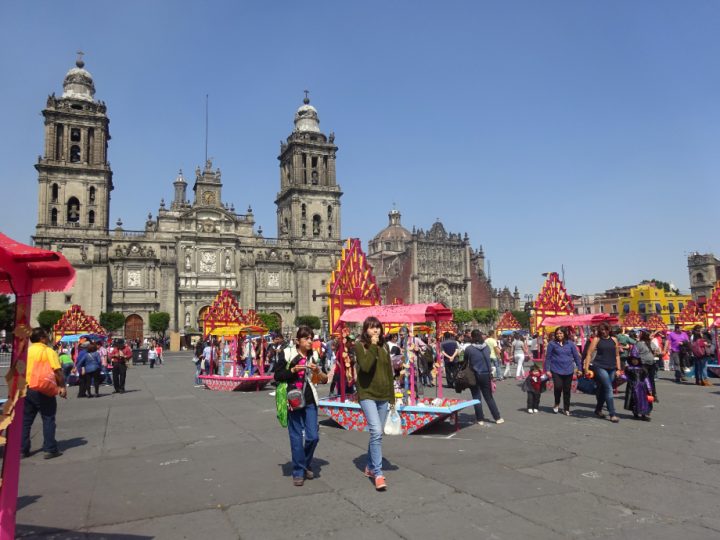

    Copacabana

    From La Paz I directly took a “colectivo” to Titicaca Lake: a taxi from the airport first left me at the bus terminal El Alto and I joined other 9 bolivians for a 4 hours trip! Arriving to La Paz by night, I booked a ticket for la Isla del Sol the day after, and slept in the first hotel I found (very easy and very cheap – 4 euros a night).
    › See the pictures of this trip (on Facebook)

    The day after I visited Copacabana from 8am to 1pm (hour of the boat). It’s not a big city but it’s very nice and authentic. I had the chance to participate to the blessing of cars, very typical!
     

    Transports:
    – Taxi airport => El Alto: 50 bolivianos (20min)
    – La Paz => Copacabana: 50 BOL (4 hours)
    – Copacabana => Isla del Sol: 50 BOL round trip (2 hours)
    – Copacabana => Cuzco: 170 BOL or 140 with a semi cama, less confortable (6 hours + the border control)
    Copacabana

    Here is the top 5 to do:

    Cerro Calvario

    cerro calvario

    Visit the cathedral

    catedral de copacabana

    Capilla de velas

    capilla de velas

    Walk in the streets

    Copacabana

    Eat in the Market

    Copacabana

    Let’s go to the origin of the Inca empire…

    Isla del Sol

    Isla del sol

    There was only two options to go to Isla del Sol: in the morning (8am) or in the evening (1pm), and same to go back (10am and 15pm). The second problem was where they left me (after two hours): the south port (Yumani) instead of the north one (Chinkana), where you actually can see the most interesting ruins. The locals people told me there was a conflict between the three communities and the North were blocked. So I suggested with a group of travelers I met there to wake up early and pass the controls before the sunrise… And it worked, leaving at 5.30am!

    After approximately 9km and 3h walking we finally discovered a sacred stone, a ritual table (for the sacrifices of lamas) and the ruins of Chinkana, a huge village / fort / labyrinth! It really worth the pain – because walking at 3800m is a challenge – and we decided to go back from the other way, longer and around the coast… Going up and down the hills… If you’re not sportive I would suggest to go back from the same path! We were back in the south just in time to take the boat (you can ask to take one which stop to the small ruins in the south), and I directly took my confortable night bus to Cuzco.

    Looking back…
    In Copacabana I didn’t have time but you can also take a trip to islas flotantes (floated island) and Isla de la Luna (Moon Island) where there are some ruins. I neither had the force to go to el Horca del Inca, a second hill but it seems to offer a great view of the city!
    Tips:
    – To fight the altitude: Walk quietly, drink a lot (of water…) and use coca leaves (take three, fold them and leave them in your mouth between your teeth and your gum).
    – Always negociate the prices in Bolivia!
    › Take a look on this trip (on Facebook)

    Arrived in Cuzco I followed Luciana, one of the argentinian girl with Johann, the martinican, and we met Ana, an other Argentinian! We booked an hostel and met a guide recommended by Lupi which sold us a 1 day tour of Sacred Valley, 3 days 2 night for Machu Pichu and 4 days to Choquequirao.

    Valle Sagrado

    I would recommend to rent a car and go by yourself to the Sacred Valley (same for the Machu Pichu). The guide explainations are very interesting but it’s really easy to go there…

    Here are the sites you can visit in one day in Sacred Valley:

    Chinchero

    Chinchero

    Moray

    Moray

    Salineras de Maras

    Salineras Maras

    Ollantaytambo

    Ollantaytambo

    Písac

    pisaq

    Machu Pichu in 3 days & 2 nights

    Early in the morning we took the bus until Hydroelectrica (7 hours), we arrived by noun, took a break to lunch and followed the railway to Aguas Calientes (3 hours walk, but you can also take a train from Cuzco to Aguas Calientes).

    The second day we walked up early to go to the bridge where you start to climb 1h30 to the Machu Pichu. They opened the gate around 6am but there was already a big line at 5… Arriving on top we had to wait for a group to start the tour at 8am. Honestly we escaped very quickly with Luciana to visit at our rythm. So we missed the explanations, but we really passed an unforgettable moment! Johan had the patience to follow the group and told us it was interesting but very calculated to lead the group close to the exit after 4h visit.

    We get back around noun to Aguas Calientes and took rest, drinking great Pisco Sour(s). The third day we had to go back to Hydroelectrica to get our bus at 2pm, and made a stop in a nice parc where you’ve got typical plants and a nice waterfall (Cataratas de Mandor, not really crazy). It tooks 9 hours to go back (by night it’s slower).

    Machu Pichu
    Tips:
    – If you have time and force, follow the end of the Inca Trail to have an amazing view of the site!
    – You can also do this trip with just one night, but you need to leave the Machu Pichu at 11am to get the bus to Hydroelectrica on time!
    – We already had the entrance ticket for the Machu Pichu, it’s recommended to buy it in Cuzco but you can also do it in Aguas Calientes. IMPORTANT: Huayna Pichu ticket is very hard to get because they allow only 400 persons per day…

    Choquequirao in 4 days

    Back to Cuzco we ‘ve been invited in our guide family in Chincheros and shared with them the lunch and a very nice afternoon (thanks Hermo!), a very necessary break to prepare us to the trekking to Choquequirao…

    Choquequirao is the last inca bastion, hard to access so empty of tourists (big diference from Machu Pichu)! It was great to have a guide to lead us, but his plan didn’t allow us to have time to visit the whole site (a shame when you know you passed through the 6th deepest canyon of the World to get there).

    1st day you leave Cuzco and take the bus direction Abancay until Cachora crossing (around 4 hours), then a taxi to the entrance of the trek path (one more hour). From there you start walking, we chose not to rent the service of horses to carry our backpack, BIG MISTAKE. This day we went down the hill (9km, 1600m of negative level) until a bridge, and climbed to Santa Rosa Camp (3km, 700m positive) in about 7 hours.

    The second day we paid a horse to carry our bags, really too heavy to climb this huge mountain… After two hours, 4km and 1000m positive level we arrived to Marampata and saw far far away Choquequirao. We prepared the camp for the other night and took back the walk… After others 5km and 2h you finally arrive to this huge site.

    Choquequirao

    It’s really hard for me to describe those ruins… I will just share with you those white qwarts lamas you can see on one of the hill… We passed around 3 hours there, but didn’t have time to visit everything sadly… We needed to go back before the sunset and couldn’t stand an other day… So we went back to the camp arriving by night.

    The third day woke up at 6am to start to go back to Chiqisqa, one hour after the bridge to take a deserved break! From 11am it’s really hard to walk so we started the last day at 5am by night to arrive by 8 on the top and we asked a driver who left a group to start the expedition to bring back us to Cuzco.

    › Check this travel’s pictures (on Facebook)

    This trip is the hardest I’ve ever made but it’s also the best in my life!

    Cuzco

    Cuzco

    Back to Cuzco I only had one day so I took a Tour for tips which helped me to see everything in the short time I had (various are starting from the principal place – Plaza Mayor). On this same place you will find the main cathedral. Take a look inside, there’s a painted of “The Last Supper” with one funny detail: they’re eating a Cuy (the hamster you can traditionally eat in Peru)! This is just one example of the colonialism presence in this city. All the buildings are literally built on the ruins of the original city (you still can see the original stones). Even the river crossing the city has been covered…
     

    Looking Back…
    – I didn’t have time to fully visit Sacsayhuamán in the north of the city, but it’s definitly something to do!
    To sleep: I fully recommend Puriwasi Hostel, cheap and perfect location
    To eat: San Pedro Market or the Limbus restaurant (San Blas area)

    Top 5 to do in Cuzco:

    Inka Museum

    museo del inca

    Coricancha

    Coricancha

    San Blas quarter

    San Blas

    San Pedro Market

    Ollantaytambo

    Hatun Rumiyuq

    Calle Hatun Rumiyuq
    Summary:
    – Day 1: La Paz => Copacabana
    – Day 2: Copacabana => Isla del Sol
    – Day 3: Cuzco
    – Day 4 to 7: Machu Pichu
    – Day 8: Chinchero BBQ
    – Day 9 to 12: Choquequirao
    – Day 13: Cuzco (bus by night to La Paz – 20 soles)
    – Day 14 to 15: La Paz
    Maps:
    › Isla del Sol
    › Valle Sagrado
    › Choquequirao


    Thank you guys, I’ve passed magic moment with you…

  • Mexico DF in 3 days

    Mexico DF in 3 days

    I arrived in the beginning of my trip in Yucatan to DF and took one day to visit Teotihuacan site. When I came back after one week playing Indiana Jones in the pyramids, I took a week-end to enjoy the city and celebrate the “Dia de los Muertos”.
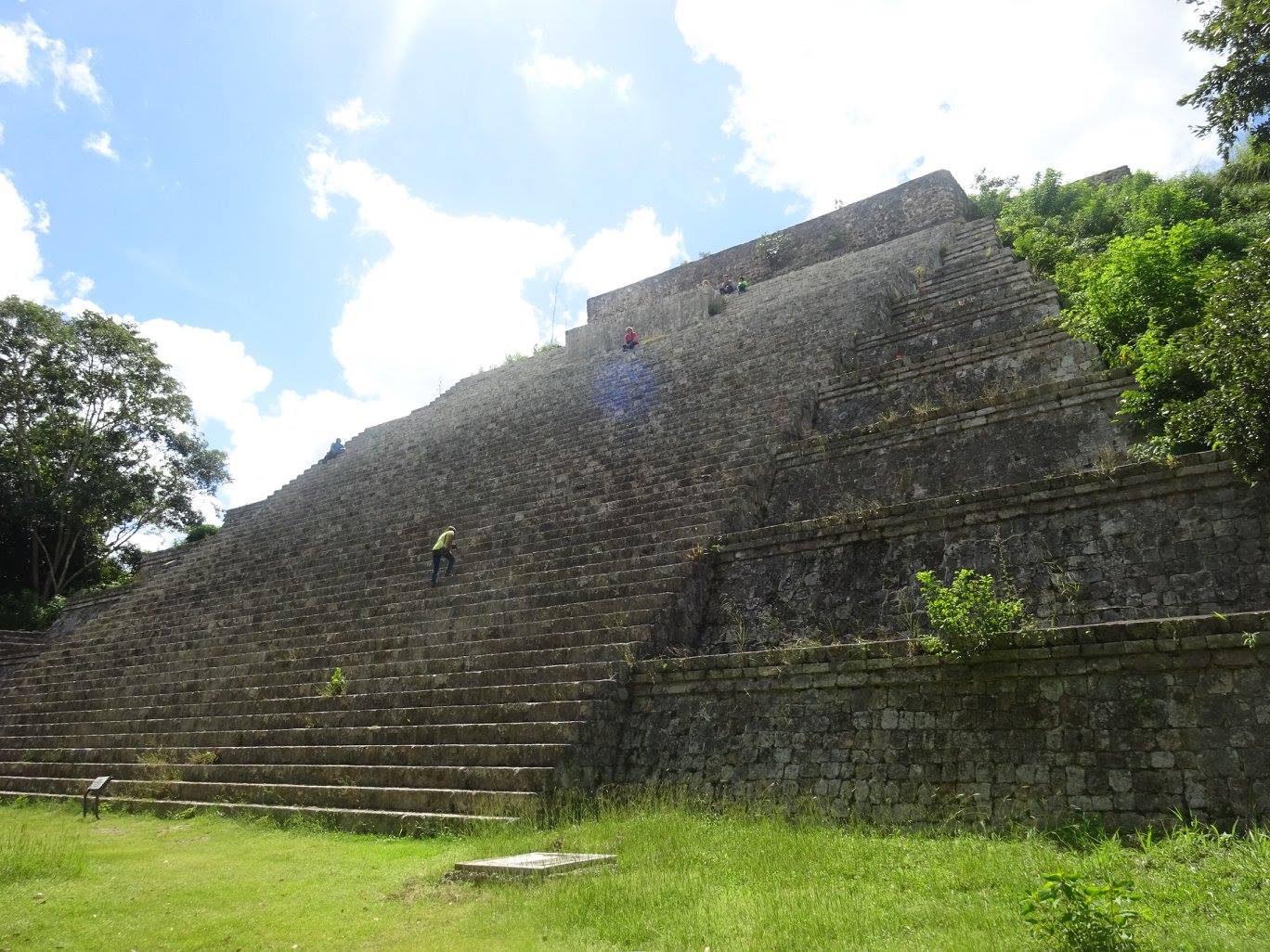

    Teotihuacan

    Teotihuacan was the largest city in the pre-Columbian in America, its construction has been determined around 300BC, and stay quite mysterious. The Aztecs arriving to the empty city thought it was the place where the Gods were created, or where they built the Universe! We don’t really know yet why the place has been left, or what the pyramids were made for (sacrifices surely).

    You will start your visit from the south part, visiting first a citadel and the Temple of Quetzalcóalt (the Plumed Serpent) where a tunnel had been recently found. Then you will start your way to the Calzada de los muertos (the Roadway of the Dead), seing habitations from each sides before go up the Pyramid of the Sun, the tallest one.

    Behind this huge pyramid, you will find the museum of teotihuacan culture with the bones discovered behind the pyramids and other reliques which gives you highlight of the development of the city.

    In the end of the visit you will arrive to the Moon pyramid, and the courtyard of the Quetzalpapálot palace where you can still enjoy the painted on the walls.

    Once you exit the site, you can visit the small Museum of murals and take back the bus to Mexico DF.

    You would need at least 4 hours to visit everything fully, you can climb all the ruins and even if it’s full of tourists, it’s unmissable!

    temple of the moon teotihuacan
    Infos:
    To get there: Metro line 5 yellow to Autobuses del Norte stop and go “puerta 8” where you will find buses for 50 MXN (45min drive)
    Entrance: 85$MX
    Update 2022:
    You can no longer climb on the pyramids…

    After this gorgeous site I had 2 days to visit the capital of Mexico

    What to do in Mexico DF

    After one week in the nice and quiet countryside (in Yucatan) I must admit I haven’t been really happy to come back to this huge capital. I just had a couple of days to discover this city… I’ve walked a lot in the historic center, Coyoacán and Xochimilco areas, and visited the museum of anthropology. I met in the hostel an american from California who joined me to share the first day of those visits.

    Centro historico

    catedral mexico DF

    I had an hostel one block from the Cathedral, so I visited a lot this area. I would recommend to visit its bells, and the ruins of Templo Mayor right behind the cathedral (as the majority of the catholic churches, they used the stones of the old temples to build it…). I advise you to visit the museum (85$MX).

    Bellas Artes

    Museo Bellas Artes Mexico

    Taking the 5 de mayo street I arrived to this gorgeous building, and walked until the San Juan market, and then came back crossing the Barrio Chino to join the historic center.

    Museo Nacional de Antropologia

    Museo antropologia mexico df

    You need at least 2h to visit this museum, it was so huge I think you can take much more time! Then I walked until the Angel de la Independencía passing by Condesa and Roma nice areas. If you have time you can also climb Chapultepec castle in the heart of a parc.

    Museo Nacional de las Culturas

    museo de las culturas mexico

    Starting from the Zocalo, the cathedral place, there’s a pedestrian zone where you will find a very nice museum of cultures latin american (and others).

    Xochimilco

    Thanks to the bad weather this very touristic place was empty, and we were able negotiate the price of one embarcation for two 300$MX (in 2016). It was a nice boat trip, but nothing really special but there was the traditional mariachis playing music on an embarcation! After 1h we came back and went to a market few blocs from the port, a very local place I totally recommend.

    Coyoacán

    Coyoacan

    The museum of Frida Kahlo was closed but we enjoyed all the Coyoacán area with all the animations for the Dia de los Muertos (good food, hot chocolate, pan de muerto… delicious!). We also visited the Parroquia San Juan Bautista and stood at the Cervecería de Barrio to wait for the rain to stop…

    Celebrate El dia de los Muertos

    Mexico DF wasn’t really the best place to celebrate this special day. All the city was decorated for the event, and the streets were full of performances, offerings, and people dressed incredibly scary, but that’s it. For the first year they prepared a parade (that I missed) because of the reputation the last James Bond had generated, but I think the countryside is better to fully enjoy the traditions!

    Dia de los muertos df
    dia de muertos
    dia de los muertos

    What you can see those days…

  • Yucatan in one week

    Yucatan in one week

    I initially had a flight for Mexico DF but couldn’t go to this country without visiting the pyramids I’ve always been passionated about! So I took a cheap flight to Merida, and had one week to discover some sites of Ruta Puuc, Chichen Itza, Coba, Tulum, before visiting the great Calakmul! I’ve also visited Valladolid and its cenote, and the nice city of Campeche.

    Note: I came back in 2022 for a 9 days roadtrip from Cancun


    La Ruta Puuc from Merida

    I arrived by night in Merida and took a taxi to my hostel (30min, 40 pesos). They had a tour to visit five of the Ruta Puuc sites, but as I hate to follow a group I prefered to go by myself. It was great to take my time, and to enjoy a local bus (where I discussed all along with a maya maid), but I only visited two of the sites: Uxmal and Kabah.

    Uxmal is the first maya city I’ve discovered in Yucatan, it takes at least 2 hours to visit it, and much more if you take a guide. It’s really gorgeous and impressive! Kabah is smaller but famous for some 300 masks dedicated to Chac, the rain god. It’s also very well preserved, you can cross the road to go to the west part, you will only distingish the ruins on the left of the way, and you will find a mysterious door which seems to be the start of an old autoroute of procession.

    Uxmal

    Here are the five sites you can visit in one day (if you take the bus you’ll be running, easier by car):

    Uxmal

    Uxmal

    Kabah

    Kabah

    Sayil

    sayil

    Labna

    Labna

    Xlapak

    xlapak
    Looking Back…
    The best way to visit this amazing region is to rent a car and enjoy the visit by yourself.
    By bus you take a bus from Merida direction Campeche and ask the driver to stop to Uxmal (1h30 drive, 70 pesos). Then you take an other bus to go to Kabah (30min). And to go back you just need to stand on the road and to make a sign to the bus driver when he arrives…
    Infos:
    – Entrance price to Uxmal: 70 pesos*
    – entrance price to Kabah: 50 pesos*
    – Hostel in Merida: Hostel Nomadas with their huge rooms, kitchen and swimming pool, 220 pesos (10e) per night!
    › Pictures of Uxmal (on Facebook)
    › Pictures of Kabah (on Facebook)
    *For prices updated 2022, check this post

    After this nice introduction I took the road of one of the World’s Wonder…


    Chichen Itza

    Chichen Itza
    Cenote Chichen Itza
    Caracol Chichen Itza

    Chichen Itza is just a chef d’oeuvre! Its modern ans so special style can be related to the fact it has been built on an other maya pyramid like the one you can see in the region (with just one side to climb on). It has a total of 365 steps and draw twice a year (during the on equinoxes), a shadow in the shape of a snake, finishing by the snake heads on the bottom! You will also discover there the biggest ball court of the country, a huge “cenote”, an amazing observatory, or a huge palace full of columns!

    You will need at least half a day to visit everything. One only bad point: it’s so famous that it’s really full of tourists, guides and shops…

    Infos:
    – To get there: Bus from Merida to Chichen Itza: 2h – 100 pesos / bus from Chichen Itza to Valladolid 45min – 65 pesos
    – Price for the entrance of Chichen Itza: 70 pesos
    – Best period to visit is definitly during the equinoxe (19/21 march and 22/23 september) where they organize a special show!
    › See the map of the site
    › More pictures (on Facebook)

    Valladolid

    Valladolid is a really nice city where you will visit a spanish convent, various cenotes to swim in (I only visited the one in the center), a very small museum where you will find the oldest cross of the region (as they say…) and various cathedrals.It’s a nice example of a colonial city, in 2 hours you will see everything, doesn’t really worth to spend more.

    Good to know:
    The Cenotes which look like nice natural swimming pools originally served as place for sacrifices… Think twice before diving in!
    Valladolid

    Coba

    Coba
    Coba

    After one night in Valladolid, I went to Coba, one of my favourite ruins! It’s a juge city so you may need one of the bike driver avalaible in the entrance, or a bicycle to rent. I prefered to walked to fully enjoy this peacefull land! You finally can climb on the main old pyramid to enjoy an amazing view of the jungle.

    After maybe 3 hours of visit, I went to Playa del Carmen, and hated this place! You are in “Gringolandia”: a VERY touristic city, without soul… It’s nice for partying, though, because it’s full of bars and restaurants and has nice beaches!

    Infos:
    – To get there: Bus from Valladolid direction Tulum (around 150 pesos to arrive to Tulum)
    – Price for the entrance: 60 pesos (price in 2016)
    Pictures: › check the album (on Facebook)
    Update 2022: You can no longer climb on the main pyramid, which was the most interesting stuff here… See the post 2022

    Tulum

    After one night in Playa del Carmen I took the road to Bacalar and stopped to Tulum, the main maya port and only site on the coast. It’s also full of tourist, but the view and sea atmosphere is a nice experience to live! You need a half day to visit the whole site, full of reptiles… (even snakes!)

    I paid 40 pesos the entrance, and 150 the bus to Bacalar.

    Tulum
    Tulum
    Tulum

    To finish I found peace and ended this trip in a magic place lost in the jungle


    Bacalar & Calakmul

    After a long trip from Tulum (3 hours), I arrived to this small city where there is not a lot to do but chilling! Bacalar has a old fort but that’s it, so I took a break in a very hippie hostel (Green Monkey), which was a paradise for young travelers! You can enjoy the nice blue lagoon, do standing paddle, kayak or jet ski but that’s it. I stood there one day and a half, and I met Mat to share the rent of a car from Chetumal to go to Calakmul.

    Calakmul is the sister of Tikal, a huge maya city with pyramids which look like mountains! I’ve been impressed by Coba and Chichen Itza, but here is an other thing! All the hills you can see in the jungle are actually a potential pyramid. We arrived in the limit of the hour (accepted until 3pm), paid 70 pesos* the entrance, and stood there until the sunset. You should go early to really appreciate all the site, we barely saw 25% of the ruins. From Chetumal we rented a car, and then you need 1h45 to get to the ruins (see the map of this site / Check the pictures on Facebook).

    We ended this trip together in Campeche where we left the car, and I took a bus to go back to Merida when I had a flight to DF.

    *For prices updated 2022, check this post

    Map Yucatan
    Summary:
    Day 1 – Ruta Puq & Merida
    Day 2 – Chichen Itza & Valladolid
    Day 3 – Coba & Playa del Carmen
    Day 4 – Tulum & Bacalar
    Day 5 – Break in Bacalar
    Day 6 – Calakmul
    Day 7 – Campeche and Back to Merida

    During this trip I’ve met those (crazy) guys

  • Cuba for 10 days

    Cuba for 10 days

    I had 10 days to visit this big island, I just had the first two nights booked in La Habana and I followed the flow. It lead me to Viñales, the tobacco and “mogotes” region, Playa Larga on the Bay of Pigs and Trinidad.


    La Habana

    I had a BnB booked – as it’s common there – in a family house in the old Habana. This part of the city is very authentic, full of colonial houses and small streets. It’s messy and charming, but a (white) girl alone is the center of all men attention, and it can become annoying, but I’ve never felt unsafe and I passed a really good time there!

    The two first days I lost myself in the streets of the old Habana, enjoying the parade of old cars, the beautiful people in the streets, the view of each building, pieces of art left there like the time had stopped… During the afternoon I took a “top on top off” bus (10$) to join the other parts of the city, including the Malecón (the avenue on the bay), the Revolution place, the necropolis Cristobal Colon where I made a break to walk a little bit, and I took back the bus crossing the richer part of the city where you can find the Resorts and Embassies. I came back and enjoyed my last night in La Habana in one of the various restaurant with cuban live music.

    TOP 5 areas in old Habana:

    National Capitol

    National Capitol Area

    Real Fuerza Castle

    La Habana castillo de la real fuerza

    Cathedral Place

    plaza de la catedral

    Calle Obispo

    calle obispo

    Plaza Vieja

    plaza vieja

    Looking Back…
    – If you have time in La Habana don’t forget to visit the Moron Fort, and to enjoy the Jazz Club or La Fabrica
    – Everything is negotiable: the taxis, meals and nights!
    – You have two money there: the CUP and the dollar, CUC. 1 CUC = 1$usd = 24 CUP
    Transports
    – Airport => La Habana center:  aprox 20$
    – La Habana => Vinales: Viazul bus 12$, Colectivo 15$ (2h30)
    – Viñales => Playa Larga: Colectivo 30$ (6h)
    – Playa Larga => Caleta Buena => Trinidad: Taxi 30$ (2h30)
    – Trinidad => La Habana: Colectivo 25$

    Viñales

    I asked a taxi to leave me to the “Colectivos” leaving to Viñales, close to the Revolution place. When I arrived they told me one was leaving in 30min… 2 hours after it was finally full and we left for a 4 hours trip in a car from the 70th shared with other 6 travelers! When I arrived there a woman offered me a room in her step sister’s home. As always you need to fill in your informations with passport number, and pay cash.

    Vinales

    Tobacco Tour

    I asked her a tour for the tobacco plantations and 1 hour after I met a guide with his little girl and we went to his place to start a horse tour (we went the three on his bike…). It was a gorgeous day, we met a guy lost in the hills making his cigars and telling me about his business, we visited a cave and a lake where you can swim, and finished in a bar in the middle of nowhere with cubans living there, drinking local rhum!

    Cayo Jutias

    The day after I had booked a tour to Cayo Jutias, one of the paradise island in the north. We negotiated to stay there a little bit more, and I enjoyed a day in a postcard with a belgium guy I met in the cab! Back to Viñales I met an argentinian woman who told me she had booked a colectivo to Playa Larga. So the 4th day I woke up early and waited for a place to also go there!

    Infos:
    – To stay: Casa Yiyi (15$ the night + 5$ diner + 3 breakfast)
    – Horse tour: 5$/hour (3h minimum)
    – Cayo Jutia: 15$ the taxi with return (1h30)
    – If you have time: Visit the Cueva del Indio!

    Playa Larga

    Playa Larga is situated on the Pig’s Bay famous for a failed military invasion of Cuba undertaken by the Central Intelligence Agency. It has hot water and whit sand beaches. I arrived, found an BnB and enjoyed the day at the beach. The young woman of the accommodation advised me a dive center where I’ve been the day after for a very nice day swimming in the caribbean ocean in front of cueva de los peces – the fishes cave.

    I met there a group of spanish girls and we went out together by night, invited by “Chocolate”, a guy from the dive staff! He found us for the day after a great plan: a taxi driver who accepted to pass the day with us in a All Included called Caleta Buena and to leave us at the end of the day at Trinidad.
     

    Infos:
    – To stay: Casa Leibis (15$ the night + 4 diner + 3 breakfast)
    – Diving day: 25$ (45min diving + cuevas de los peces)
    – Caleta Buena all inclusive: 15$
    playa larga

    Trinidad

    Trinidad

    After 3 hours driving in an other classic car, we arrived in this colorful old city! My new spanish friends had a great plan for an hotel and we shared a room after a good negotiation. We were on the top of the city, 15min from the main place. There was a special celebration, with a rodeo and dancings by night! We passed two nights there, enjoying the nice streets, painted shops, cheap restaurants and an amazing disco in the heart of a cave…

    The day after I needed to go back to La Habana, with a hangover, sharing my Taxi with two Argentinian guys and Russian girl. I passed the last day enjoying again this great city!
     

    Infos:
    – To stay: Hotel Kinto (30$ / night for 3 people with breakfast)
    – To eat: Restaurante la Taberna
    – To drink: Casa de la Musica
    – To dance: La Cueva


    Hasta la próxima Cuba!


    Summary:
    Day 1-2: La Habana
    D3: La Habana => Viñales (4h) and horse tour
    D4: Cayo Jutias
    D5: Viñales => Playa Larga (5h)
    D6: Diving Cueva de los peces
    D7: All inclusive Playa Maceo => Trinidad (3h)
    D8: Trinidad
    D9: Trinidad => La Habana (6h)
    D10: La Habana
    plaza de la victoria

    Thank you guys for all those great moments

  • A step in Colonia del Sacramento

    A step in Colonia del Sacramento

    From Buenos Aires you can easily take the ferry to Montevideo, capital of Uruguay, or this small and cute old city, known as the oldest town in the country. One day is enough to visit everything, here is what I saw there:

  • A week-end in Cartagena

    A week-end in Cartagena

    I’ve been sent to Colombia to work, and as I already knew Bogota from a previous business trip, I decided to pass the week-end in Cartagena de las Indias. I had time to enjoy the historic center, a bit around, and to go on the coast to Playa Blanca!


    The historic center

    Cartagena is a little colorful treasure! I arrived in the airport early in the morning, went to the hostel in taxi to leave my bag, and had all the day to visit the center full of colonial houses, palaces with gorgeous inside patios, and streets full of culture mixed.

    Addresses:
    – To stay: El Viajero Cartagena Hostel, Cartagena
    – To drink: La Marzola (nice deco)
    – To dance: La Botica rooftop!
    – To see the sunset: Cafe del Mar on the fortifications!
    Cartagena de las indias

    At noun I made a stop on a place, and met Jorge, a old columbian who offered me to walk around with me. We visited together the gold museum, the Plaza del Reloj – Clock place, the Parque Centenario full of iguanas and monkeys, and the Baluarte (bastion) San Miguel Chambacu.

    Then I took a Free walking tour to know a bit more about the story of the city at 4pm (from Plaza Santa Teresa, starting also at 10am). I finished the day having dinner on Plaza Santo Domingo and seing a caribbean street show, went back to the hostel and met two crazy americans (Ben & Nick) in the bar. We went out all together with other travelers, a night we’ll remember!

    San Pedro Claver

    On this place you will enjoy a quiet ambience in the feet of the San Pedro Claver church (originally known as the church of San Juan de Dios).

    Plaza San Diego

    Plaza San Diego

    You will find some markets on this place, an red church really lovely, and you NEED to take a look inside the Hotel Sofitel Legend Santa Clara Cartagena in the corner (expensive place but with an amazing patio).

    Parque Centenario

    Parque Centenario

    This small parc beyond the historic wall is full of sloths, marmosets, squirrels and iguanas! It’s also a green place where you can take a break from the warm weather.

    Plaza santa teresa

    Plaza Santa Teresa

    Start point of the free walking tour, you will find there a naval museum with an interesting map of the original city, and you can also climb here on the old town’s wall!

    San Felipe de Barajas

    San Felipe de Barajas Castle

    I didn’t have time to fully visit this fort, but you surely should take time to visit it! It looks to offer a really nice view of the city, and give you more informations about how Cartagena were built since the spanish invasion.

    Museo de oro

    If you don’t know the gold museum of Bogota, you may like this small museum full of treasures of the Zenú culture! It’s situated on Plaza de Bolívar, and closed on sunday and monday!

    Plaza Santo Domingo

    Parque Centenario

    Playa Blanca

    Playa blanca
    Playa blanca
    Playa blanca
    Playa blanca
    Playa blanca

    The day after I had a tour booked from the hostel to Playa Blanca (1h from the center). I met two argentinian guys and a columbian from Cali in the mini bus, and we had all day to enjoy together the sun and the warm water. It was far from a empty beach I was used to in Panama, but it stays a paradise on earth…

    When I came back I had time to visit the Getsemaní area, full of street art and finished the day walking on the old city wall.

    Looking back:
    Playa blanca wasn’t maybe the best choice to make, it was a too touristic. I think if you have time you should go to islas del Rosario, isla Grande, or if you have time go to Barranquilla (perfect place also for the Carnival).


    Thank you guys for all those good moments!

  • Rapa Nui / Eastern Island

    Rapa Nui / Eastern Island

    To celebrate my 30 years old I was on this mysterious island, one of the most isolated, with my mom. In 4 days we achieved to visit the majority of the sites. It’s one of my favorite trip and defintly my best birthday ever!


    Rapa Nui

    Eastern Island, or the polynesian name “Rapa Nui” is a small island lost in the middle of the Pacific. Discovered on an eastern day, by a dutch group in 1722, it’s an island full of Moais, those enigmatic statues built between 1250 y 1500 AC.

    We rented a car to visit the island and enjoy the time there all alone. You need to know that every Moai stand up have been restored, as they were all destroyed. Some of them wear a hat, others coral eyes.

    You must buy at the airport a ticket to visit two sites: Rano Kau and Ahu Tongariki. The others are free (for this moment).
     

    Tips:
    To stay: Camping Mihinoa, good price and good location!
    To see absolutely: Balet Cultural Kari Kari (check the video on Youtube)
    > Download the map
    rapa nui

    Day 1 – South East Coast

    We started the day by Vinapu, where we saw the first destroyed Moais but also the incredible work on the hats and on the platforms (very close to the peruvian style around Cuzco). Then we took the coast road and stopped at every point.

    The main sites:

    Vinapu

    Hanga Te’e

    Hanga Te'e

    Akahanga

    Akahanga

    Ahu Tongariki

    Day 2 – Rano Raraku, North Coast & Orongo

    After seing the sunrise back to Ahu Tongariki, we went to the mountain where were built the Moais: Ranu Raraku. You can see there 397 moais, including in the heart of the volcan! They were dug directly in the rock, and put in a hole to build the back side. They all have been abandoned in the middle of their construction or during the transportation. To protect them the archaeologists left the bodys in the earth, but you can easily imagine the size of the statue watching the heads!

    We kept going north to find various sites, like the petroglyphs of Papa Vaka, the stone Pu O Hiro (a natural trumpet), the red beach Ovahe,Te Pito Kura – World numbril, and finished on Anakena beach where you see the Ahu Nau Nau.

    Orongo

    Orongo

    Orongo situated on the south west is a big hill where you can appreciate a gorgeous sunset! You will start by Rano Kau belvedere, view on the crater full of water, and walk along the coast seing the original Orongo houses where started Tangata Manu celebration, “Bird Man”.

    Each village chief chose his champion to perform the competition (the winner offer to his village the repartition of the island supplies during one year). The competition consisted of a race starting in the crater, then they had to swim on a board to Moto Nui island (you can see in front of Orongo). Finally they had to find a tern egg and to go back on the coast with the egg intact!

    Day 3 – Around Hanga Roa & the West Coast

    Hanga Roa is the only city where you can visit there a nice museum, the church (you should go there during a mass where they mix christianism and local traditions and songs), and an artisanal center.

    Close to the city:

    Ana Kai Tangata

    Ana Kai Tangata

    A cave with birds draw on the ceiling!

    Ahu Vai Uri

    Ahu Vai Uri

    Situated on Tahai site, Ahu Uri and Ahu Tahai are a great place for the sunset!

    Ahu Ko Te Riku

    Ahu Ko Te Riku

    Also on Tahai place, this Moai is the only one who kept his eyes!

    Hanga Kio’e

    Hanga Kio'e

    An other alone Moai back to the see!

    The caves

    caves

    On the west coast you’ll find the cave Ana Kakenga, with two windows on the sea (hard to find because the hole is small) and Ana Te Pora a bit further.

    Ahu Akivi

    Ahu Akivi

    The only site where the Moais seems to look on the beach (the others all look inside of the island).

    Huri A Urenga

    Huri A Urenga

    A Moai with the particularity to have 4 hands.

    Puna Pau

    Puna Pau

    The place where come from the hats: Pukaos.

    What you can ear in the church on sunday…

    What you can see in the city (Playa Pea)…

    If you have more time:
    – There’s a Moai in the sea: go diving!
    – We didn’t have time to go on the North side west side where you can go by feet
    – You can do a trekking to Terevaka Volcan (507m) or Volcan Puakatike (370m)
    – The best period to go there is during february for the Tangata Manu celebrations

    Pictures of the best moments!

  • Atacama all alone

    Atacama all alone

    Atacama is a region situated in north of Chile, less than 2 hours flight from Santiago, I’ve been there various time and always prefered to rent a car instead of taking a tour.


    Desierto de Atacama

    First I’d like to reassure you, it’s very easy to orientate yourself in this desert. You have Calama, the airport city, at 1h30 of San Pedro which is the main « city » and the starting point of all the tours. But as I always say, groups are not for me so I always rented cars from Calama to enjoy the desert alone with my friends!

    From San Pedro:

    South:

    – Valle de la Luna
    – Salar de Atacama
    – Cities of Toconao and Socaire
    – Lagunas Altiplanicas
    – Piedras Rojas

    East:

    – Salar of Tara
    – Uyuni tours (Bolivia)

    North:

    – Pukara de Quitor
    – Garganta del diablo
    – Puritama Therms
    – Geisers of Tatio

    West:

    – Petroglyphs of Yerbas Buenas
    – Valle Arcoiris
    – Rio Grande
    – Valle de la Muerte
    – Piedra del Coyote

    Petroglyphs of Yerbas Buenas & Valle Arcoiris

    I will always remember the first time I took the car from Calama to San Pedro with my friends, crossing the field of aeolians and getting deeper and deeper in the middle of nowhere… Before arriving to San Pedro we took the road on the left direction Rio Grande and stopped to the Petroglyhs of Yerbas Buenas.

    On the sunset we went to Valle Arcoiris (I’ve been there a few time, I think the best moment of the day for the colours is in the morning). To find it it’s easy: after Yerbas Buenas the road goes down to a bridge, you need to take the road on the left BEFORE this bridge!

    If you have time you can go to Rio Grande which is a nice village lost in the mountains.

    Petroglyphs yerbas buenas
    Petroglyphs yerbas buenas
    Valle arcoiris
    Valle arcoiris

    Salar de Atacama, Lagunas Altiplanicas & Piedras Rojas

    Lagunas atacama

    From San Pedro we took our car direction south (Toconao – Solaire) and start our trip seing the sunrise on the lake Tebenquiche, then we follow the road to pass in front of the Eyes of the desert – los Ojos del desierto (two big holes in the middle of the earth), and arrive to Laguna Cejar when you can swim in a salty lake (for me it doesn’t own the price).

    After that, it’s a cul de sac, you will need to go back to the main road and can take a break to Toconao (not a lot to see but a small church and the stairs of the bell tower made of cactus wood ! – try to be there at noun it’s still a manual bell) and then direction to south, turn on the first to the right until Laguna Chaxa which is the supposed favorite place for the flamingos. You’ll find there a small museum about the desert fauna et flora, and you can enjoy a nice labyrinth of paths through the salty desert.

    We came back again to the main road, and took direction Solaire to go to Lagunas altiplanicas (Lagunas Miscanti and Miñiques). We came back to the main road again and took direction to Piedras Rojas. To be true we didn’t make it the first time (not enough fuel) but you should definitly end this day seing the sunset there!

    San Pedro, Pukara de Quitor & Valle de la Luna

    Back to the city we visited a little bit the center… Enjoy the market (entrance on the main place), eat a nice empanada, buy some fruit or vegetables on the car park… You can also visit the museum of meteorite (never did) and a nice church!

    Very close to San Pedro there is a lot of stuff to see: you can start by Pukara de Quitor (Atacamanian ruins), it’s just 5 min drive from the city center and it gives you an amazing view of the Death Valley.

    Valle de la Luna MUST be in your todolist!

    Places to eat & drink – Burger Garden, a food truck – El Huerto & his garden behind – Casa de Piedra, nice restaurant! – 02 for a good breakfast or tea – ChelaCabur for a good beer – Barros and his live music – Lola’s to take a drink – Ayllu and his terrasse with fire

    Here are what you can see in this Moon Valley:

    Canyon

    valle de la luna

    Dune

    duna valle de la luna

    Anfiteatro

    Anfiteatro

    Las 3 Marias

    las tres marias

    Around San Pedro you can also lost yourself in the Garganta del Diablo, or go to Valle de la Muerte – Death Valley – to do Sandboard (there’s not more to do there…).

    Salar de Tara

    Monjes de Tara

    Here you will go to the highest point, more than 4300m, I’ve been there twice, one with a 4×4 with a friend but we almost lost ourselves in the desert, so the second time I booked a tour with Horizonte Atacama Agency. You will start at 7am and end around 4pm, totally dead…

    You will first stop at Rio Quepiapo, then you will enter in the desert and have few time to see the Monjes de Tara. They’re old volcan projectiles, very impressive… Then you will stop on a huge crater, and go to Tara’s Cathedrals to have lunch in the border of a lake before coming back.

    Geisers of Tatio & Termas de Puritama

    Geisers of tatio

    To go to the Geisers without having 1000 tourists with you, you shall arrive before the sunrise or later (around 8am). I did both and I recommend early in the morning to really appreciate the effect of those Geisers and the big smoke towers they make! I also heard that it can be cool for the sunset… And I’ve never did it but you can even take a bath there!

    You can also wait until Termas de Puritama to swim, it’s a really nice place, an oasis in the middle of the desert with great installations!

    “Get lost in the Nature and you will find yourself”

    Time for each activity: – Valle de la Luna: 3 hours to visit – San Pedro to the Geisers: 1h30 – San Pedro to Termas Puritama: 30min – San Pedro to the Atacama Salar: 45min – San Pedro to Toconao: 30min – San Pedro to Piedras Rojas: 3h
    Prices (in pesos, for foreigners): – Valle de la Luna entrance: 10000$ – Geisers entrance: 10000$ – Termas de Puritama entrance: 11000$ – Laguna Cejar entrance: 25000$ – Tour of stars: 30000$ – Tour of Salar de Tara 40000$
    Looking back…
    – The most beautiful part is beyond the Piedras rojas, you will see amazing lakes full of Flamingos and colored mountains
    – Never did: minas de Chuquicamata, the biggest with open sky! You need to book in advance and to start from Calama.
    – The only tours I would recommend are for the Salar de Tara, Volcan Licancabur (5920m) and Salar de Uyuni (in Bolivia)
    – Best sunset: at Piedra del Coyote (included in the entrance of Valle de la Luna)
    – I fully recommend a star tour, but with lot of clothes and more than one telescope for 10 people!

    Thanks all of you for sharing those great landscapes…

  • One week in Rio de Janeiro & Around

    One week in Rio de Janeiro & Around

    Ahhhhh Rio! I think this is one of the best city I’ve ever visited… I’ve been there first for the Carnaval and on various professional trips, and I always enjoyed the weather, the people, the music, the ambiance…


    Rio de Janeiro

    There are so many ways to visit this magic city… You can easily walk in the Downtown area, take a rest and enjoy the beaches, visit the touristic places like Pao de Azucar, Cristo Redemtor, or find more local stuff like watching a game in the Maraqueña stadium, visit a favela, or go outside the city in Ihla Grande in the west or Buzios in the east. Rio is also a perfect place to party, more than ever during the Carnival!

    To stay: El Misti Hostel for its bar, or Villa budget for its patio (both are in ideally situated in Copacabana, few blocks from the beach and in front of Siqueira Campos metro station)
    To eat: You need to try one of the churrascaria restaurant, specialized in BBQ (like Porcão which is a chain). If you want cheaper, they also have a lot of restaurants with huge buffets where you pay the weight!
    And if you look for a romantic restaurant, I recommend the rooftop of Praia Ipanema Hotel, with an amazing view on Ipanema beach (for the sunset…)
    To try: Pan de queijo & the açai juice!
    Rio de Janeiro

    Top 5 of the best views of Rio:

    Cristo Redentor

    Cristo redentor

    Pao de Azucar

    Pao de azucar

    Dos hermaos

    Rio de Janeiro - What to do

    Duque de Caxias

    Forte Duque de Caxias

    Vista Chinesa

    Tijuca forest

    The city center

    In an half day you can visit all the city center, between the metro station Gloria and Cinelandia (you can also take the new tram)!

    Escalier Selarón

    Escalera Selarón

    Those famous colored steps start on the feet of the old aqueduc, el aqueduto da carioca.

    Cathedral Sao Sebastian

    Cathedral Sao Sebastian

    Known as the Metropolitan Cathedral of Rio de Janeiro, this very special church has been built in the 60’s and 70’s for a maximum of 20 000 people!

    Municipal Theater

    Municipal Theater area

    The city center is full of treasuries mixed with modern buildings, but you can still see nice stuff like the theater, Praça XV, or Candelaria church.

    Parque Olímpico

    Take a moment to discover this rehabilitated port, with the Museum of Tomorrow – Museo do Amanha -, and the World’s largest street mural graffiti… Amazing!

    Eduardo Kobra, brazilian artist, representing the different faces of humanity:

    The beaches

    You can’t leave Rio without try those beaches! Rio has the best beaches I’ve ever seen in term of ambience… Between people playing footvolley or volleyball, doing surf, bodyboard or standing paddle, and the others taking rest with their family or friends. You can rent a chair for few reales, and enjoy the beach life with salers of caipirinhas, food, bikinis, pareos, hats… The best are the most famous: Copacabana, and Ipanema where you need to see the sunset behind the Dos Hermaos (two brothers) mountains. You could even rent a bike and easily go from one to the other!

    On Copacabana if you have time I recommend you to have lunch in the Forte Copacabana, and to check the Caminho dos Pescadores – the fisher way, in the bottom of Duque de Caxias fort by night!

    What else?!

    parque botanico

    Parque botanico & Tijuca forest

    If you have time to visit this nice parc you will also discover the lagoon of the city, and you could also keep going to Tijuca forest where you will find plenty of things to do (like nice waterfalls where you can swim, or the famous Chinese view -Vista Chinesa.

    maracaña

    Maracaña

    If you are lucky and can buy a football ticket to live this experience, I totally advise you to go there! We had the chance to see a game of Flamingo – Botafogo, two clubs of Rio, and we really had a great time (arrive early to buy the tickets in the stadium, or buy them directly in the club).

    favela

    Favelas

    We took a tour (with Rio Maximum) to visit Rocinha Favela, the biggest one, and a second one to go to Morro Dos Hermaos where we crossed the favela Vidigal. During the day there are so many people that I’m not sure a tour is needed, but it’s still interesting!

    sagui

    Want to see monkeys?

    You have good chance to see those monkeys in every parc of Rio, but the best place is probably on the way to go to the fort Duque de Caxias. You will see that those marmoset aren’t shy at all (carefull though not to be bitten)!

    > Check the video on Youtube

    And the Fiesta?!

    Rio is also the perfect place to have fun by night! Botafogo, Santa Teresa, Leblond… You will always find a great bar or place to dance. And the Carnival is the apotheosis of the celebrations: a great ambience, people with smiles everywhere, everybody is a friend… During this first week of february, you MUST go to the Sambodromo and see the best Samba schools in competition, and participate to one of the various Blocos in the streets!

    Outside of Rio

    If you have time left, you have two very good options at only 3h from Rio: you can also go west in Angra dos Reis bay and take a boat to Ilha Grande (we took a one day tour, but I think it deserve much more time to really enjoy the magnificent of this region), or go east to Buzios, a tinny but nice city with the same warm and blue water, and the big boats to visit the islands.

    Ilha Grande

    ihla grande

    Buzios

    Buzios
    Safety:
    I lived 4 years in Latin America so I already know that I have a “gringo” face, and I always take care of myself travelling alone: I don’t wear gold jewleries, I don’t have handbag and just go out with few Reales in my pocket, my phone and a copy of my passeport!
    During the carnival there’s a lot of pickpockets but also a lot of cops in the streets. We were two french girls and met a lot of easy going persons.
    I’ve never felt in danger in Rio and never had any problems. I even met great people and shared incredibles moments with them!


    Thank you guys for those great moments…

  • What to do in Santiago

    What to do in Santiago

    I lived almost 3 years in this city so I know it pretty well, and lived my best years there! Between Europe and Latin America, you can find everything in this modern city, but for a tourist I would just recommend few days there, as Chile is very different from its capital!


    The historic center

    Let’s start by the old center. Take the metro line 1 (red one) and stop at Santa Lucia. Here you will find two artisanal markets: the craft center (perfect to buy souvenirs) across the main road, and an other at the entrance of Santa Lucia hill. You can enjoy a very nice view from the top, and go back down to take San Antonio pedestrian street. There’s a lot of shops and restaurants in this area. Take North direction and you will arrive on the main place: Plaza de armas. This is the km 0 point of Chile. On this gorgeous place surrounded by galeries, you can visit the cathedral, the old post office, and the city council where you can climb on the clock tower to get a general view of the place, and enjoy the museum of the city! I also recommend you the pre colombian art museum – el Museo Chileno de Arte Precolombiano.

    Let’s keep going North until the Mercado Central, perfect place to eat fish and sea food. If you like local stuff you must absolutely go to La Vega market crossing the bridge! The paradise of vegetables, fruits and spices… Cross back the bridge and walk along Florestal parc until Bellas Artes museum. Here take on the right and finish this big walk in Lastarria, the latin quarter full of terrasses to take a nice break. If you like opera, I suggest you to visit the Municipal Theater also in the center!

    santa lucia santiago
    Cerro Santa Lucia

    If you have time…

    la moneda

    La Moneda

    The president building destroyed by the Pinochet bombing in 73, and where Salvador Allende committed suicide. You also have a cultural museum to visit and the biggest flag of the country on this place!

    barrio yungay

    Barrio Yungay

    This old quarter full of street art where you can visit an impressive human right museum: el Museo de la Memoria y de los Derechos Humanos. Take time also to discover the street Concha y Toro.

    iglesia san francisco

    San Francisco church

    This red church is the first and oldest colonial building of the country. You even can see there a chapel for domestic animals!

    paris londres

    Paris Londres

    Two very nice streets with a european style close to the craft market (centro artesanal) of Santa Lucia.

    barrio italia

    Barrio Italia

    Situated south of Salvador Metro, calle Italia full of galeries and coffee shops is a perfect place to walk during the week end.

    los dominicos

    Los Dominicos market

    At the end of line 1 of the metro is a nice artisanal market in the feet of the Cordillera.

    Places to eat:
    – Liguria, chilean food and nice restaurants (metro Tobalaba or Manuel Montt)
    – The terrasse of Biografo in Lastarria, food is not crazy but it’s nice and quiet
    – Peluqueria Francesa with great deco in Yungay
    – Castillo Florestal in front of Bellas Artes
    – Mathilde’s rooftop for the sunset in Bellavista
    – Silvestre in Barrio Italia for a sunday brunch
    To take a drink:
    – Maestra vida, a salsa bar
    – Bar a cielo Abierto for colombian live music
    – Jardín Mallinkrodt, a nice patio
    – The Thelonius in Bellavista, a jazz bar
    – The Roof (or others on Tobala avenue)
    – Santo Remedio or other bars on Manuel Montt
    – Bar de Rene Barrio Italia, a rock bar with cheap piscolas
    cerro san cristobal

    From top to underground

    The highest tower of latin america is located in Tobalaba, in Costanera Center! You should choose a day without “smog” (the pollution cloud), the day after a rain is perfect for that. You could walk from the tower along the Rio Mapocho to Pedro de Valdivia Norte and take the teleferic to go on top of San Cristobal hill, to the Virgen. To go back down you can take the “elevator” and arrive to Pionono street: the perfect place to take a drink. You can or choose one of the terrasse on the street and enjoy cheap beers and fries “namedekoi” or go to Patio Bellavista, much more “high level”.

    Looking Back…
    Santiago is nice to visit two or three days, but you better go out from the capital as soon as you can. You can find places around the city, take North to La Serena and Valle de Elqui, or go to Atacama region, or take South to the lakes region around Pucon and Puerto Montt, go to Chiloe Island, or take the Carretera Austral to the great Patagonia, or a flight to Punta Arenas to visit Torres del Paine parc and the glaciers.

    Close to the city…

    parques

    The Cordillera

    Cerro Manquehue, Manquehuito, Pochoco, Santuario de la naturaleza, Aguas de Ramon… You have plenty of places 30min from the city center to lost yourself in the nature and escape from the polluted center! To ski you shall go to Valle Coronado or Nevado.

    pommaire

    Pommaire

    This small village is a nice break and can be a stop to do before going to Valparaiso! Famous for its poteries you can buy very cheap stuff and enjoy great typical chilean food!

    valparaiso

    Valparaiso

    UNMISSABLE! Full of stories, this hippie city has a collection of street arts. You can pass a week end there taking a bus from Universidad de Santiago.

    cordillera

    Vineyards

    Santiago is surrounded by great vineyards like Concha y Toro, or Emiliana (an organic one) you can visit with a guide and vine degustations.

    cajon de maipo

    Cajon de Maipo

    If you like green places, rafting, trekkings, or hot baths, I fully recommend you to go there (by car for more liberty)! You should visit the website to get all the informations!

    Pictures of the best moments!

  • 5 days in Puerto Viejo

    5 days in Puerto Viejo

    For my 29th birthday I decided to enjoy short holidays in Costa Rica! I was working in Panama so I took a night bus to the North border, crossed an old bridge, took an old bus to finally arrive in Puerto Viejo de Salamanca, THE PEACE ON EARTH.


    I was travelling with Marine, my flatmate (and talented video maker) and we shared really nice experiences: The Mad Monkey hostel and its cheap hammock, the beautiful virgin beaches, the bike rental crossing a forest full of monkeys, the refuge of wild animals, and the Bri Bri community visit!

    Here is the summary of those 5 days, by Marine:

  • Wales tour in Las Perlas Islands

    Wales tour in Las Perlas Islands

    Las Perlas, or Pearl islands are an archipel situated at 30 km from Panama Coast, lost in the middle of the Pacific. When I lived in Panama I passed a week-end there with friends to see whales!


    Contadora

    We left for Contadora (one of the first island of Las Perlas and one of the more touristic place with Saboga island) from Balboa Yacht Club Causeway in Panama City (check in at 7am, departure 7:30 on Saturday morning). After 1h30 journey we finally arrived in the archipelago of Las Perlas!

    200 lost islands in the Pacific, which were the pirates hiding place before becoming those of the Germans and Americans who decided to charge a price for any service… (expensive for Panama, not really from our European eyes). It’s also where they grabbed several episodes of The Survivor (and the 2004 edition of Koh Lanta!) and where Christian Dior bought a vacation house…

    Contadora is quite big but not too much, you have electric golf cars as main transportation, or bicycles, or you can just walk (one hour to do the round trip). On the roads you’ll find beautiful houses, nice beaches and magnificent hotels restaurants!

    It’s not easy to find a place to stay for less than 40$ per persons… We were hosted in Casa del Sol, a Bed and Breakfast. The managers came to get us to the ferry, showed us the rooms (the extra “beds” provided were a joke), and left us. The studio cost $143 for 4 people ($36 per person). The breakfast was poor and the promised bikes missing…

    Big “Like” for Playa Larga hosting a boat and several abandoned hotels (I wonder how / why)!

    contadora
    contadora
    contadora beach
    contadora
    contadora
    contadora
    contadora
    contadora whales
    contadora whales
    contadora whales
    Infos:
    – To go there: $90 roundtrip Sea Las Perlas Ferry (another Ferry offers to leave from the Trump Tower but it wasn’t available)
    – To sleep: $36 hostel Casa Del Sol, not the best but the less expensive I found… (I recommand Villa Romantica or The Point)
    – To eat: Between $15 and $20 each meal (we’ve been to Villa Romantica in front of the sea, Las Tortugas an Italian restaurant and Gerald’s specialized in fishes)

    Whales watching Tour

    The owners of the BnB recommended us their friend Nino, who would take us to a boat ride for $35 a half day (the entire boat…). It would have been the best option if we didn’t have yet a tour booked in advance with an agency (50$ per person for 3h). A friend saw an other publicity on the beach offering 6$ per person. Conclusion: NEGOCIATE THE PRICE!

    So we started the tour at 10am, leaded by… Nino! This tour was just perfect, we were all alone and we had an english speaking guide.
     

    Infos:
    Whales Watching Tour – 10h a 13h – 50$
    Nino’s phone if you don’t want to pay the agency: (+507) 6652 5323


    [wrc_column grid=”2″ width=”1″ type=”start”]

    Thank you guys for sharing this trip!

  • San Blas Islands

    San Blas Islands

    Lost in the Caribbean sea, San Blas is an archipel of more than 360 islands where you will meet the Paradise on Earth! When I was living in Panama I’ve been various time to different islands, in group or in couple, with a guide or alone.


    Kuna Yala

    You will see that the Kunas are a little bit shy, sometimes they don’t speak english or spanish, but we had the chance to meet very friendly people who told us a bit of their traditions: I’ve learnt that they are married very young (it’s normal to have a child at 15YO for example), they leave all together in peace being Mormonts, Adventists or Catholics, they have churches and schools in the mains islands and they pass their days working for tourism, taking care of the islands and fishing.

    For them resting like we do on the beach without doing nothing and with bikini is crazy, and the price of the traditional woman dress and jewels are very expensive (don’t remember the price but it’s like 700$ the all stuff…).

    So you will stay on touristic islands with just few “cabanas” and all included services. Meals are constituted of rice and banana “plantin”, with chiken or fresh fish (sometimes lobsters), with a little salad and pineapple as a desert. The first time I been there in 2013 they didn’t even have electricity, but they now use solar panels (what a pity…).

    san blas-guanidup
    san blas - guanidup
    Guanidup
    san blas - guanidup
    Guanidup
    san blas - guanidup
    Guanidup
    san blas senidup
    Senidup
    senidup
    Senidup
    senidup
    senidup
    senidup
    Senidup
    Kuna
    Kuna
    san blas nubesidup
    Nubesidup
    san blas nubesidup
    Nubesidup

    On this territory own by the Kunas, the natives from those islands, you really have for everybody:

    san blas - guanidup

    Isla Guanidup

    For lovers (because not much to do but beautiful and clean)

    san blas - isla perro

    Isla Perro

    For campers and revelers (the world and tents and hamaks)

    san blas senidup

    Isla Senidup

    For funs groups (large enough with volleyball ground and music by night)

    san blas nubesidup

    Isla Nubesidup

    For quiet groups

    You will always be able to do snorkeling around those islands, and you can also ask a tour to their islands cities or more touristic:

    Isla Perro

    An island in “camping” mode where I discovered the joy of snorkeling with a nice wreck, full of colorful fish, and large shells

    san blas isla perro

    Isla de las Estrellas

    You don’t have nothing to do there but enjoy the coconut trees, pelicans, flying fish and snorkeling to see the starfishes!

    san blas isla de las estrellas

    How to go there

    san blas road 2

    From Panama to Kuna Yala harbour:

    It is recommended to go from Panama around 5:30 am/6am to be in port from 8am to 8.30am. It’s just 95km driving but 1h in the mountain, crossing the tumultuous Chagres National Park.
    You can choose between paying a taxi $ 50 roundtrip per person, or have to drive (with a 4×4), around $ 60 for gasoline + entrance fee of the car on the territory $ 5 + parking in the harbor $ 5).

    Be aware that anyway you will be control to a police station and at the entrance of Kuna Yala where you will present your passport and pay the entrance fee – between $ 2 and $ 10 per person ($ 2 for Panamanian, $ 4 for resident and $ 10 for tourists).

    You must also pay $ 2 at the entrance to the harbor.

    From Kuna Yala port to the islands:

    A lancha will then pick you up and will take about 30 minutes to arrive on the island you chose (you need to contact the owner of the island to book in advance and be sure to have a place)

    You usually arrive on the islands between 8 and 9am on saturday, and leave the day after around 3pm.

    Prices:
    Nubesidup: 60$ one night and food
    Senidup: 60$ for one night and food
    Guanidup: 75$ per night and food
    Isla Perro tour: 10$
    Isla de las Estrellas: 6$
    Rent a snorkel: 4$
    Buy a fresh coconut: 1$
    san blas port

    Contacts:

    Senidup: Ricardo +507 6513 0091
    Guanidup: Milcides +507 6635 6737
    Chauffer: Luciano +507 6784 2904